Retail is moving faster than ever. New products arrive every week, customers expect perfect information online, and AI search tools depend on complete and accurate listings. But many retailers still face the same issue every day: huge product listing backlogs.

A listing backlog simply means products are waiting to go live because their information is not ready. Maybe photos are missing, attributes are incomplete, or descriptions are not written yet. But this delay is not a small problem. It directly reduces sales, visibility, and customer trust.
Imagine a fashion retailer that launches 2,000 new SKUs a month. Each product needs:
When 2,000 products suddenly become 5,000 or 10,000, manual teams simply cannot keep up. This is how backlogs begin.
People now ask AI assistants things like:
AI answers depend on complete product information. If your listing is missing attributes, AI cannot see the product. This means the product becomes invisible, even if it is in stock.
Being first to publish improves:
If a product goes live two weeks late, it might miss a trending moment or a seasonal spike. That lost time equals lost revenue.
Retail teams work hard, but the system they use works against them. Here’s why.
Teams spend hours pulling everything together. This slows down every step.
Someone must write descriptions, resize images, fill missing attributes, and check compliance rules. This work is slow, repetitive, and different people do it differently, leading to inconsistent quality.
Amazon might allow 200 characters for a title. Flipkart might allow 150. Your own website may need a completely different format. Doing this manually for thousands of SKUs multiplies work very quickly.
If a listing gets rejected for missing materials, the system does not learn. Next time, the same mistake will happen again. That is why backlogs reappear month after month.
AI does not just speed up tasks. It changes how listing work gets done. Here is how AI removes the bottlenecks.
Instead of searching for spreadsheets, emails, and folders, AI agents pull everything together into one place and standardize it.
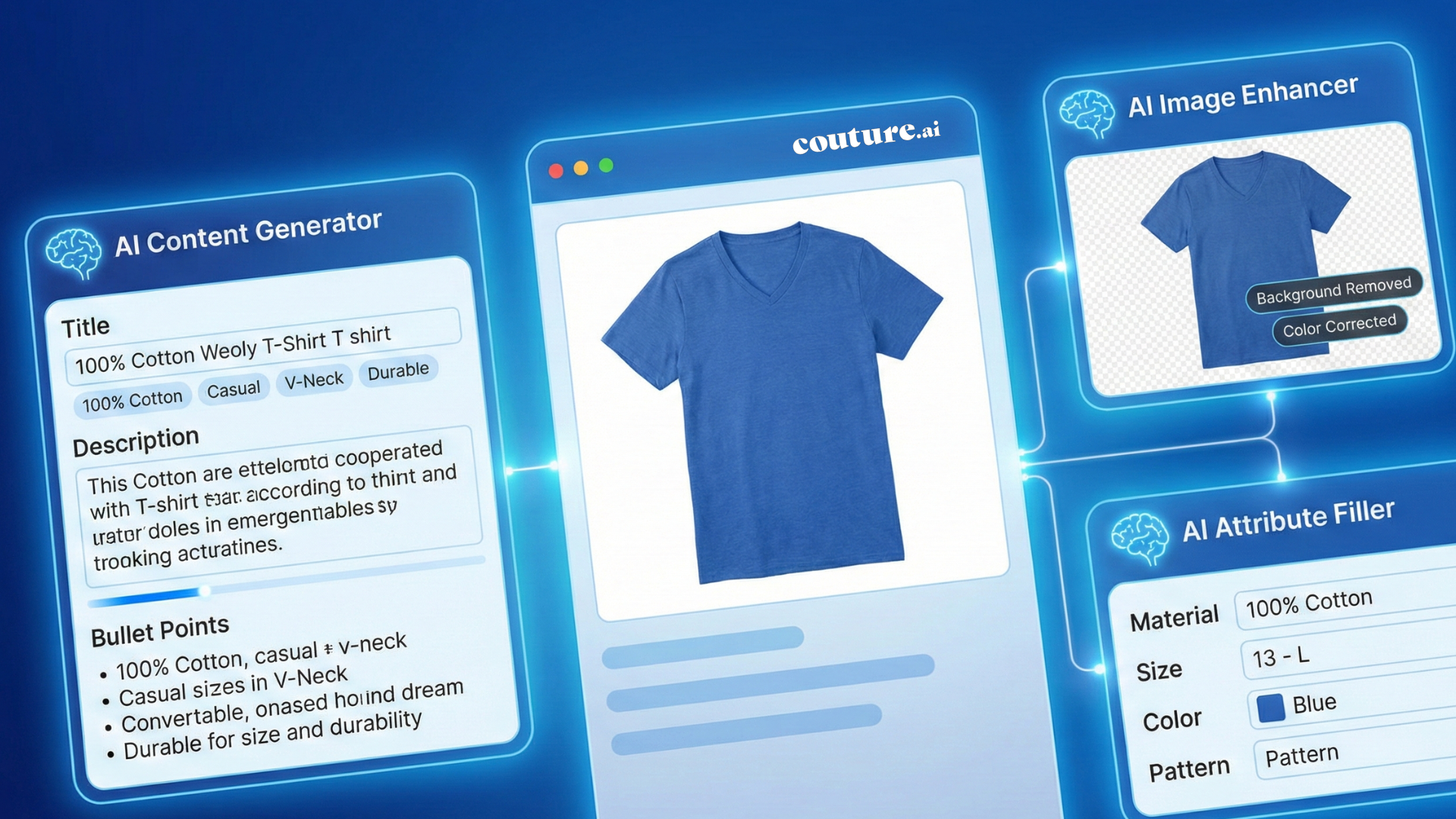
Descriptions, titles, bullet points, SEO metadata, and translations are created on the spot using brand tone and channel rules.
AI can now create packshots, lifestyle photos, remove backgrounds, and fix lighting. This removes waiting time for photoshoots or editing teams.
Computer vision detects color and pattern automatically. Multimodal AI infers material, fit, purpose, and other details.
Before publishing, AI verifies if everything matches brand rules, platform requirements, and legal guidelines.
Once the listing is ready, AI creates the right version for each channel and keeps everything synchronized. This turns listing into a continuous flow, not a painful batch process.
Our team can run a short diagnostic to identify gaps and automation opportunities.
Instead of one AI tool, retailers now use multiple agents working together, similar to team members with different roles.
These agents communicate and make decisions together. The result is faster, more accurate, and more consistent work. This is how Couture.ai structures its autonomous merchandising system.
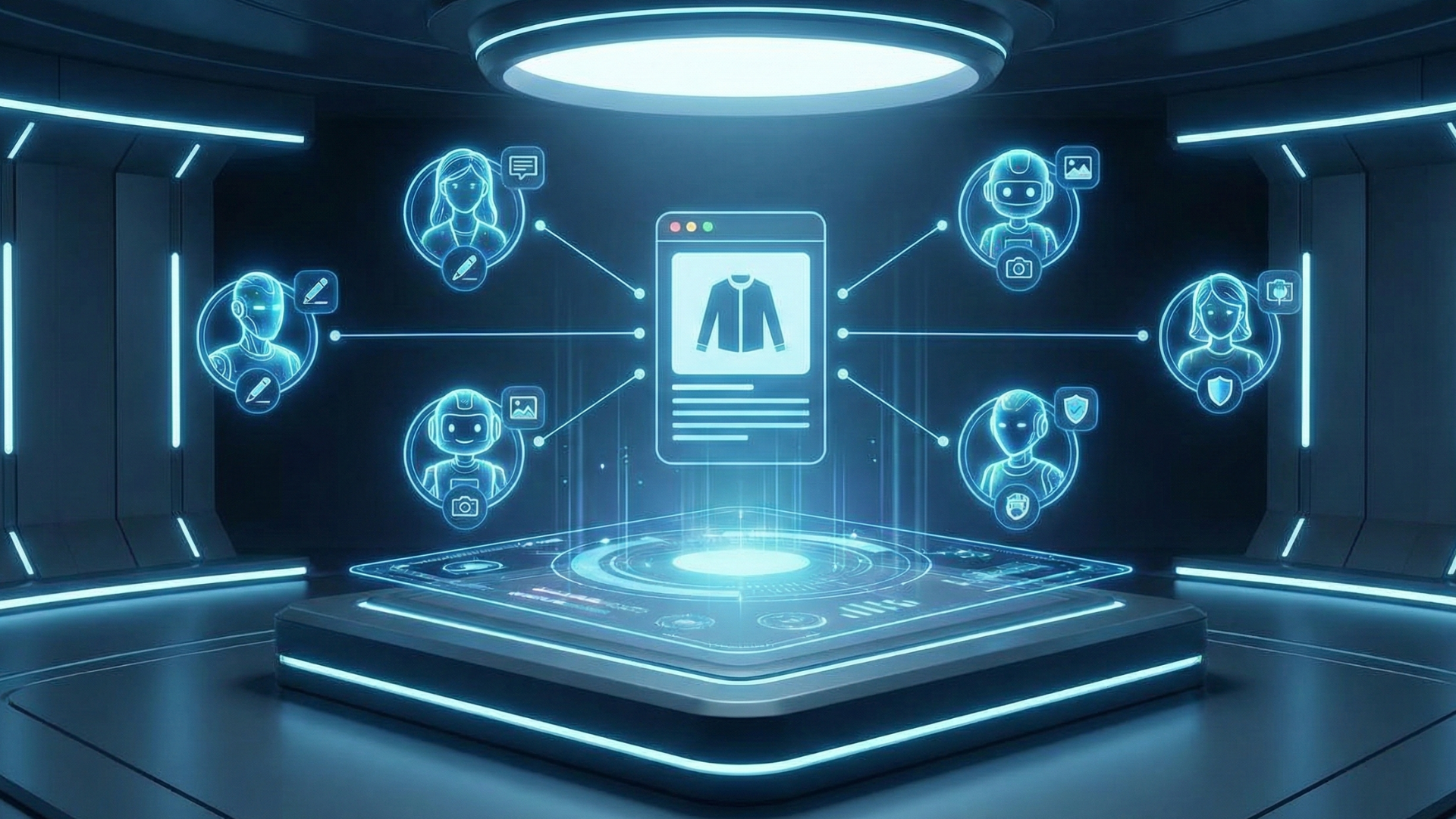
Couture.ai does not rely on isolated AI tools. It uses an MCP unified intelligence layer that coordinates all agents and ensures that every decision is consistent, explainable, and aligned with merchandising rules.
This is what makes Couture.ai different from any AI listing or PIM automation tool in the market.
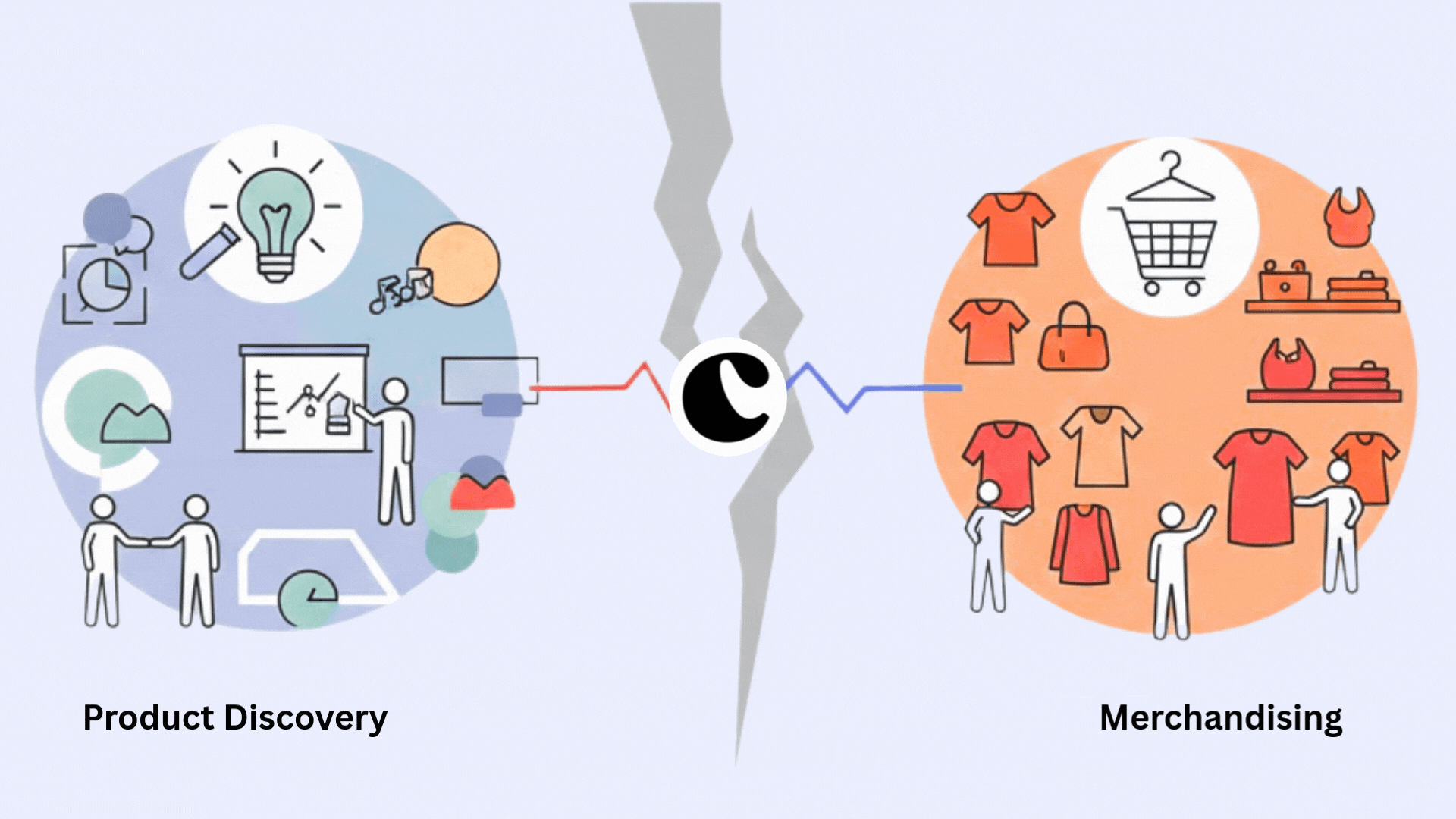
Couture.ai does not just automate listing. It connects listing to the entire merchandising system, from trend discovery to store execution. This is why backlogs disappear instead of coming back.
Couture.ai pulls data from PIM, ERP, vendors, product creation, sourcing, and trend intelligence.
Attributes, descriptions, metadata, and visuals are generated together, following brand and channel rules.
If something is missing or incorrect, agents correct it automatically using past learnings and rule sets.
Trend agents, pricing agents, forecasting agents, and listing agents work as one system, not in silos.
If a product gains traction or starts underperforming, its listing is updated automatically with better content or imagery.
These outcomes reflect the real operational impact of Couture.ai.
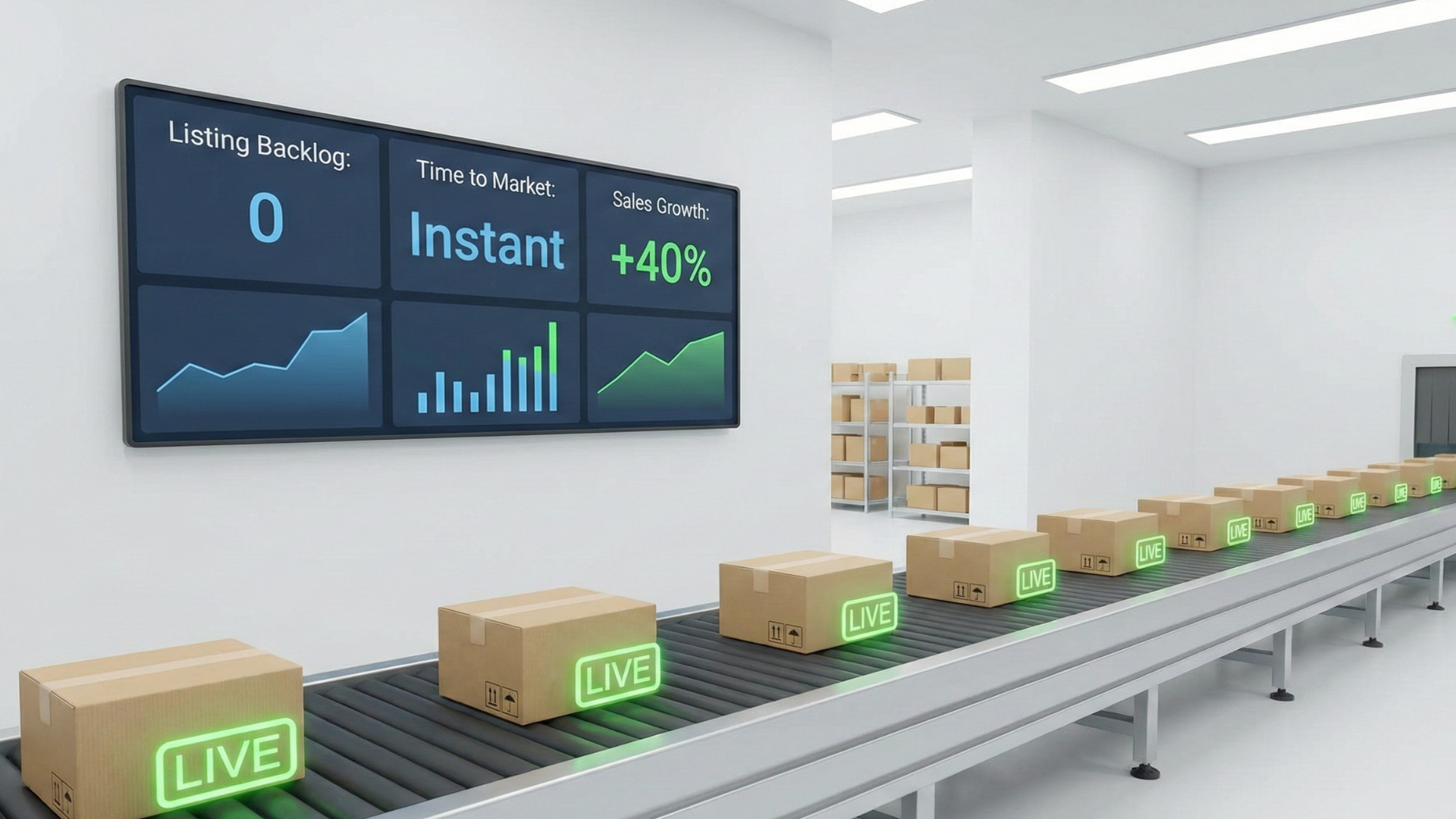
Listing backlogs is not the real problem. The real problem is a merchandising system that cannot keep up with modern retail speed.
AI solves backlogs not by adding more people, but by rebuilding the workflow. Couture.ai provides this rebuilt system. With autonomous merchandising, retailers get:
In a world where customers expect perfect information instantly, the question is no longer “Can we eliminate backlogs?” The real question is “How much growth are we losing by not solving them now? Book a walkthrough of Couture.ai's autonomous listing engine.
Subscribe to get the latest updates and trends in AI, automation, and intelligent solutions — directly in your inbox.
Stay Informed: Insights and Trends from Couture AI
Reduce operational complexity, improve planning accuracy, and deliver smarter retail execution with Couture AI.