Your inventory system just flagged 300 SKUs as overstocked. Your pricing tool says competitor X dropped prices by 15%. Your customer service platform shows 47 unresolved queries. And your AI merchandising dashboard needs manual updates.
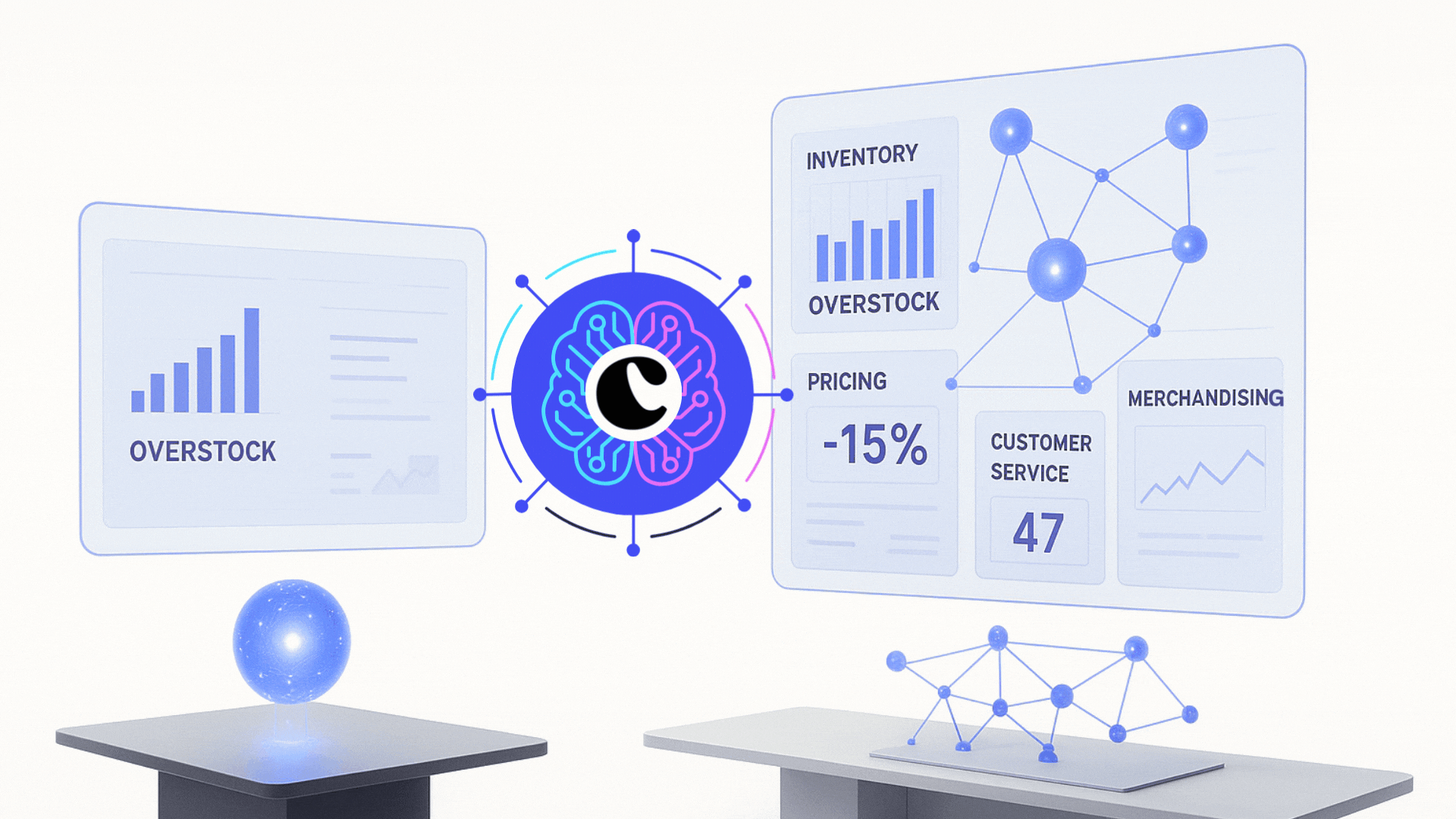
Agentic AI in Retail is supposed to fix this. But here's what nobody suggests you: not all AI agents are built the same.
You've got two paths. Single-agent systems that handle a single task at a time. Or multi-agent setups that work like a team.
One automates a task, and the other runs your operation.
Let's break it down further.
A single AI agent focuses on one job. It can be demand forecasting, repricing, or customer support.
It does that job well. But that's all it does.
How it looks in retail:
Each one is reliable. But they don't talk to each other.
Your pricing agent doesn't know your inventory is low. So it drops prices on items you can barely stock.
Your customer service agent can't check real-time inventory. So it promises products that aren't available.
You get AI automation, for sure. Though you're always the middleman connecting the dots.
Single agents are simple to set up with a lower cost upfront. Easy to test one use case at a time.
If you're just dipping your toes into retail agents, this is where you start.
Retail doesn't run in silos. Everything connects. Inventory affects pricing. Pricing affects demand. Demand affects fulfillment.
A single agent can't see the whole picture.
Multiple agents perform individual tasks, but they perfectly coordinate, share data, and make decisions together.
A real scenario:
Your demand forecasting agent predicts a demand increase in running shoes next week. It sends that data to your inventory agent. Your inventory agent orders more stock. Your pricing agent sees the trend and adjusts margins. Your AI merchandising agent updates your homepage banners.
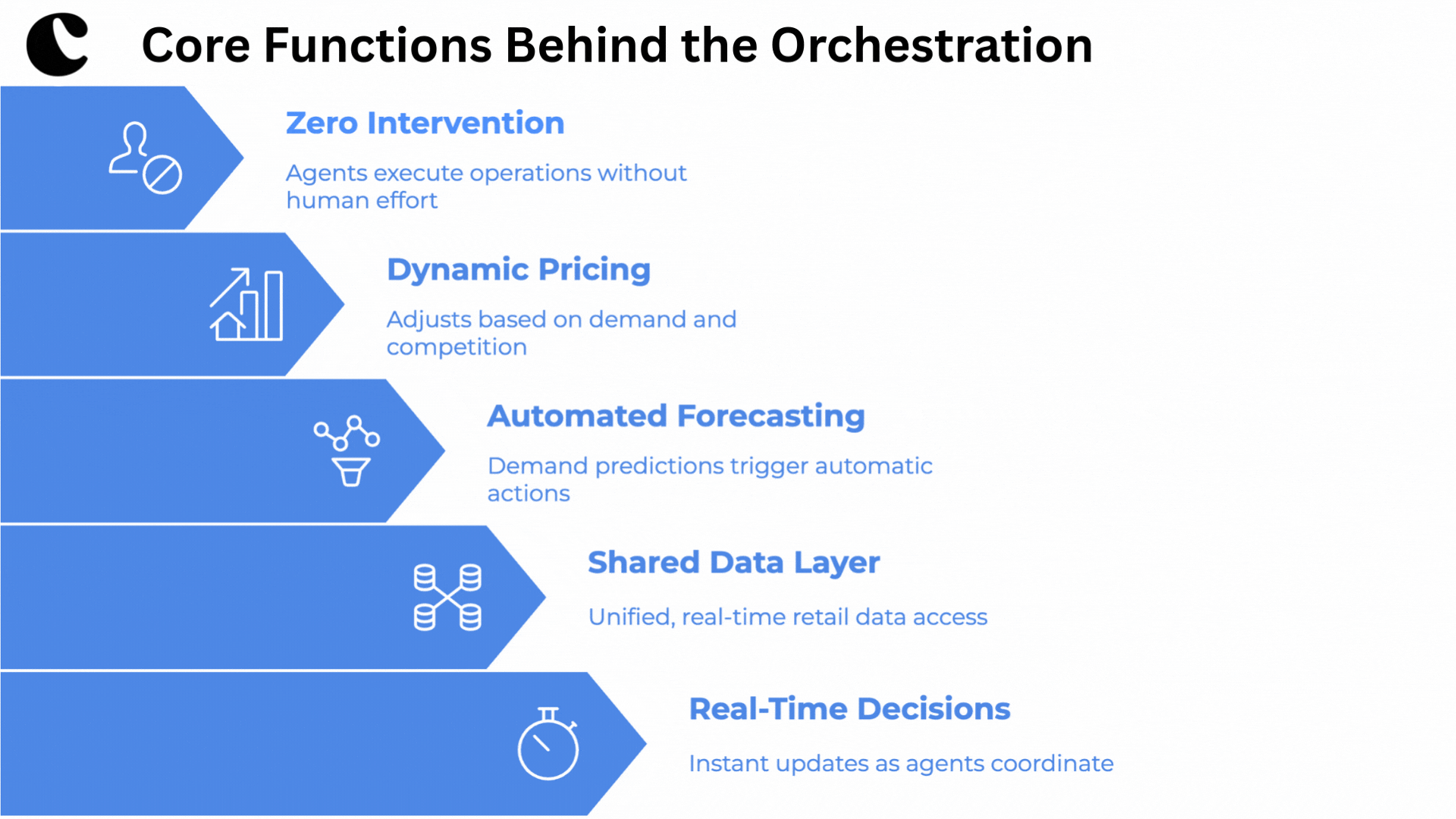
All of this happens automatically with no human intervention.
That's the power of multi-agent systems in the retail industry.
Multi-systems use something called "agent communication protocols.
They work like a relay race. Each agent does its part, then hands off to the next.
This agentic approach is precisely the next wave of commerce - McKinsey and other consultancies label “agentic commerce” and agent-based orchestration as a major trend for retailers and platforms
Couture.ai builds custom multi-agent systems that fit your exact operations. You're not buying off-the-shelf software. You're getting a system that thinks like your team, but executes 24/7. Book a personalized call from here now!
If you're running a mid-to-large retail operation, you need multi-agents. Period.
Here's when they become non-negotiable:
Selling on your website, Amazon, Walmart, Target, and physical stores?
Each channel has different pricing rules, inventory allocation, and customer expectations.
A multi-agent system coordinates all of it. Your pricing agent adjusts by channel. Your inventory agent allocates stock based on velocity. Your fulfillment agent routes orders to the nearest warehouse.
Fast fashion. Electronics. Seasonal goods.
If you're in categories where trends shift weekly (or daily), you can't afford delays.
Multi agents react instantly. Trend spotted - inventory adjusted - pricing optimized - marketing updated.
All within minutes.
Private label + resale + dropshipping + in-store?
Yeah, you need multi-agents.
Single agents can't juggle the coordination required for complex operations. Multi-agents handle the orchestration.
You've got dashboards. You've got analytics. You've got reports.
But your team spends hours interpreting data instead of acting on it.
Multi-agents don't just analyze. They act. They see patterns across inventory, sales, and customer behavior - then execute decisions automatically.
Let's get practical. What do you actually get from this?
Multi-agent optimization of pricing dynamically. Not once a week or a day, perhaps constantly!
They spot opportunities to increase margins without losing conversions. They prevent over-discounting on high-demand items.
Your agents talk to each other. Demand forecasting informs inventory. Inventory informs pricing. Pricing informs AI merchandising.
You stock what sells. You don't waste capital on what doesn't.
Large retailers like Target, Walmart, Home Depot, and others are increasingly using AI to prevent shortages, improve local assortment, and make billions of short-term predictions that improve availability and speed of response.
Your team stops babysitting systems. No more logging into five different platforms to make one decision.
Agents handle routine operations. Your team focuses on strategy.
Opening new channels? Expanding product lines? Entering new markets?
Multi-agent systems scale with you. You're not rebuilding your tech stack every time you grow.
Single agents can automate parts of your workflow. Multi-agents rebuild how you operate.
Retail isn't easy anymore. Your customers shop across channels. Your competitors move fast. Your margins are tight. You need systems that keep up.
Agentic AI in Retail isn't some future trend. It's happening now. You can piece together single agents and hope they connect. Or you can build a system where every part sees the full picture and moves together.
Couture.ai builds multi-agent systems designed around how your retail brand operates - not generic platforms that force you into their workflows. Custom intelligence. Real coordination. Built for your specific needs.
Subscribe to get the latest updates and trends in AI, automation, and intelligent solutions — directly in your inbox.
Stay Informed: Insights and Trends from Couture AI
No blogs available at the moment.
Reduce operational complexity, improve planning accuracy, and deliver smarter retail execution with Couture AI.