In 2026, store planning has quietly become one of the highest-leverage problems in retail.
Not because retailers suddenly discovered planograms.
In that environment, “good enough” store planning is no longer good enough.
This is why SKU-level decisions – which product, in which store, on which shelf, at what depth, under what price and promo – are becoming the control system for margin, growth, and customer experience.
This blog breaks down the global landscape and then shares how we at Couture.ai think about smarter store planning in an autonomous, agentic future.
Most retailers still treat store planning as a seasonal exercise:
In 2026, “smarter” store planning means four disciplines working as one continuous, data-driven loop at the SKU level:
Margins in many retail categories are measured in low single digits. A few points of:
…are the difference between outperforming peers and missing the year.
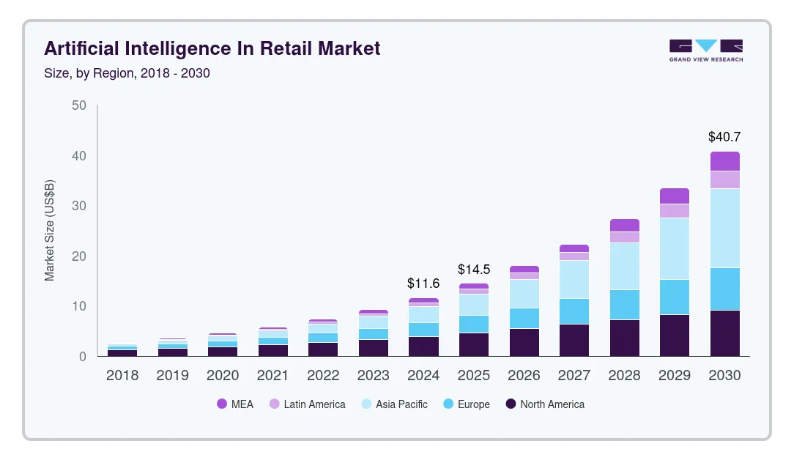
AI-driven assortment and space optimization is already shown to lift gross margins by several percentage points by reducing overstock, avoiding stockouts, and aligning product mix with real demand.
Those gains do not come from slogans. They come from thousands of small SKU-level corrections every week.
In parallel, shoppers have become far more precise:
If AI agents are telling your customers what to buy, your store planning system needs to decide where those SKUs will actually exist and how they will be surfaced – reliably, every day.
Most retailers have a sophisticated strategy deck.
But the shopper (or their AI assistant) only experiences three things:
All three are SKU-level outcomes – and all three are controlled by store planning decisions.
If you’d like a deeper breakdown of how leading retailers are re-architecting SKU-level store planning models, we’re happy to share recent industry playbooks and benchmarks. Book a Call with our experts!

Leading retailers and technology providers are converging on a similar architecture for smarter store planning. At a high level, there are four layers.
Shift from static averages to real-time micro-forecasting:
AI now determines:
The major change: speed and granularity. Systems can simulate thousands of assortment / space combinations with SKU-level trade-offs long before a category review.
The most important, emerging layer is agentic AI – autonomous or semi-autonomous software agents orchestrating decisions across planning and execution.
In a mature agentic store-planning system, you would see:
Humans do not disappear. They move up the stack – focusing on strategy, guardrails, and exceptions. The agents handle the long tail of everyday SKU-level decisions.
Most retailers fall somewhere on this path:
| Level | Operating model |
|---|---|
| 1 | Manual, seasonal, Excel-driven planning |
| 2 | Integrated planning systems – data-driven but batch-based |
| 3 | Smart, feedback-driven stores – execution data closes the loop |
| 4 | Autonomous, agentic store planning – continuous SKU-level decisioning |
Level 4 is where the industry is heading – and where Couture.ai is building.
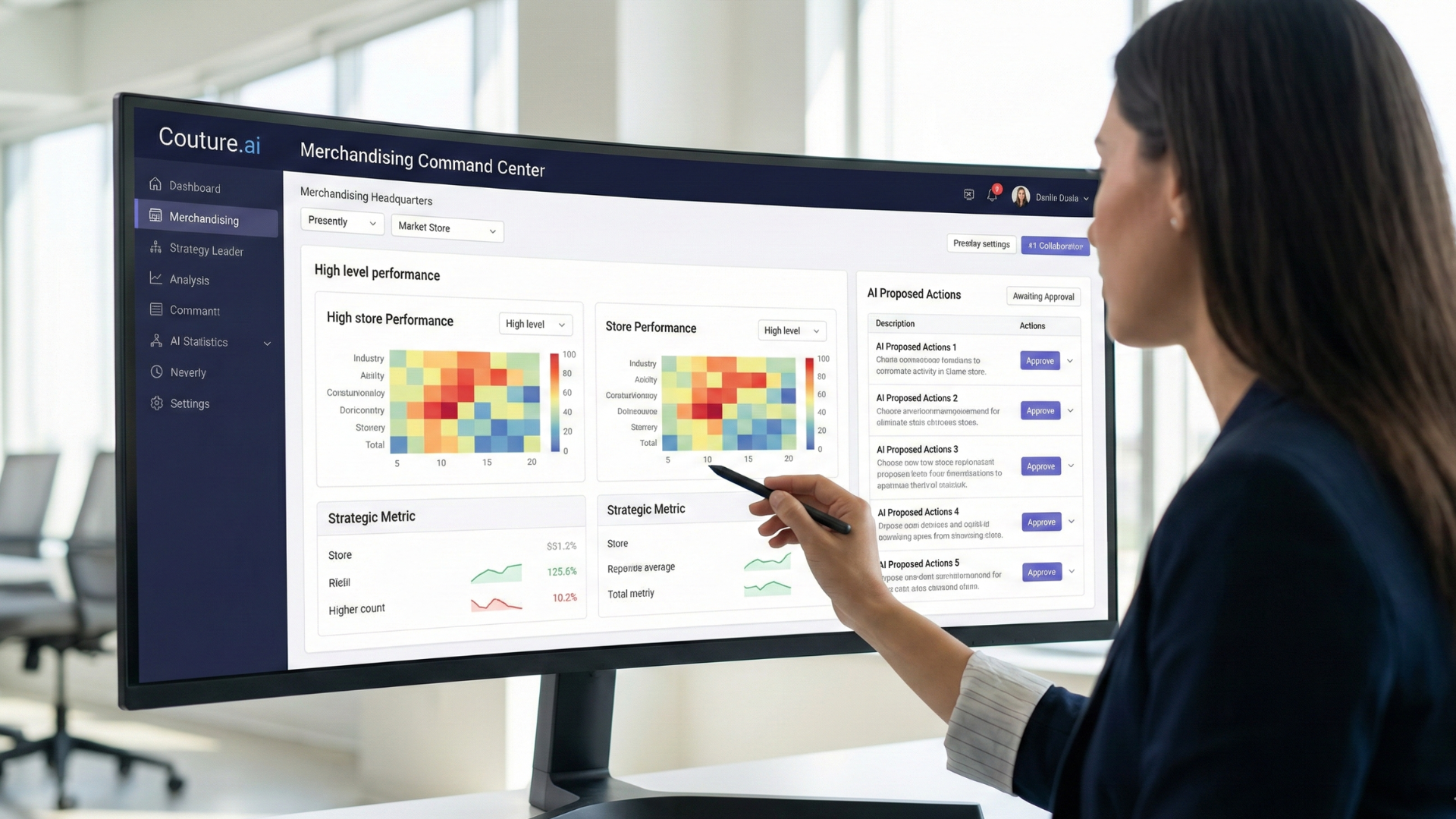
At Couture.ai, we frame all of this under a simple idea:
Agentic AI that manages merchandising from trend to store.
Store planning is not a standalone project. It is a phase in a closed loop that runs:
Trend → Sourcing → Product Creation → Listing → Store Planning → Forecasting → Pricing → Feedback
In that loop, smarter store planning is where the intelligence layer converts everything upstream into physical reality.
A few principles guide how we think about it:
It is not enough to know “this category should grow”.
An agentic merchandising system should:
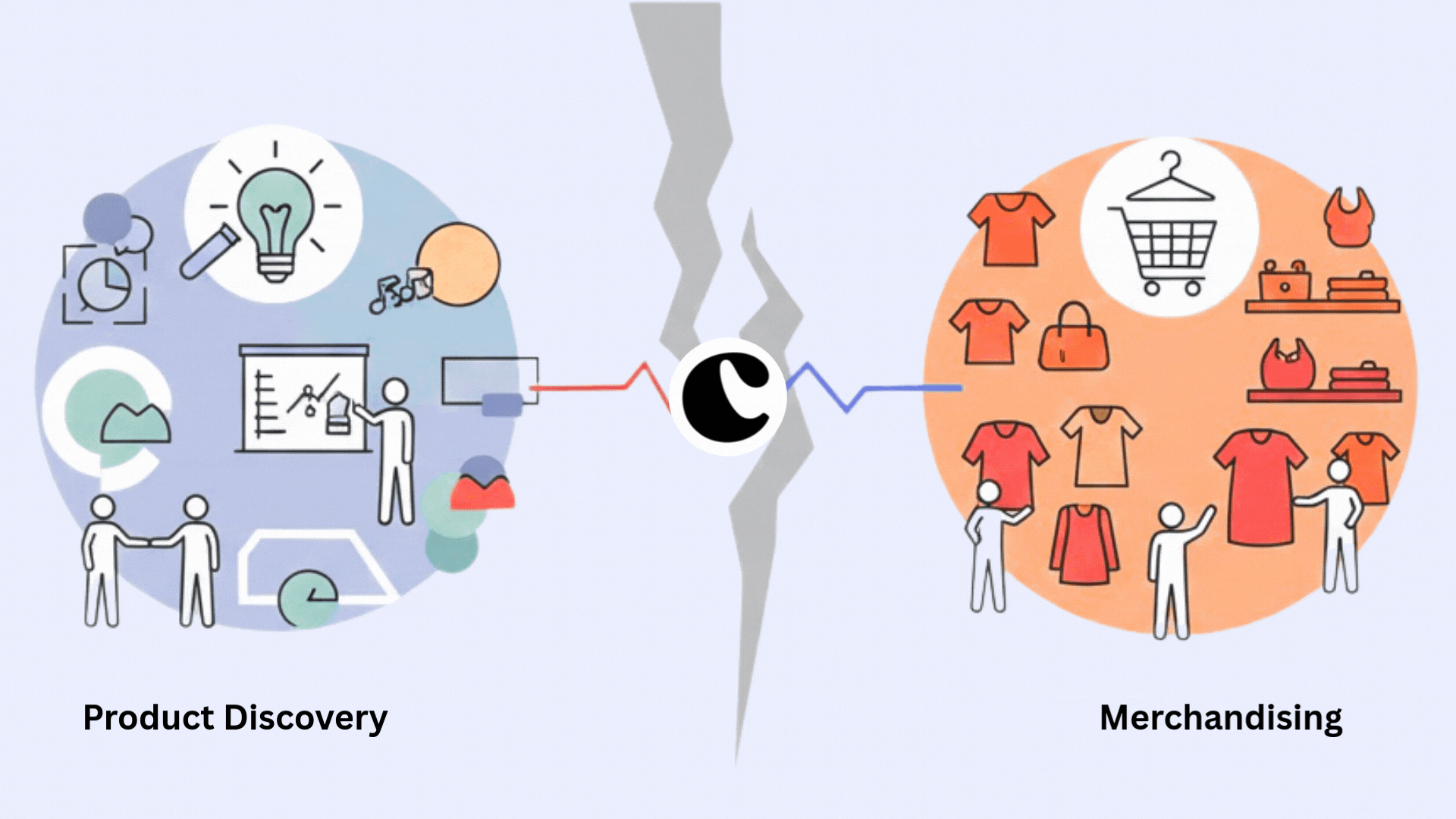
Most retailers run assortment, space, allocation, and pricing in separate tools.
Couture.ai architecture brings these into an MCP – a unified intelligence layer that:
For store planning, that means:
Executives and merchandising leaders are rightly cautious about full automation.
The right design for smarter store planning in 2026 is:
The result is not “AI takes over store planning” but:
AI runs the heavy, repetitive SKU-level work so merchandisers can focus on big bets, vendor strategy, and creative category vision.
If you’re exploring agentic AI for merchandising or store planning, our team can share real category-level results and architectural learnings from enterprise deployments. Book a Call with our experts!
Smarter store planning in 2026 is not a new module to buy. It is a shift in how retailers think about control.
Instead of trying to manually steer millions of SKU-level decisions with limited visibility, leading retailers are building agentic systems that:
In that world, SKU-level decisions are not operational noise. They are where strategy becomes reality – and where the next decade of retail winners will quietly be decided.
Subscribe to get the latest updates and trends in AI, automation, and intelligent solutions — directly in your inbox.
Stay Informed: Insights and Trends from Couture AI
Reduce operational complexity, improve planning accuracy, and deliver smarter retail execution with Couture AI.