Let us start with a simple observation.
Consumers do not search for fashion the way retailers organize it.
They do not think in SKUs, attributes, or filters. Human language is emotional, contextual, and shaped by culture. Shoppers search for phrases like “quiet luxury,” “coastal grandmother,” or “streetwear but minimal.”
These phrases are not categories. They are signals.
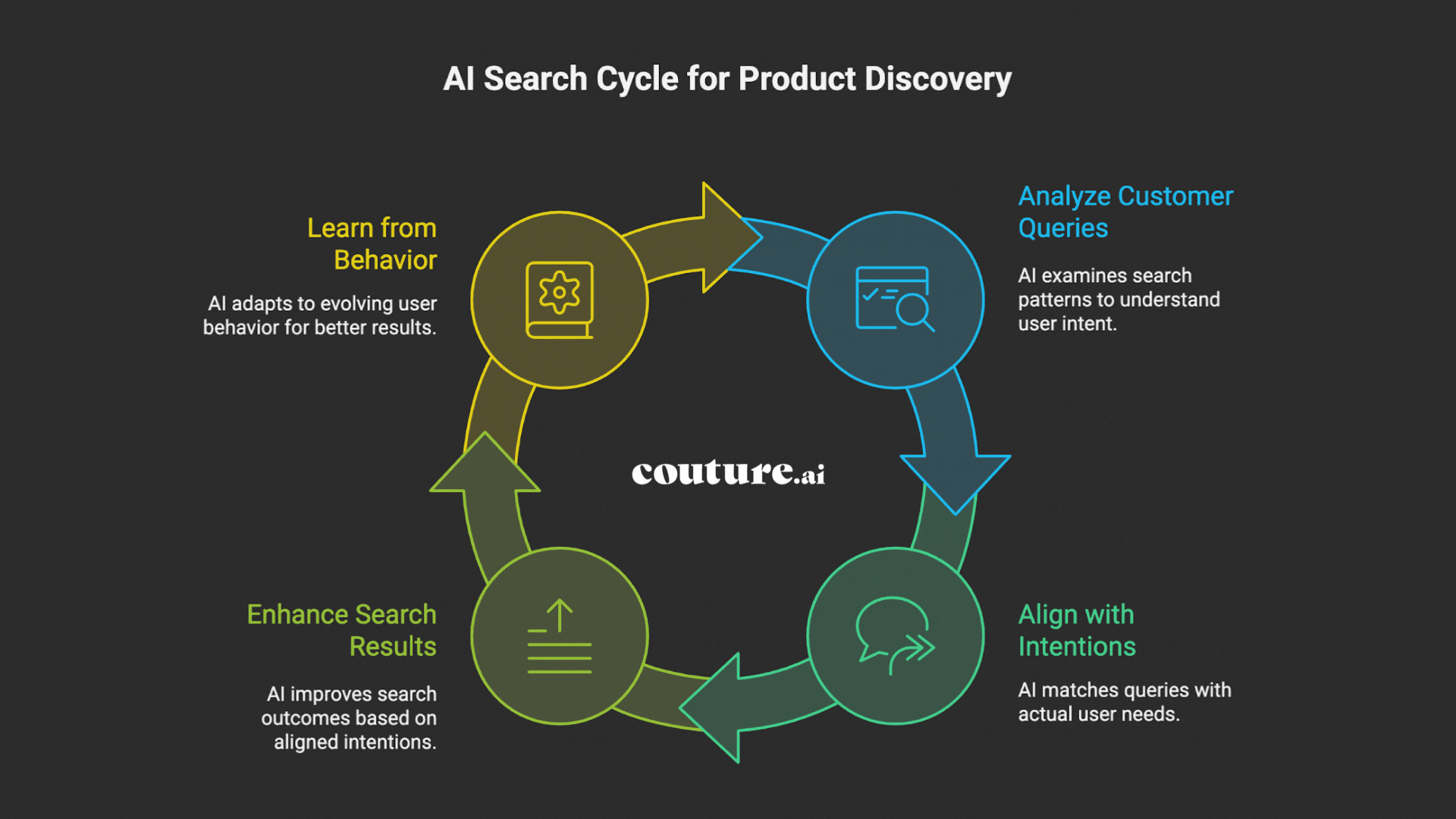
Modern discovery systems understand this quite well. They can interpret vague language, recognize aesthetic intent, and learn from shopper behavior over time.
And yet, fashion discovery still fails more often than it should.
Not because search technology is weak, but because merchandising systems cannot respond to those signals fast enough.
Fashion demand moves continuously.
Signals appear every day from social content, search behavior, influencers, and early commerce data. Trends form gradually and then accelerate quickly.
This creates a structural gap.
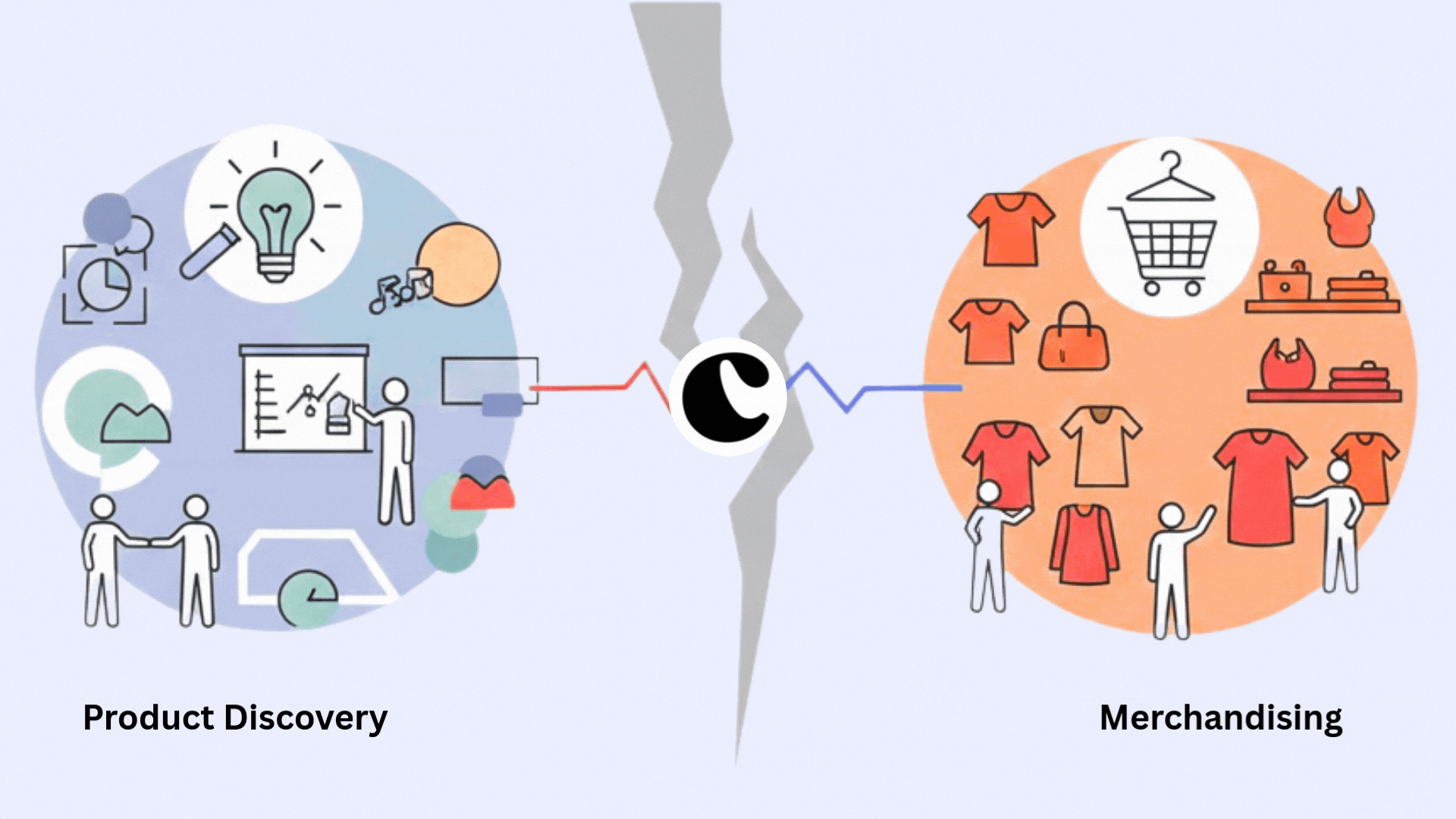
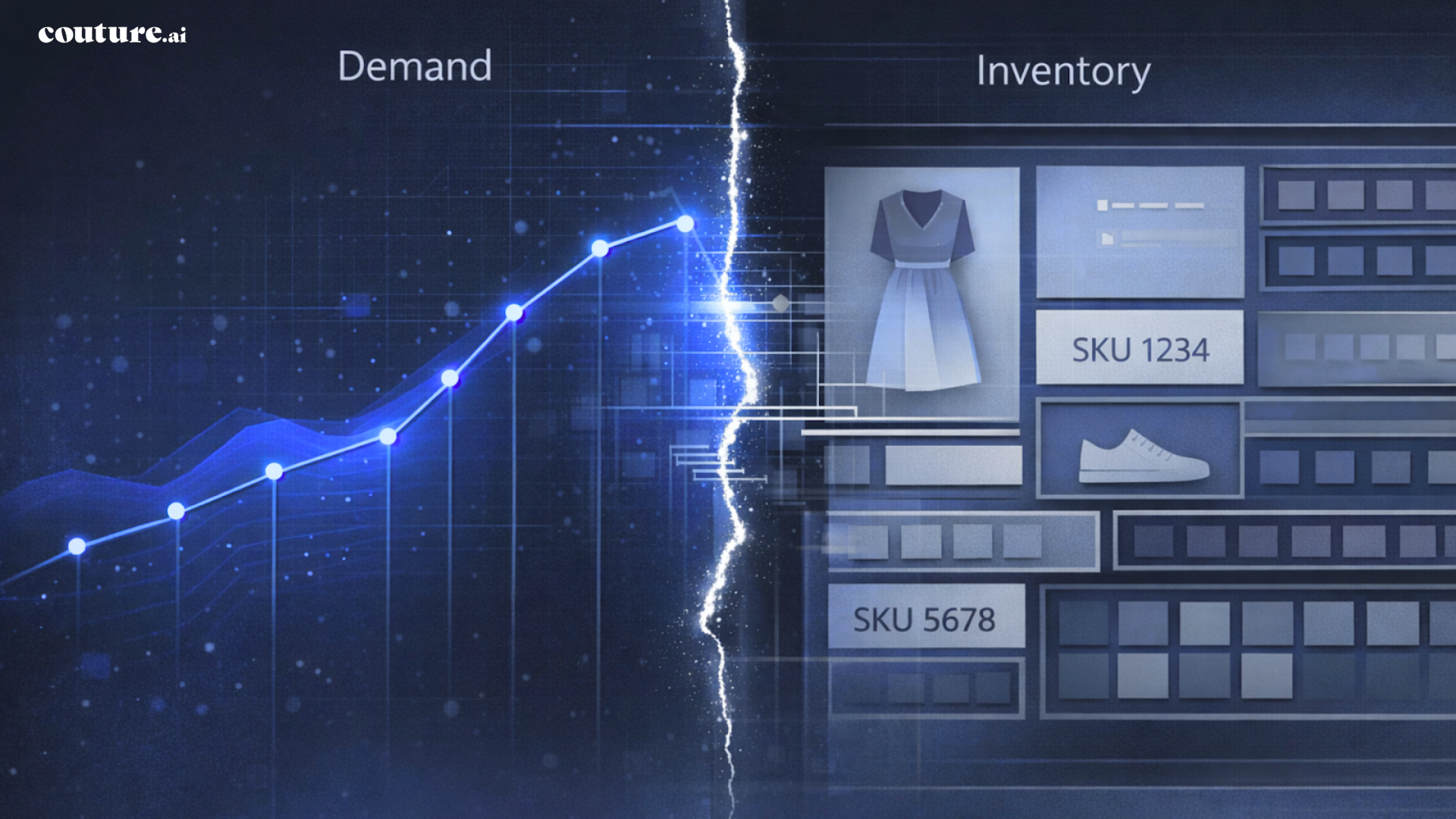
Discovery understands what shoppers want. Merchandising decides what actually exists. When these two systems move at different speeds, discovery has nothing meaningful to show.
If discovery performance feels inconsistent, the reason is often upstream.
This is usually a good moment to step back and ask where merchandising decisions are actually being made today.
Think of discovery as a translator. It translates customer language into product relevance.
Merchandising intelligence must do a similar translation, but earlier in the process.
At Couture.ai, merchandising intelligence is designed to continuously read demand signals and turn them into decisions.
Instead of reacting after sales data confirms a trend, the system learns from early signals and updates decisions continuously. This allows merchandising to operate closer to the pace of demand.
Understanding demand is only the first step.
The real challenge in fashion is acting before the opportunity passes.
Traditional merchandising workflows rely heavily on manual coordination. Trend reports are reviewed, decisions are debated, vendors are contacted, samples are approved, listings are created, and inventory is allocated. Each step introduces delay.
This delay is not caused by people. It is caused by process design.
Couture.ai reduces this friction using agentic workflows.
Humans define strategy and guardrails. Execution happens faster and with fewer handoffs. This is what makes a Trend → Store loop possible in days instead of months.
When merchandising intelligence is in place, discovery begins to behave differently.
Search results feel coherent because assortments reflect real demand. Recommendations convert because inventory depth and availability were planned intentionally. Personalization feels relevant because it is grounded in what actually exists.
Nothing changes in the search interface.
What changes is the quality and timing of upstream decisions.
Discovery stops compensating for delays and starts reflecting coordinated merchandising execution.
Many teams try to fix discovery by improving relevance, UI, or recommendations. These efforts help shoppers navigate the catalog more easily.
They do not change the catalog.
Search can rank what exists. Personalization can redistribute demand. Recommendations can increase basket size. None of these decide what products should be created, how much depth to build, where inventory should live, or when pricing should adapt.
When merchandising decisions lag behind demand, discovery improvements eventually stop delivering results.
Discovery is not the decision layer in retail. It is the presentation layer.
When these decisions are made late or without real-time signals, discovery has little room to perform.
The issue is not that discovery does not understand fashion language. The issue is that merchandising systems cannot act on that understanding fast enough.
If this feels familiar, the constraint is usually architectural, not technological. → A short discussion often makes this clear very quickly.
Merchandising intelligence is not reporting and it is not static forecasting.
At Couture.ai, this intelligence is built as a unified system. Vision, language understanding, forecasting, optimization, and agentic execution work together across the merchandising lifecycle. The system does not just produce insights. It coordinates decisions and execution.
Without merchandising intelligence, risk grows quietly over time.
Trends are missed. Markdowns increase. Inventory becomes imbalanced. Discovery performance declines despite continued investment. Teams lose confidence in AI recommendations because outcomes remain inconsistent.
Organizations that address merchandising intelligence earlier move faster, reduce excess inventory sooner, improve sell-through consistency, and keep discovery aligned with availability.
The gap widens quarter by quarter.
If discovery performance is under review, it helps to look upstream.
Fashion discovery does not fail because customers are unclear.
Customers are precise in their own language. They express intent through culture, context, and aesthetics. Discovery systems understand this today. Merchandising systems must operate at the same speed. Until merchandising intelligence becomes continuous and executable, discovery will continue to expose the gap between demand and supply. When merchandising leads and discovery reflects those decisions, fashion discovery works the way customers expect.
Customers are precise in their own language. They express intent through culture, context, and aesthetics. Discovery systems understand this today.
Merchandising systems must operate at the same speed. Until merchandising intelligence becomes continuous and executable, discovery will continue to expose the gap between demand and supply. When merchandising leads and discovery reflects those decisions, fashion discovery works the way customers expect.
Subscribe to get the latest updates and trends in AI, automation, and intelligent solutions — directly in your inbox.
Stay Informed: Insights and Trends from Couture AI
Reduce operational complexity, improve planning accuracy, and deliver smarter retail execution with Couture AI.