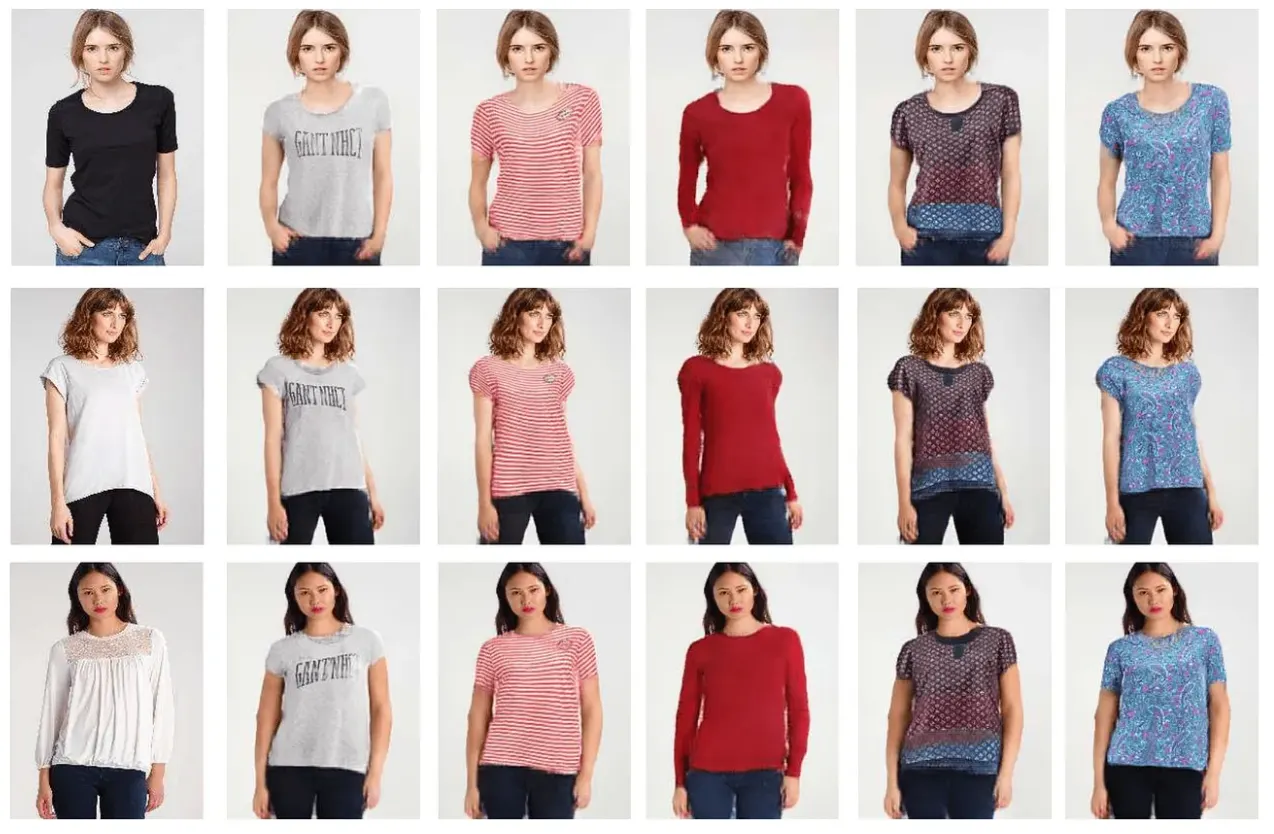
For a long time, traditional photoshoots made sense. That is exactly why they’re now so dangerous.
In that world, booking studios, shipping samples, coordinating agencies, and waiting weeks for final imagery was normal. Photography fit neatly inside the marketing calendar.
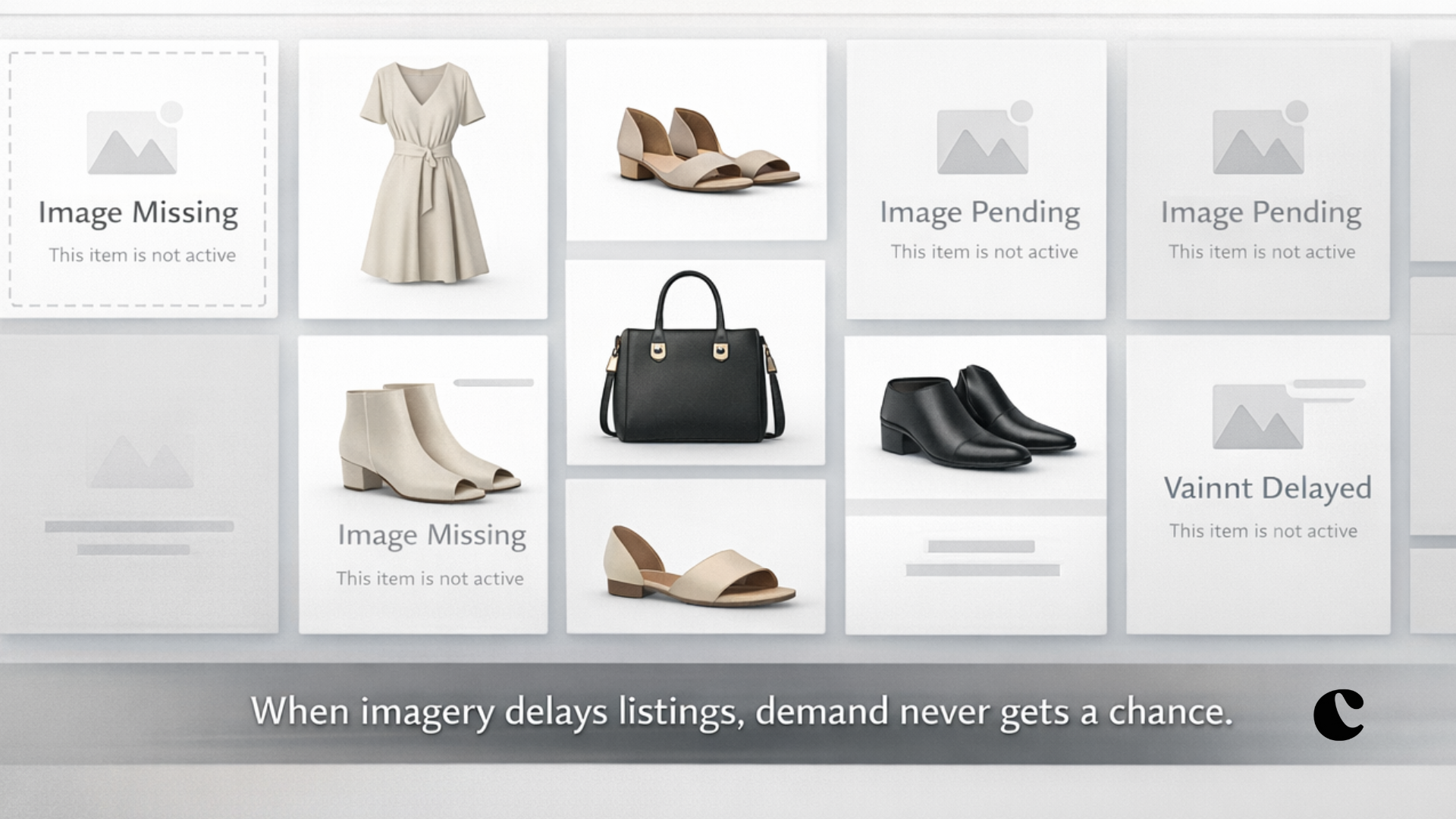
That world no longer exists.
What hasn’t changed is the workflow. And that mismatch is now quietly capping revenue across retail.
Traditional photoshoots were designed for stability.
Photography functioned as an event. You planned it, executed it, and moved on.
The problem is not that photoshoots were poorly designed. The problem is that they were designed for a retail system that no longer exists.
Modern retail now operates under four structural shifts:
These are not incremental changes. They fundamentally break the assumptions photoshoots rely on
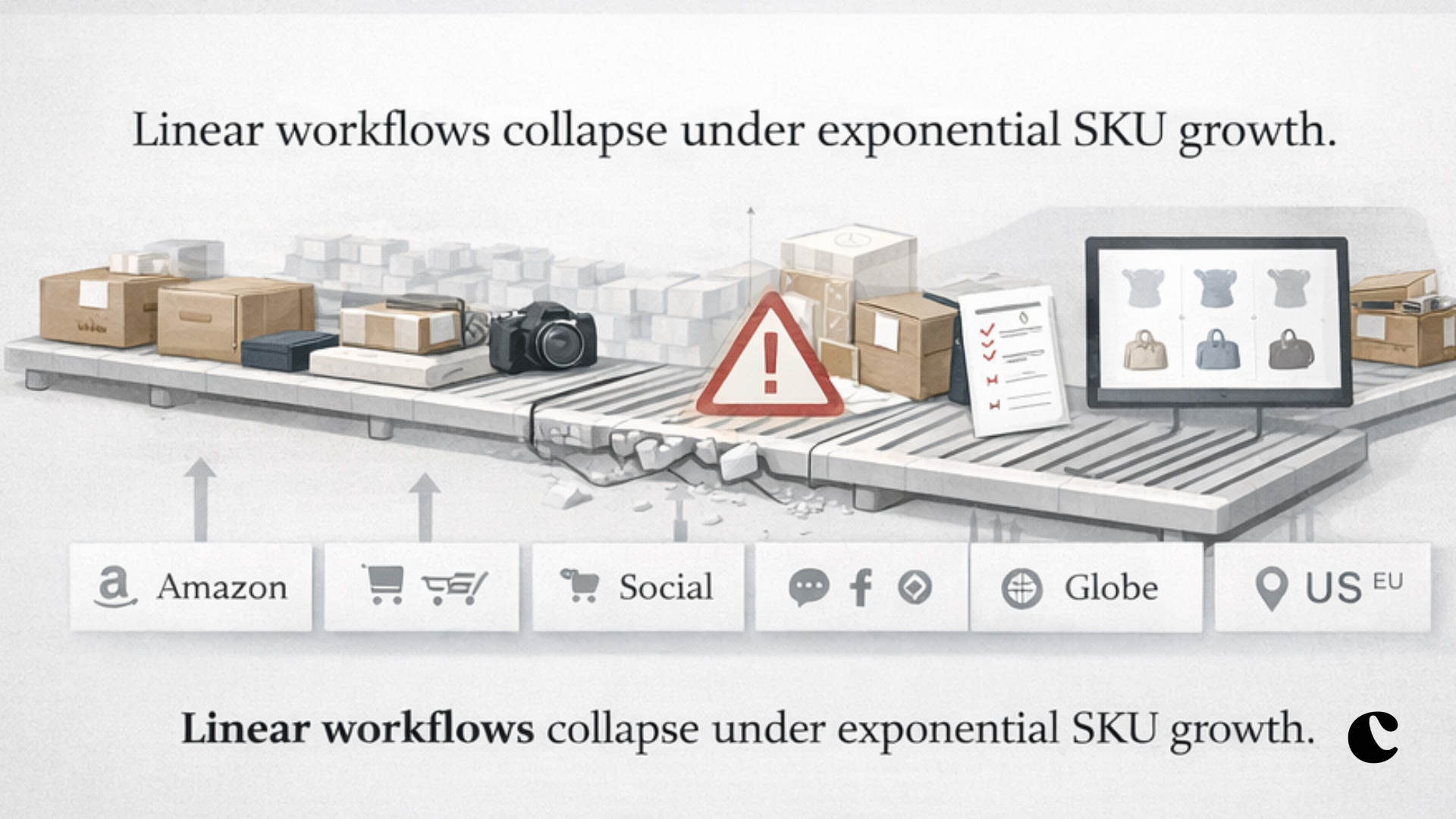
Traditional photoshoots scale linearly. Retail complexity scales exponentially.
As variants multiply, this pipeline collapses.
Industry research shows retailers lose up to 23%of potential revenue due to bad product data, with missing or delayed imagery as a primary contributor. These losses do not come from weak demand. They come from products that physically exist but remain digitally invisible.
Operational audits further show that up to 22% of catalog variants are unsellable at any given time simply because visual assets are missing or incomplete.
If this sounds familiar, here’s how some retail teams are rethinking visual production without relying on traditional photoshoots.
One reason this problem persists is that its impact is poorly instrumented.
Photography invoices look manageable. They tell only part of the story.
Roughly 40 percent of the true cost appears in vendor bills. The remaining 60 percent lives in hidden operational overhead:
When fully accounted for, traditional photoshoots often cost $350–$540 per SKU.
But the biggest loss isn’t expense.
Photography has become one of the largest untracked revenue gates in retail – precisely because most leadership teams don’t report it as one.
Most retailers feel this pain. Many attempt to fix it.
Common responses include:
These approaches optimize the event.
They do not change the system.
As long as visual production remains scheduled, physical, and linear, the bottleneck remains.
Before talking about AI, the replacement model must be clear.
Modern retail requires visual production that is:
This is the critical shift:
Photoshoots are event-based.
Modern retail cannot survive on events.
Once visuals are treated as infrastructure instead of events, the problem reframes itself.
At that point, AI is no longer optional.
It becomes inevitable.
Couture.ai was built specifically to remove this bottleneck, not to optimize around it.
The company started from a simple observation: as long as visual production depends on physical shoots, retail will never scale at the speed merchandising demands. Solving this required rethinking visuals as a system, not improving photography as a service.
This is why AI Photoshoot exists.
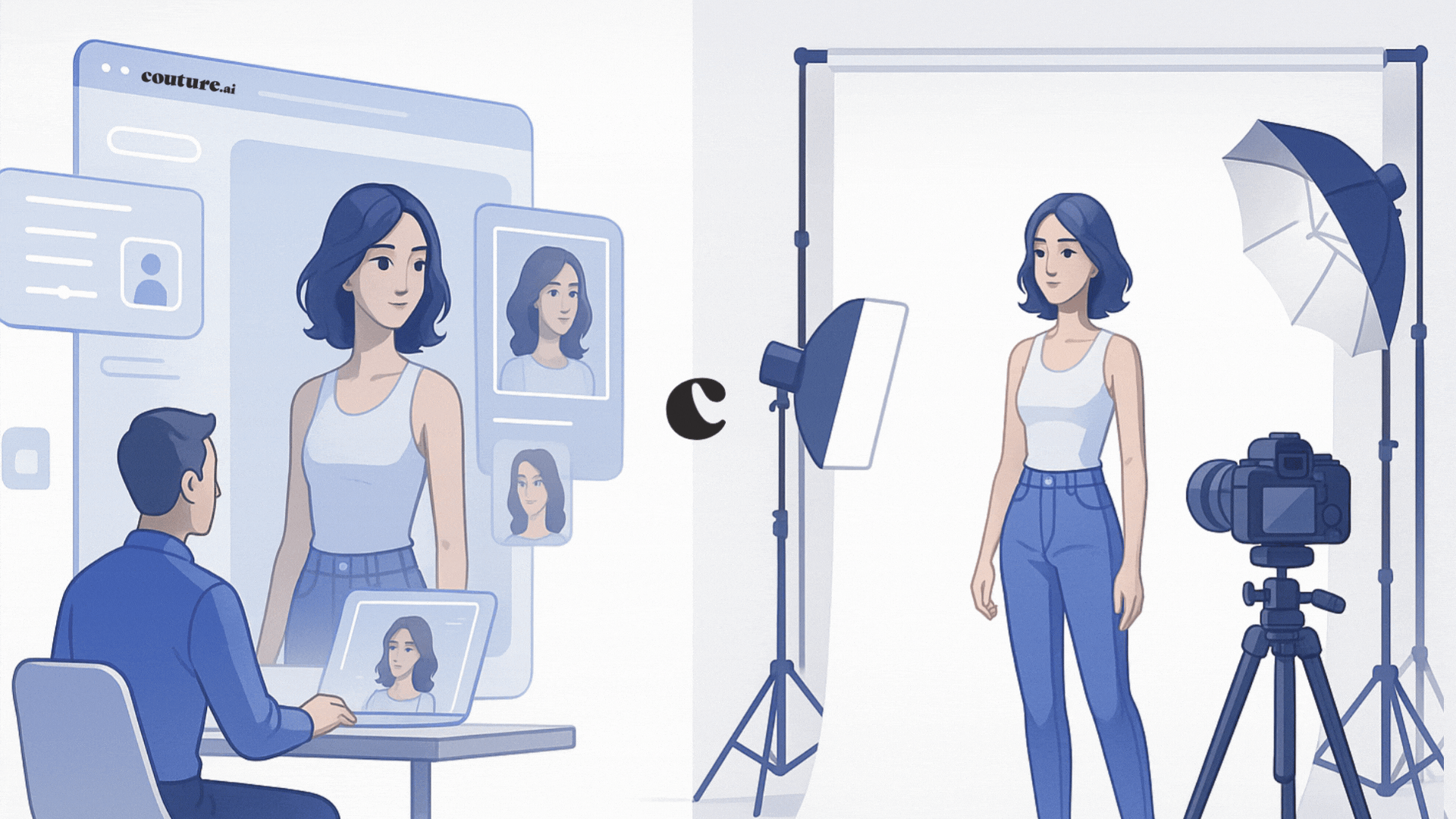
| Traditional photoshoots | AI Photoshoot |
|---|---|
| Traditional photoshoots are event-based. | AI Photoshoot is continuous. |
| Traditional visuals are assets created once and reused imperfectly. | AI Photoshoot generates visuals dynamically – per SKU, per channel, per market. |
| Traditional workflows depend on logistics and coordination. | AI Photoshoot removes logistics from the equation entirely. |
AI Photoshoot functions as a reusable visual production layer inside the merchandising lifecycle, generating consistent, brand-safe visuals across listings, marketplaces, campaigns, and regions without reshoots or studio dependency.
If you’re wondering how this works without studios, samples, or reshoots, we’ve documented how AI Photoshoot fits into the merchandising workflow step by step.
When visual production stops behaving like an event, several shifts happen immediately:
Retail competition is no longer won on product alone.
It is won on execution speed, consistency at scale, and the ability to adapt faster than demand shifts.
Traditional photoshoots were built for a slower retail era.
In today’s environment, they quietly restrict growth, delay revenue, and erode margins – not because teams are failing, but because the system itself no longer fits.
Treating visual production as infrastructure is no longer a competitive advantage.
The only real risk now is being the last organization still treating it as a creative task.
The future of retail visuals will not be shot.
They will be generated, adapted, and orchestrated as part of the retail system itself.
Subscribe to get the latest updates and trends in AI, automation, and intelligent solutions — directly in your inbox.
Stay Informed: Insights and Trends from Couture AI
Reduce operational complexity, improve planning accuracy, and deliver smarter retail execution with Couture AI.