Dec 23, 2025 | Couture AI Team
Autonomous merchandising is the next evolution of retail operations – a merchandising system that continuously senses, decides, and executes across the entire product lifecycle without manual intervention.
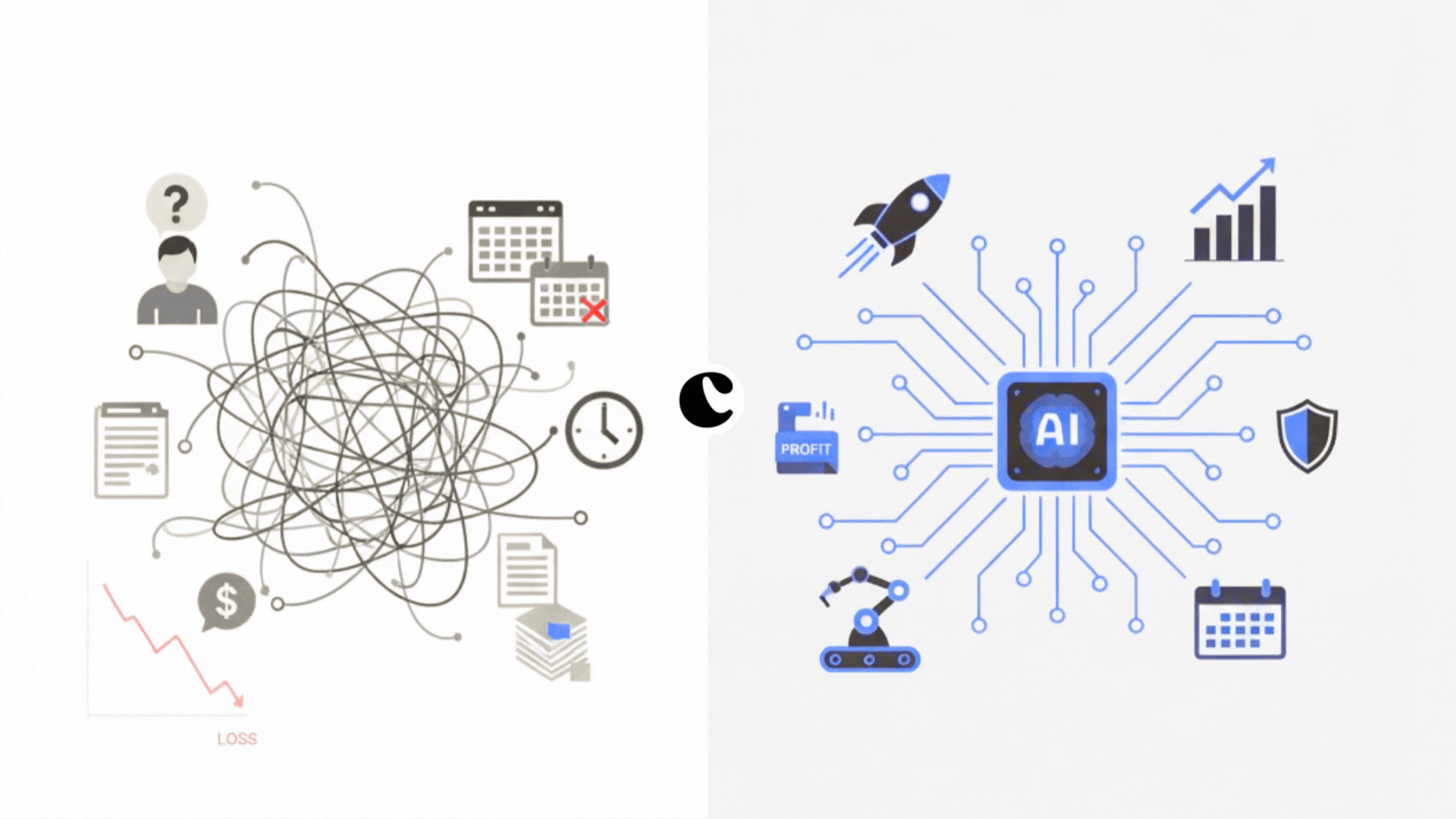
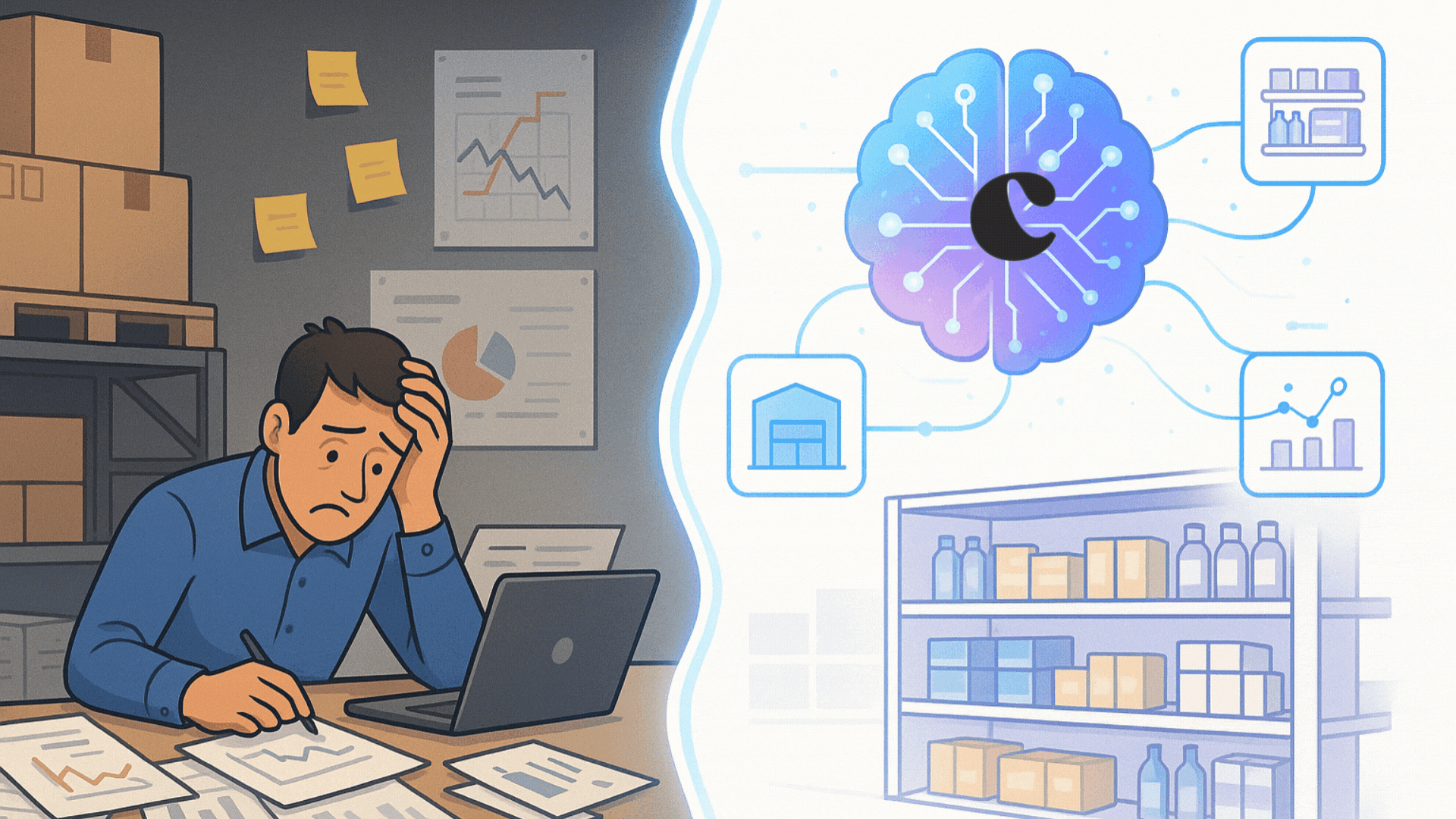
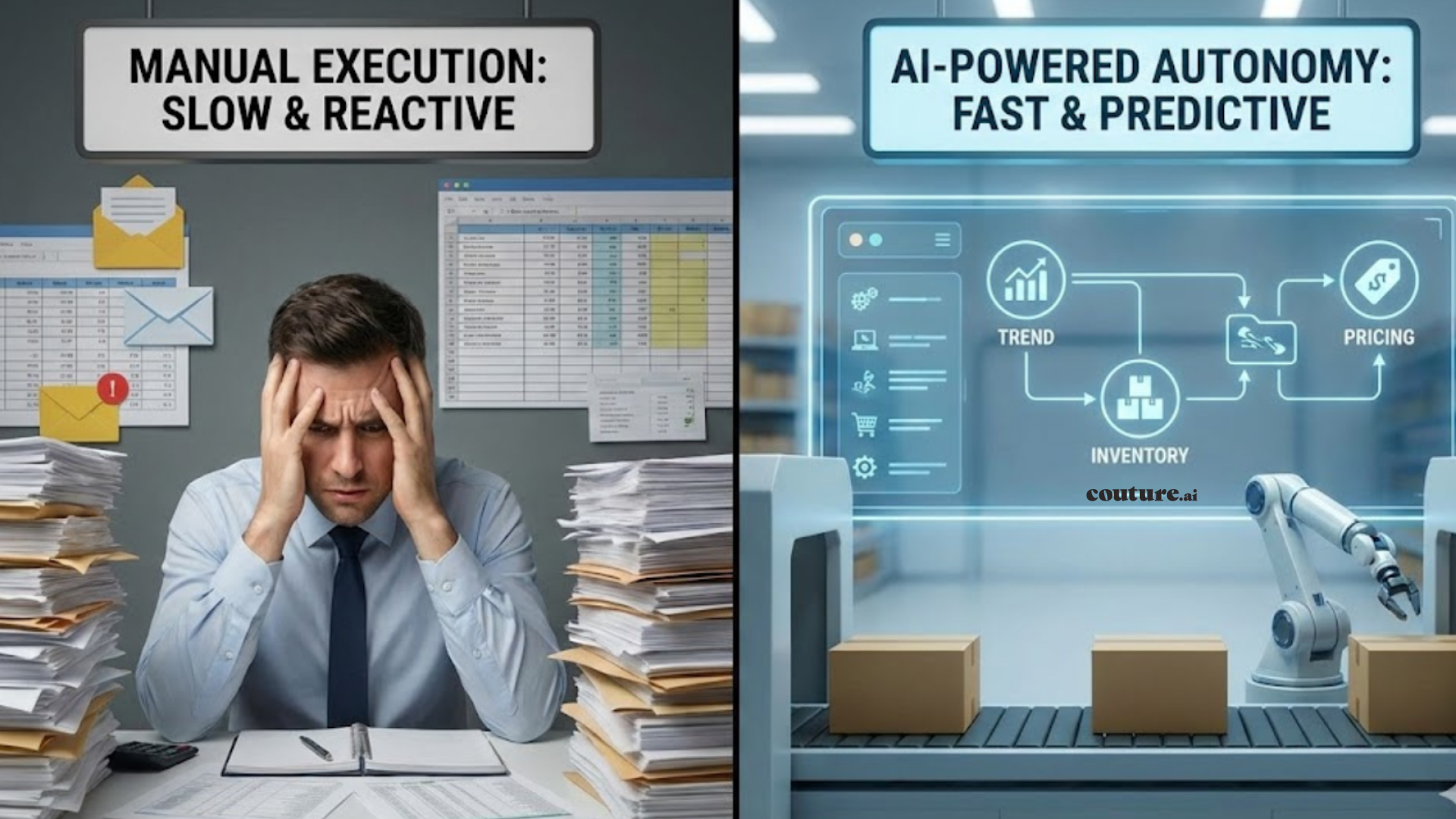
It replaces episodic decision cycles with continuous decision loops, enabling retail teams to respond to real-time demand signals rather than fixed seasonal calendars. Unlike automation, which speeds up tasks, autonomy closes the loop and ensures action happens without human follow-through.
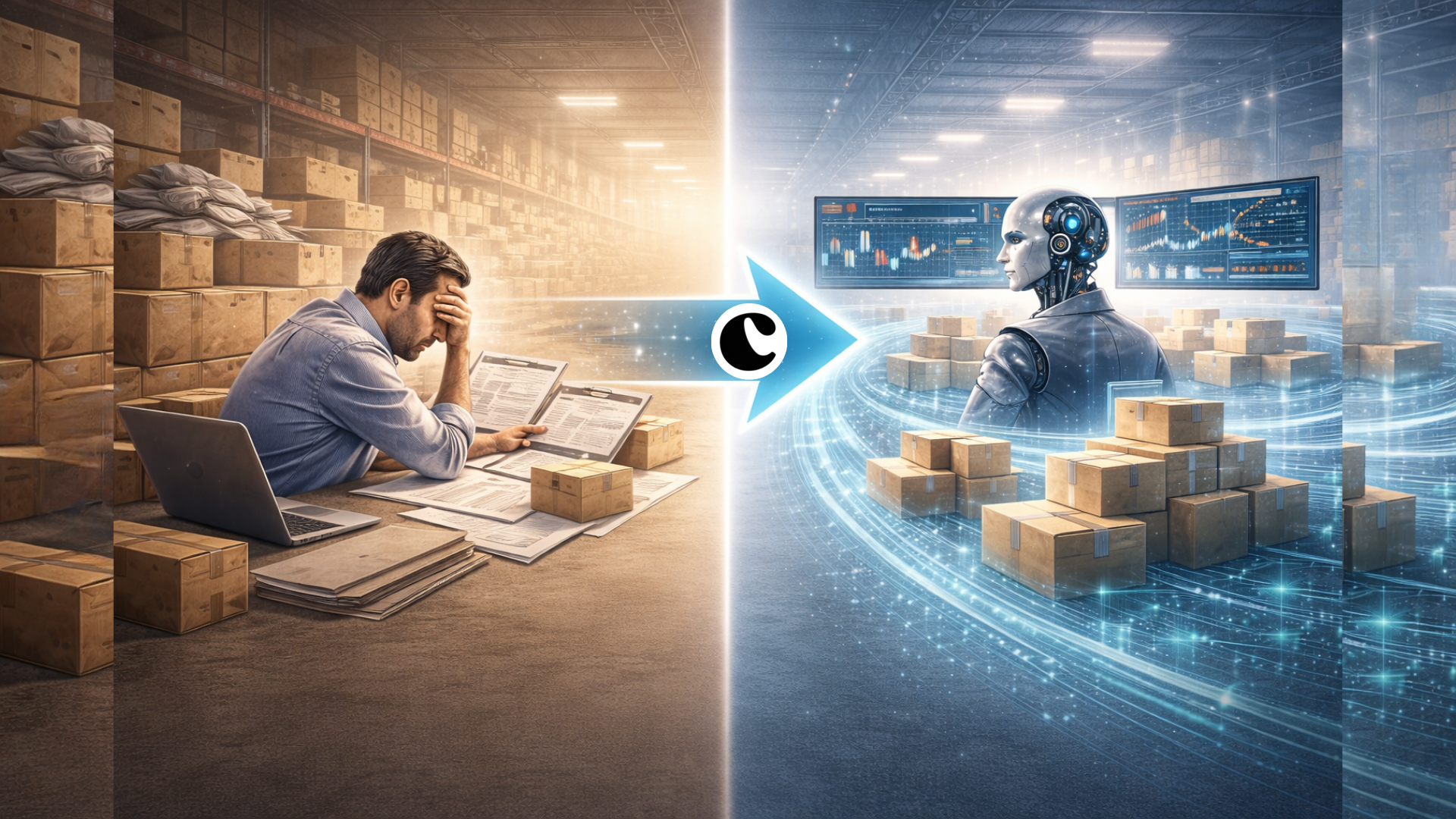
In simple terms: Autonomous merchandising is merchandising that runs, even when teams are not pushing it.
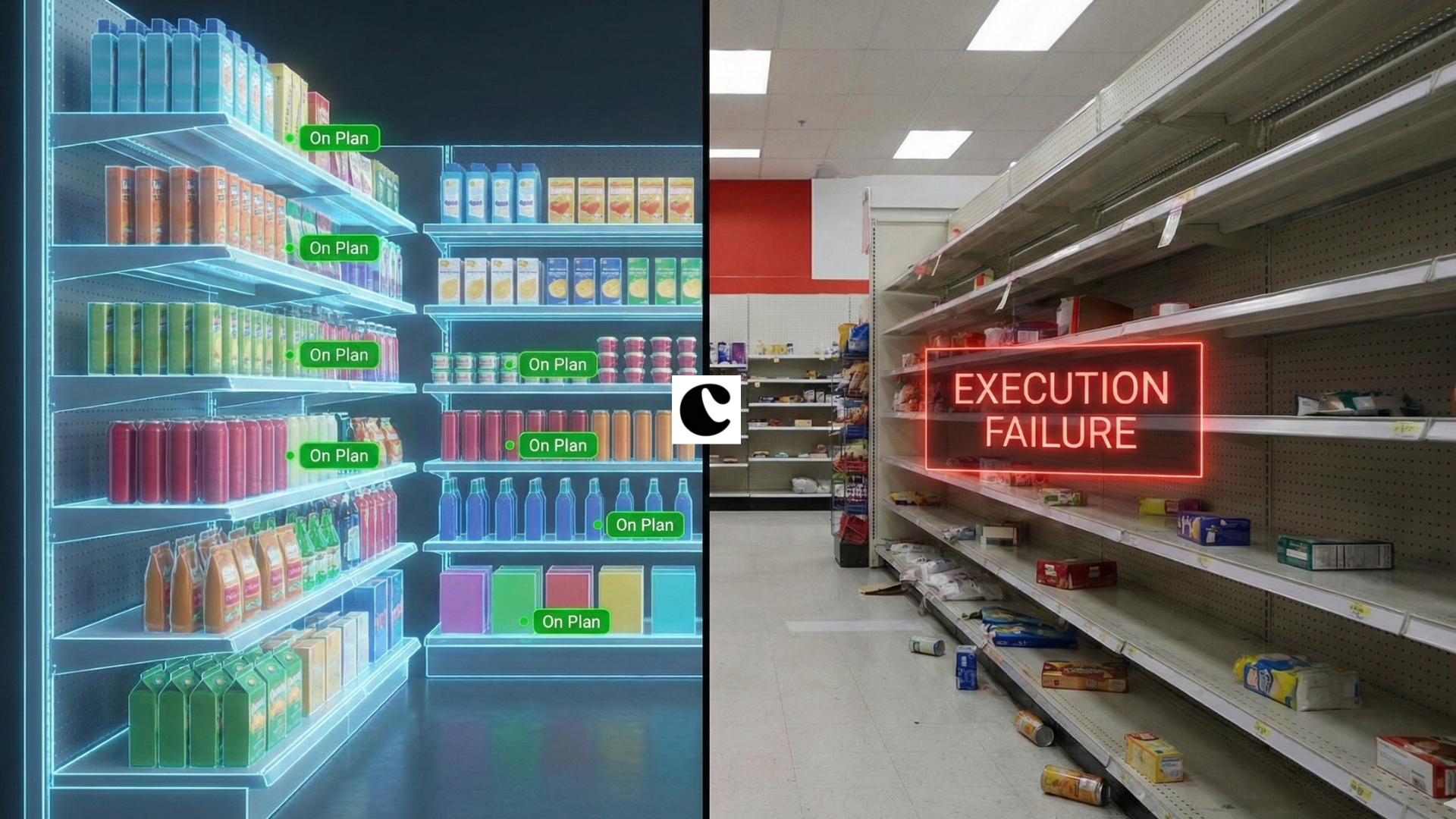
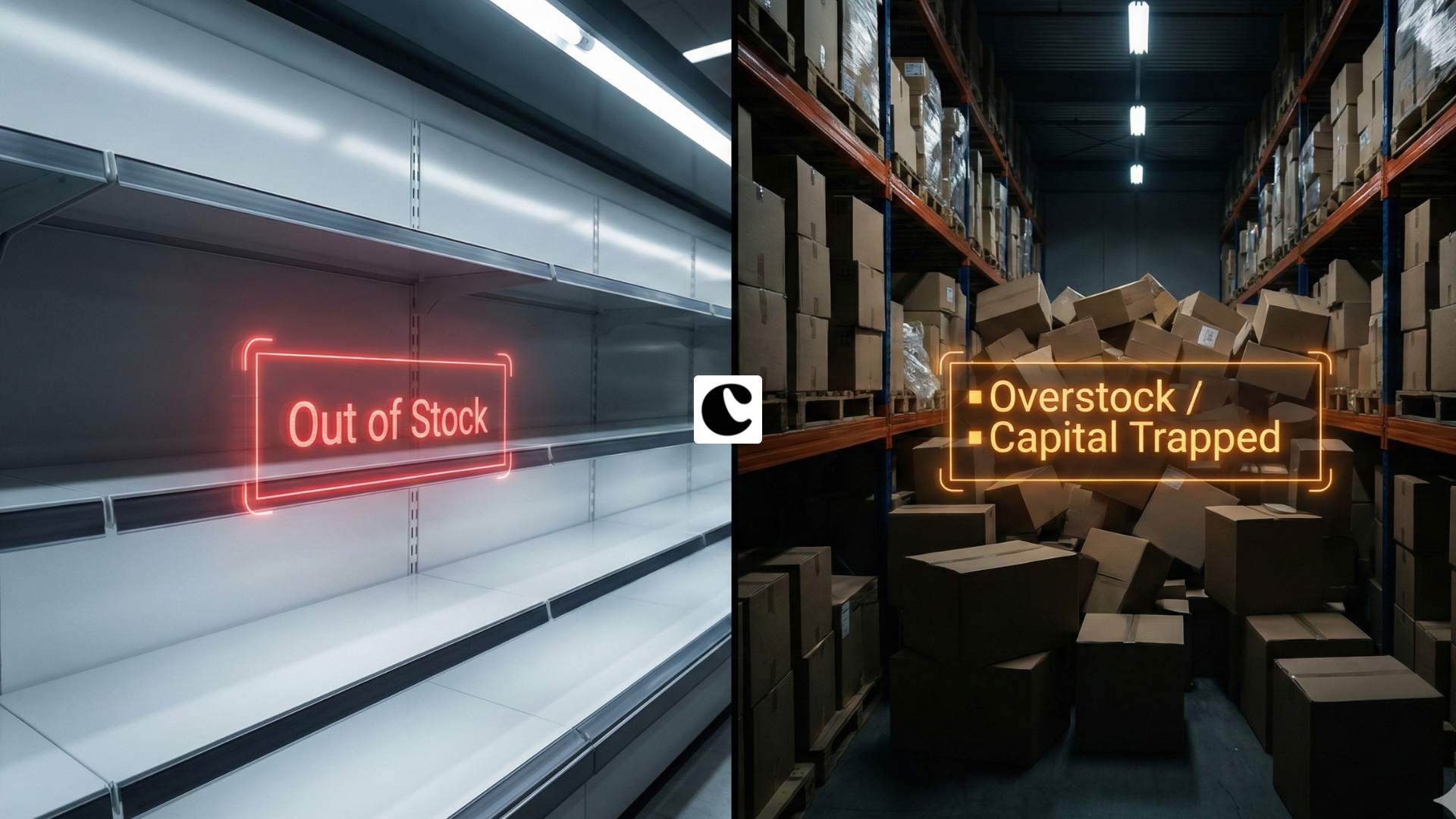
The slowdown in retail is not due to a weak strategy – it is due to shrinking execution bandwidth.
The problem is not a lack of data. It is the inability to translate intelligence into execution fast enough.
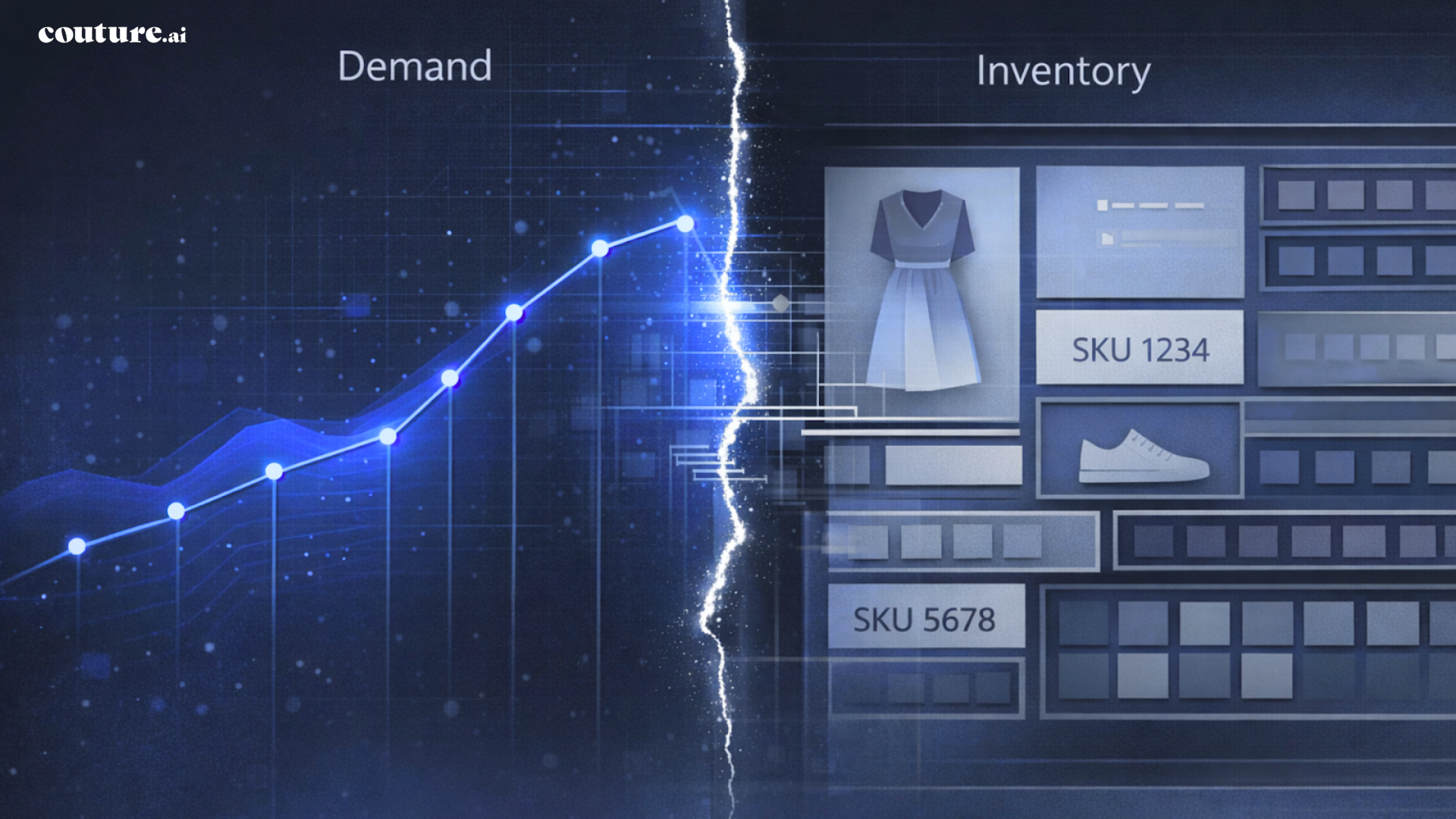
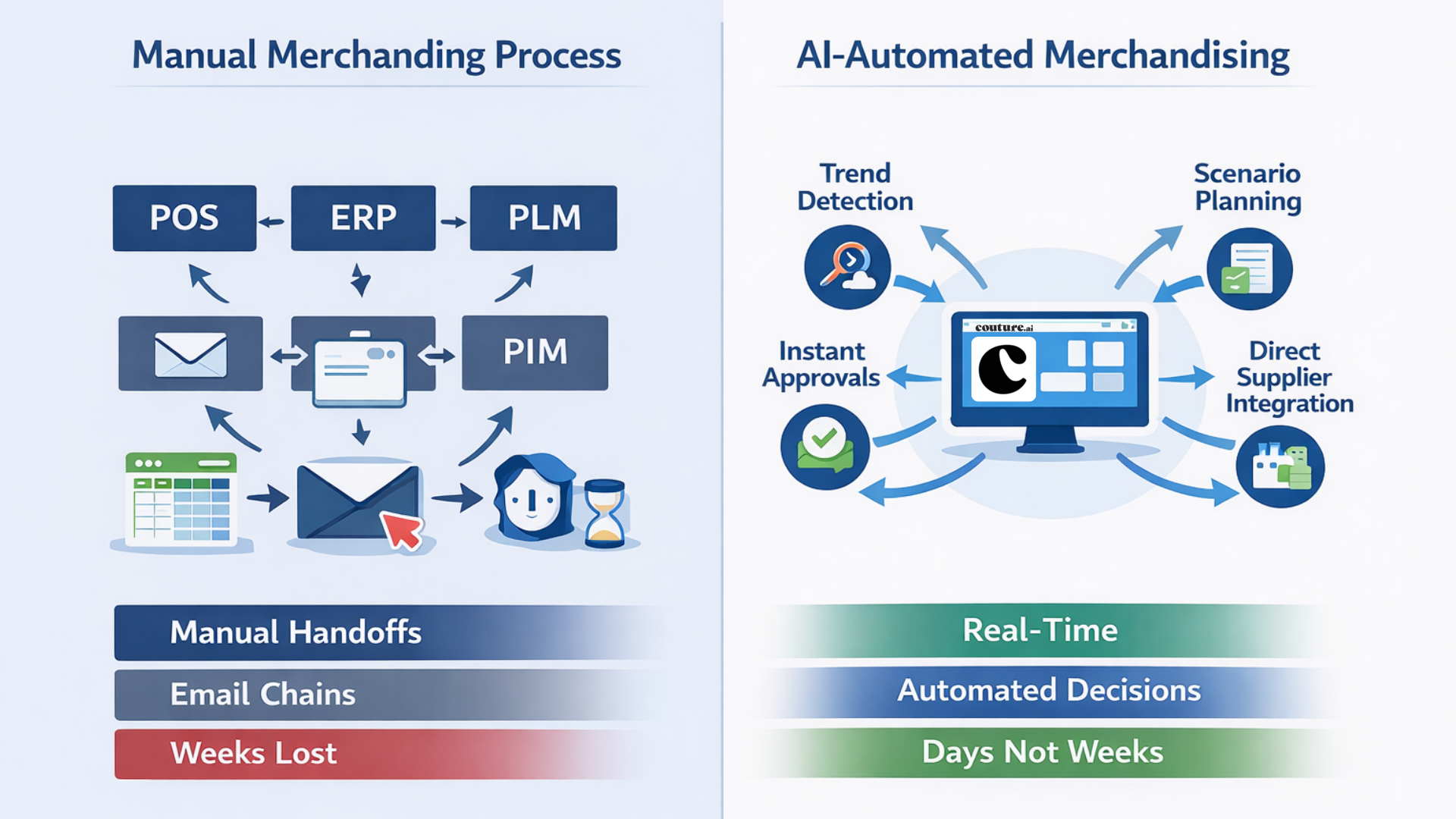
Retail has already adopted automation – dashboards, replenishment triggers, generative PDP copy, and pricing engines.
This creates delays.
| Automation | Autonomy |
|---|---|
| Speeds up tasks | Completes the loop |
| Supports teams | Executes with teams |
| Requires human intervention | Runs continuously |
| Episodic reaction | Real-time execution |
Autonomy does not replace humans. It removes the friction that prevents human expertise from scaling.
A complete autonomous merchandising system coordinates the full merchandising lifecycle:
| Stage | What autonomy enables |
|---|---|
| Trend and demand sensing | Real-time detection of emerging demand |
| Vendor and sourcing execution | RFQs, follow-ups, onboarding, and sample tracking |
| Product creation and content | Auto-generated PDPs, banners, visual packs, and attributes |
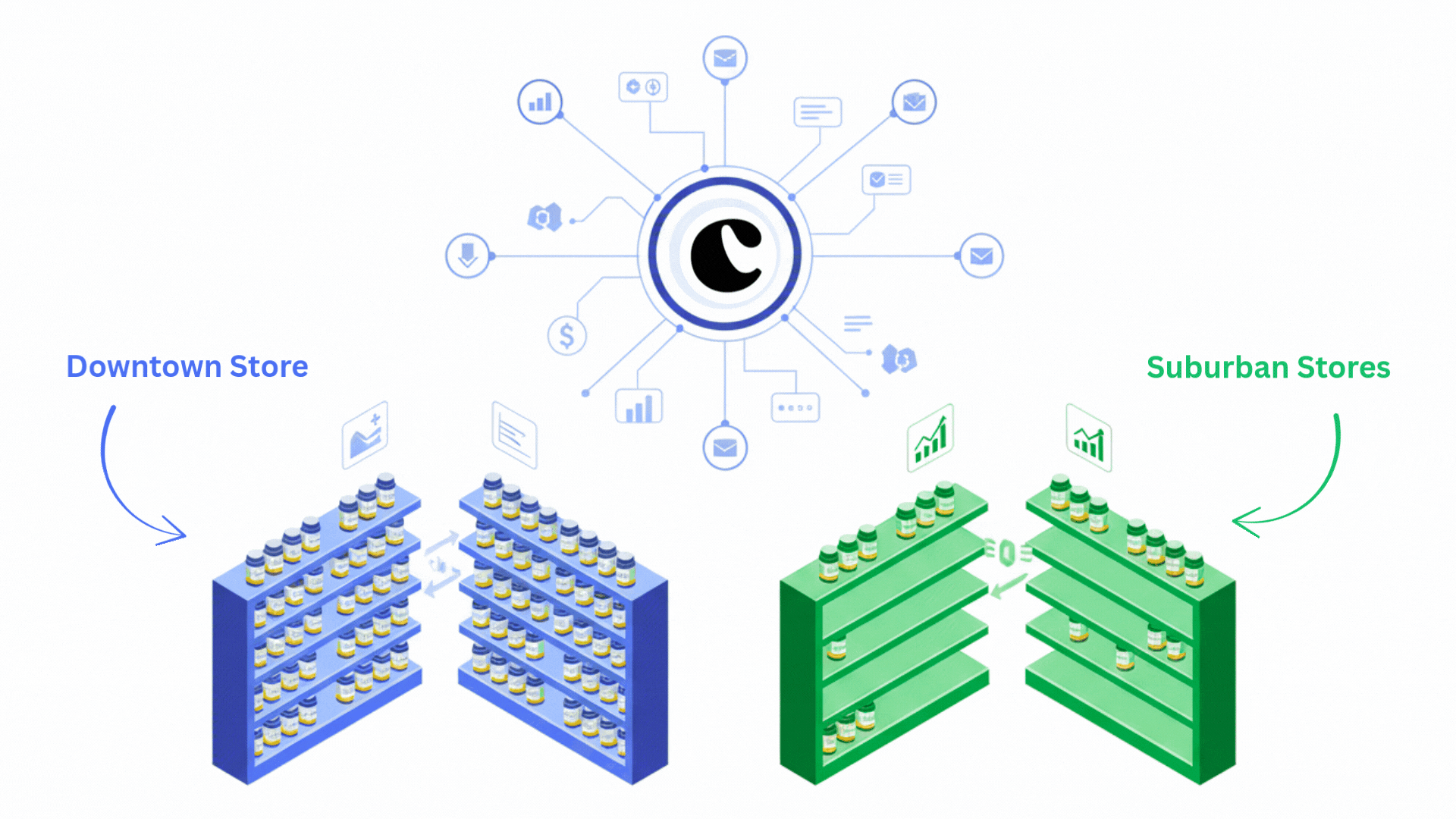
| Assortment and localization | SKU depth and category mix customized by region and channel |
| Forecasting and allocation | Continuous replenishment based on real-time demand |
| Pricing and markdowns | Adaptive pricing within margin guardrails |
| Feedback loops | Performance data automatically improves the next cycle |
Autonomy is not a feature. It is a self-learning decision and execution loop.
Autonomy does not eliminate retail roles. It shifts human time toward high-value thinking instead of repetitive execution.
Humans supervise intelligence instead of manually driving every operational task.
Retailers transitioning to autonomous models are reporting measurable impact:
| Impact | Result |
|---|---|
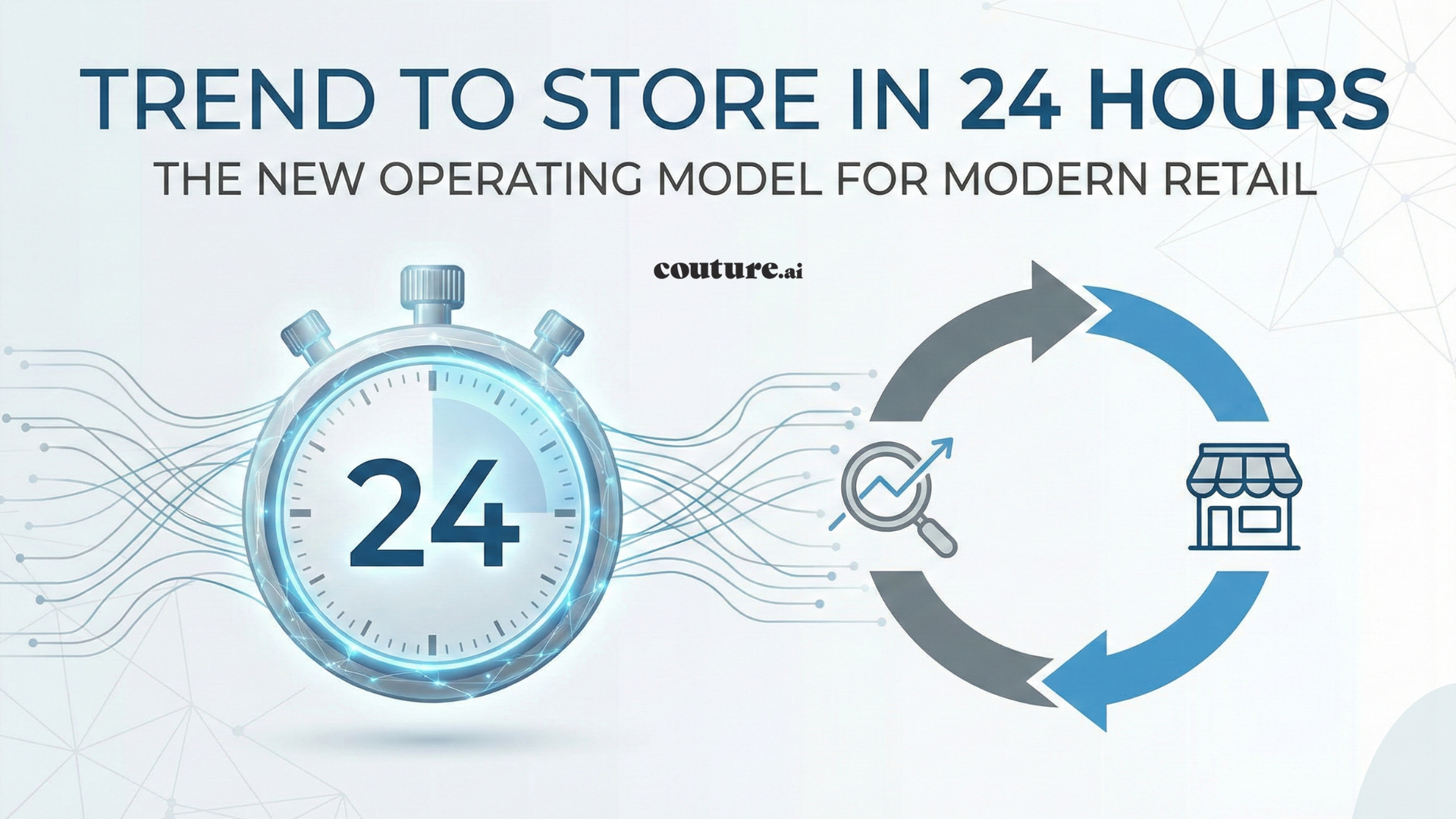
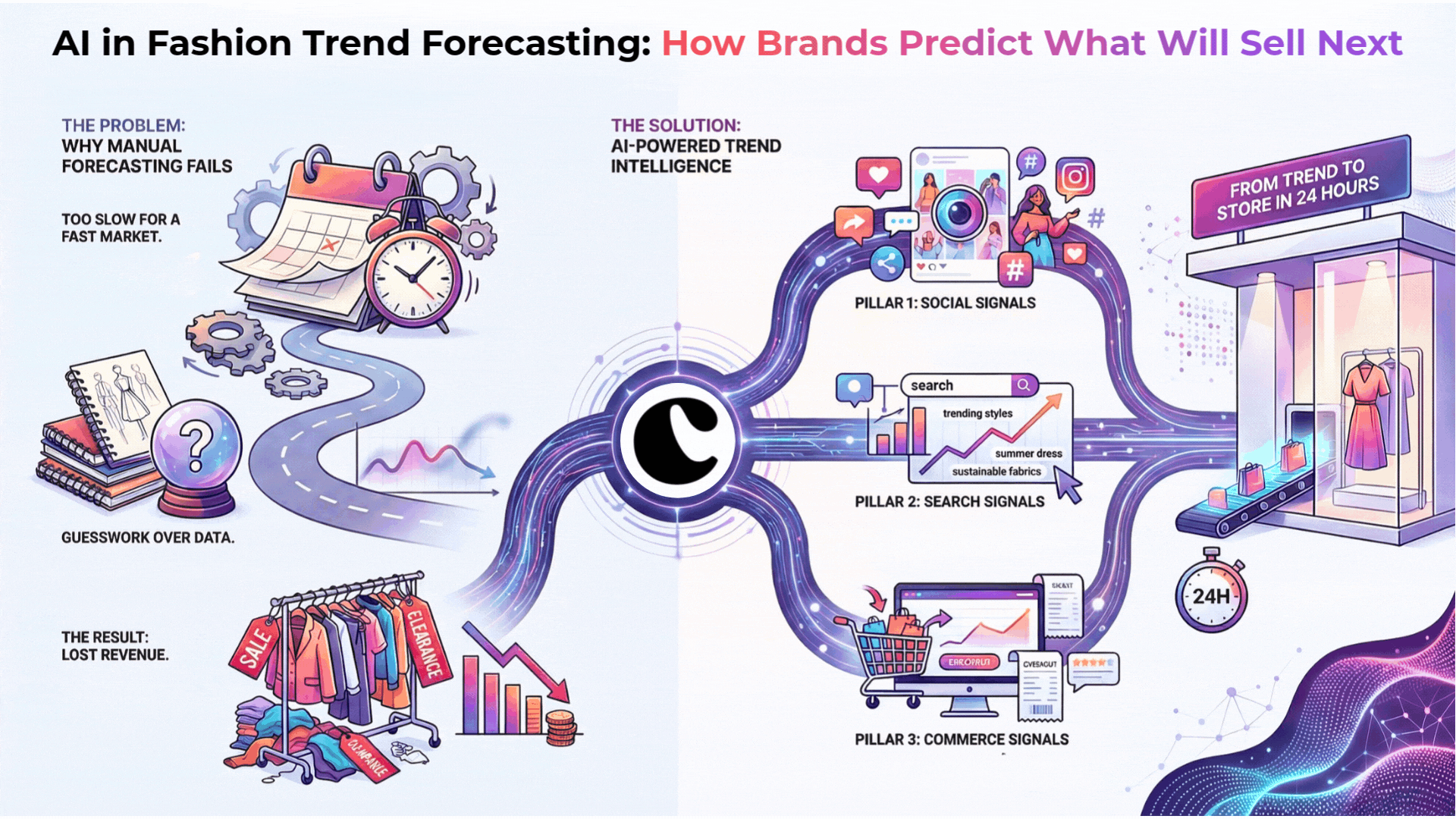
| Cycle time | Trend to product to store in under 24 hours |
| Forecast accuracy | +30 to +50 percent |
| Manual workload | -90 percent |
| SKU management capacity | 10x more SKUs without team expansion |
| Sell-through lift | +17 to +22 percent |
| Dependency on discounts | Drops significantly |
Autonomy does not just save time. It creates a structural retail advantage.
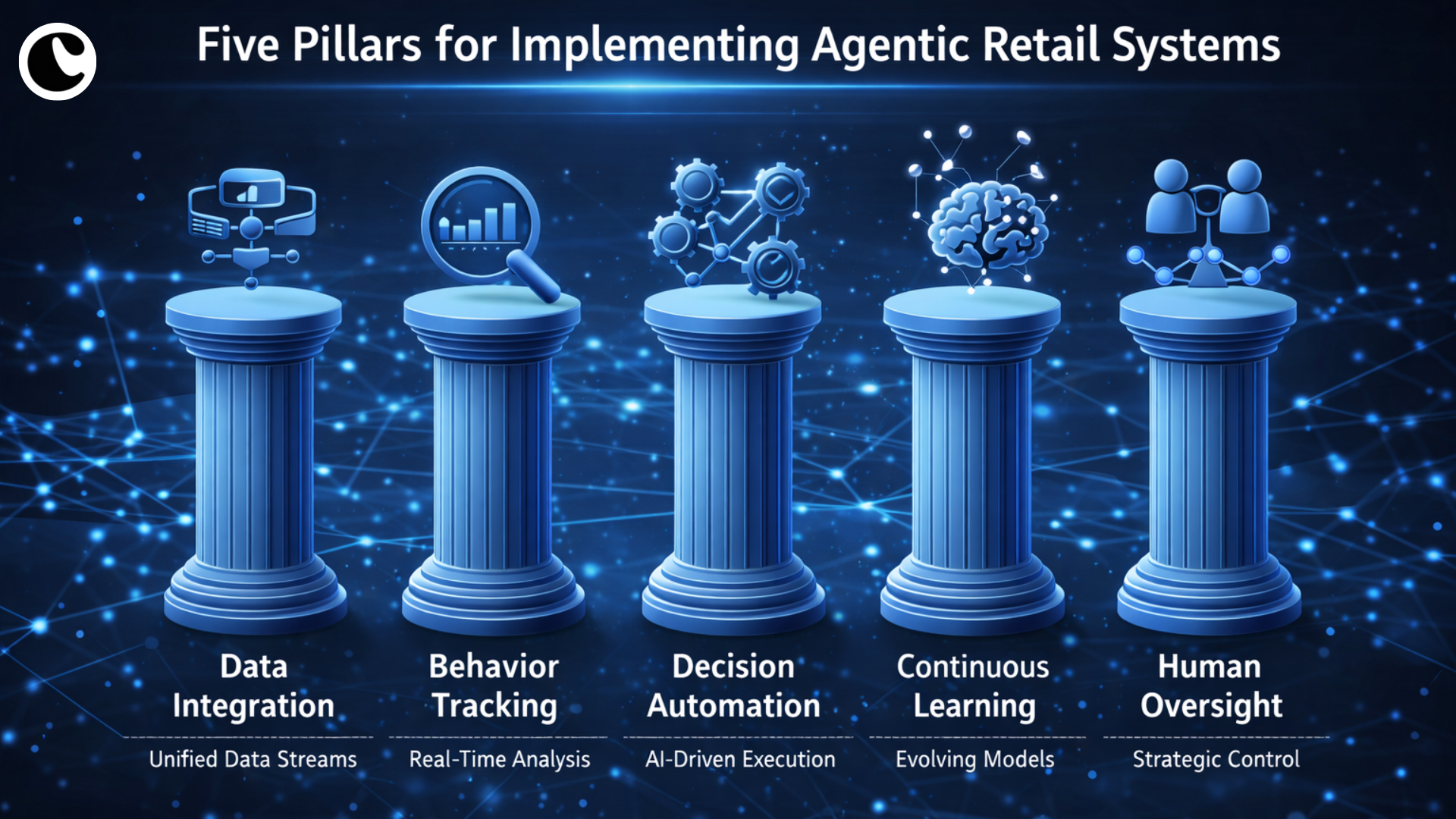
The next retail transformation will be driven by:
By 2030, retail merchandising will run continuously – with humans defining strategy and AI executing it.
Autonomous merchandising is not about making retail less human. It is about aligning merchandising with the true pace of customer demand.
Retail began with instinct. Then instinct plus data. Now: instinct, data, and autonomous execution. The shift is structural. The retailers who adopt autonomy now will learn faster, execute faster, and scale faster than those who wait.
Subscribe to get the latest updates and trends in AI, automation, and intelligent solutions — directly in your inbox.
Stay Informed: Insights and Trends from Couture AI
Reduce operational complexity, improve planning accuracy, and deliver smarter retail execution with Couture AI.