Dec 10, 2025 | Couture AI Team
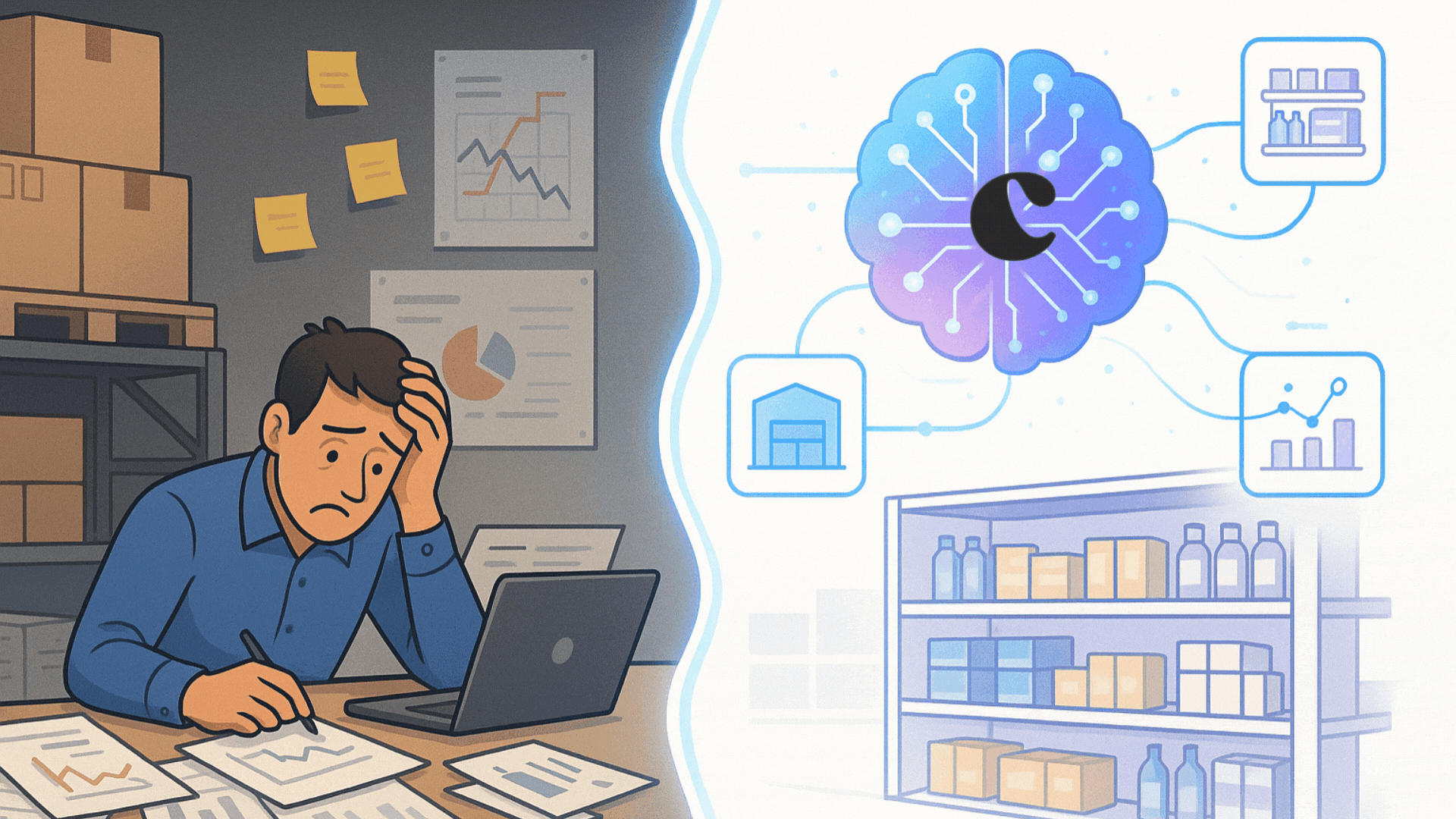
You're sitting in a planning meeting. When someone in your team asks why last quarter's forecast was off by 30%. And you don't have a good answer.
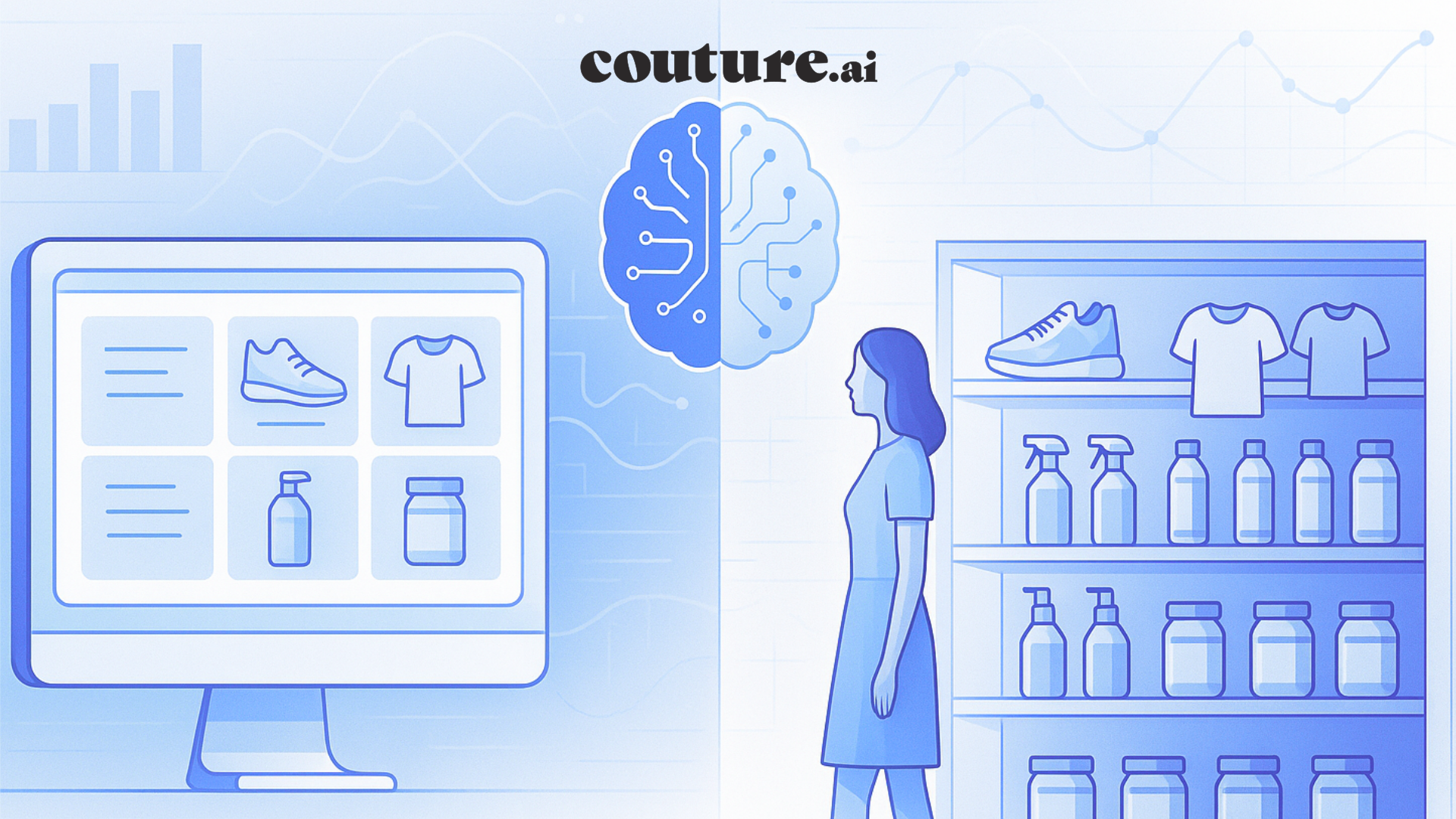
Traditional forecasting looks at what sold last year and assumes this year will be similar. But that's not how retail works and operates in this new age. Trends move in just overnight. Supply chains break. Competitors launch flash sales. By the time adjustments happen, the window's already closed.
A 2024 academic study on a Fortune-500 retailer reported a 25% reduction in stockouts after implementing AI-driven demand forecasting.
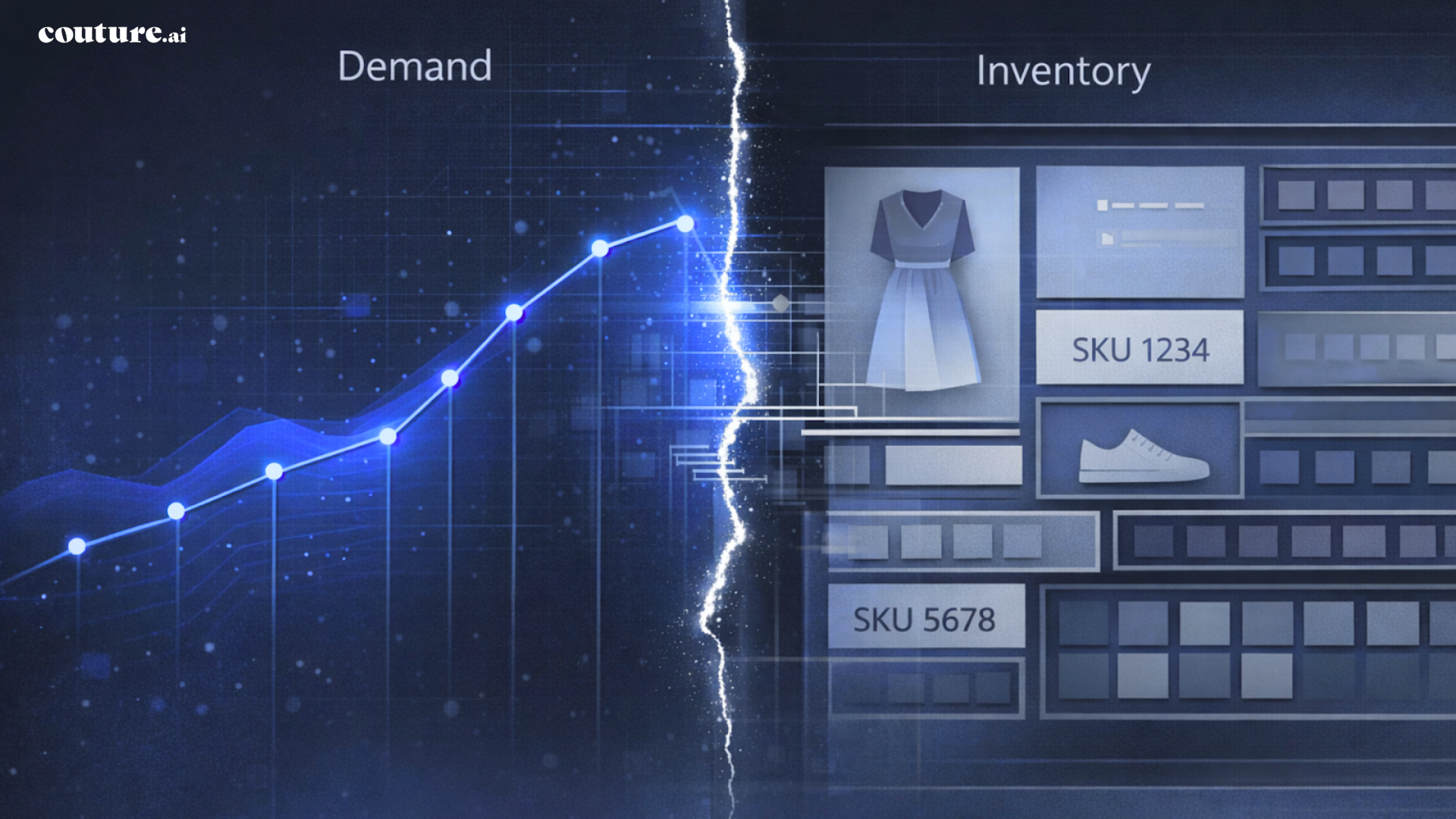
SKU forecasting with AI changes the game altogether. It looks backward and at what's happening right now and understands why things are selling (or not).
For a deeper dive, continue reading the full breakdown below.
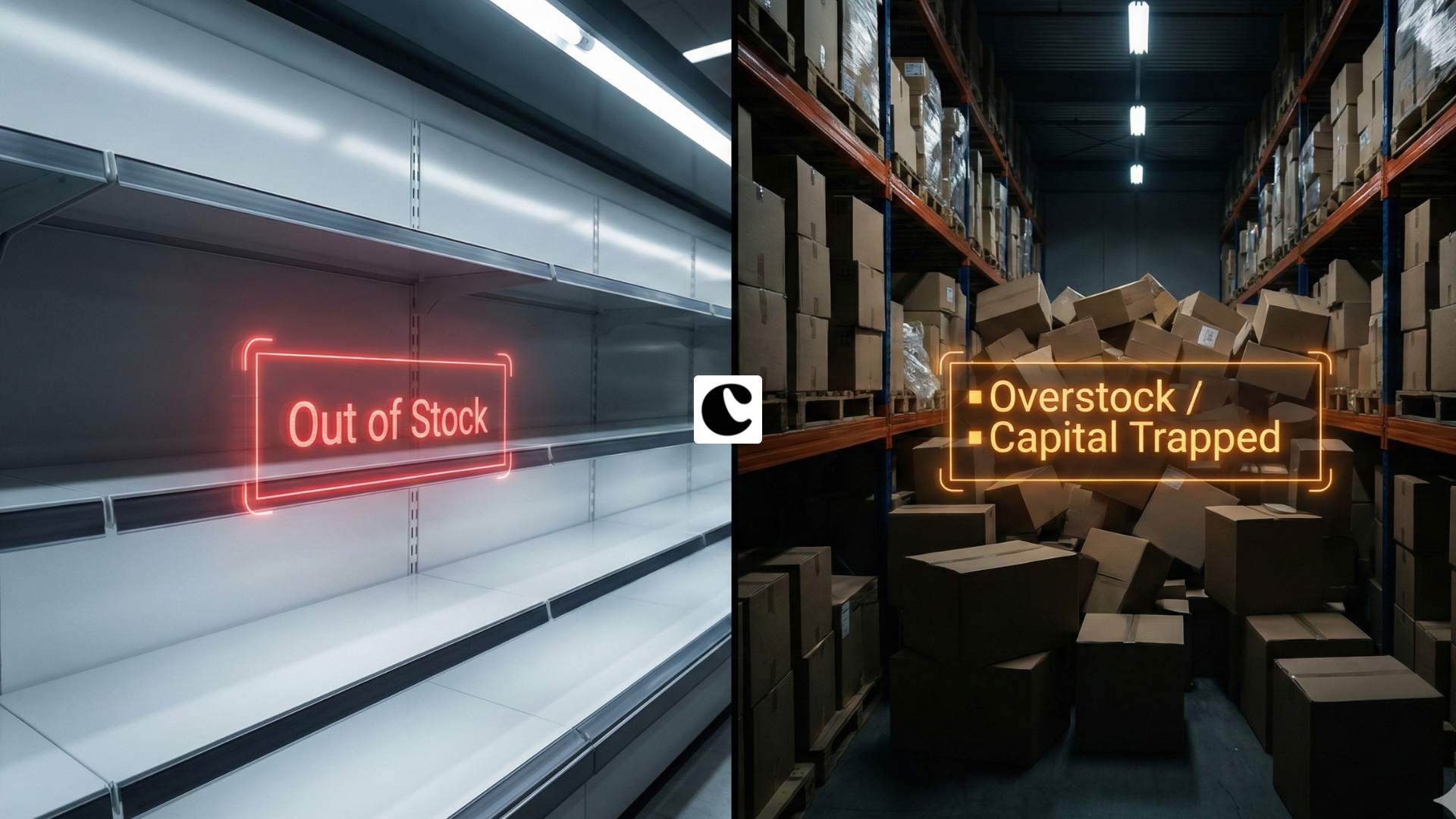
The results are quite clear: Overstock on items nobody wants. Stockouts on what's moving fast. And tons of money tied up in the wrong inventory.
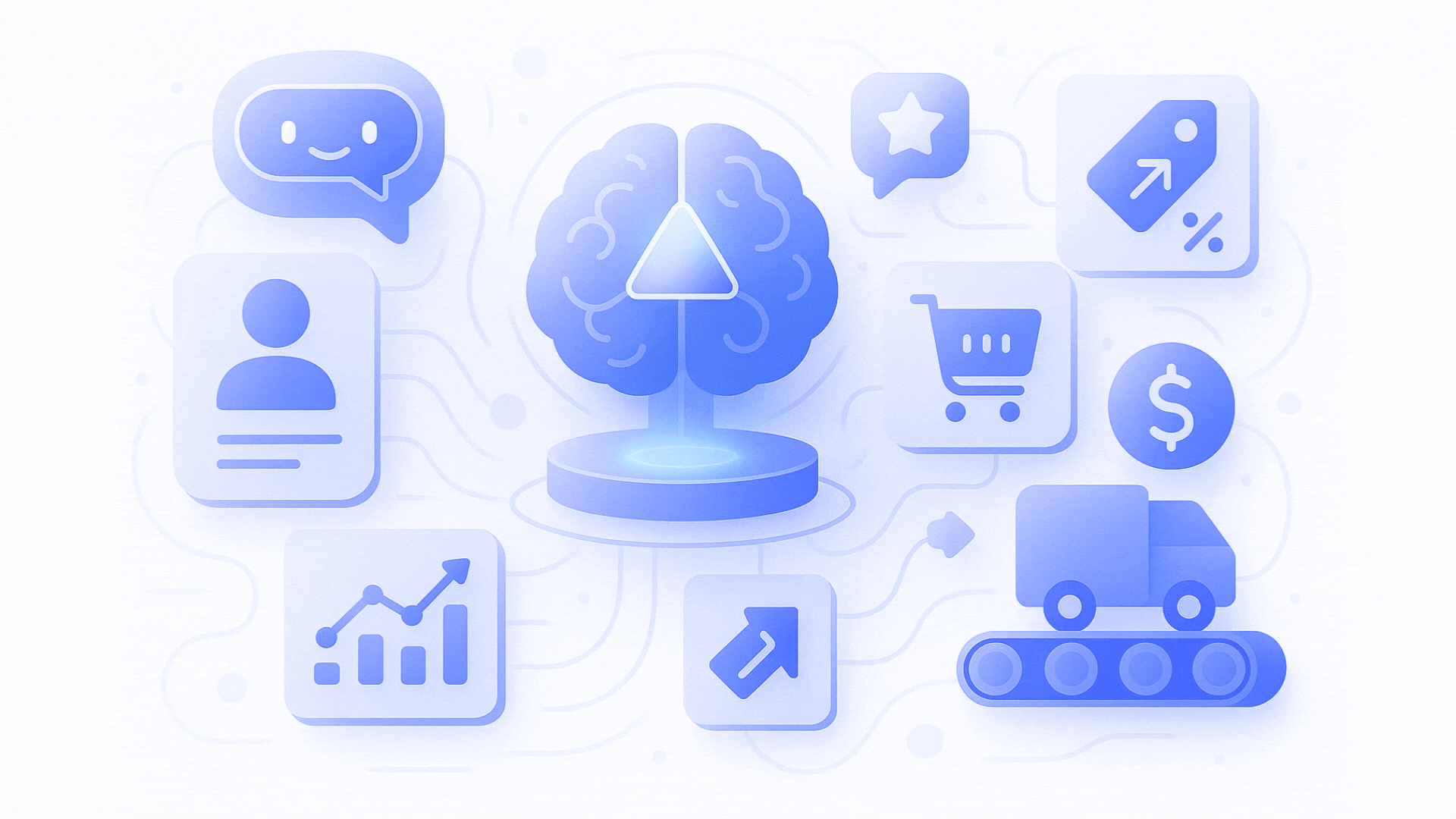
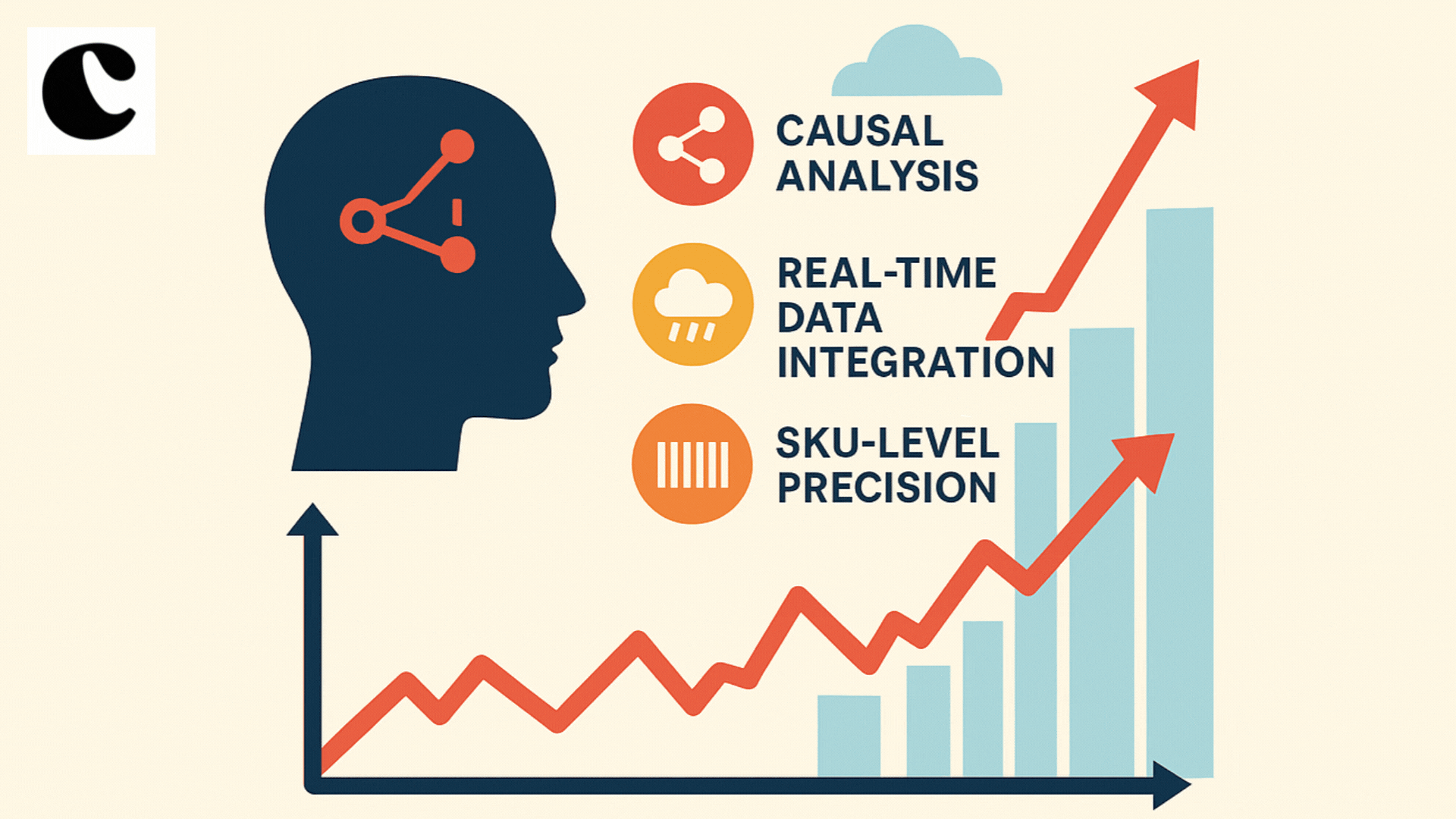
AI Demand planning in retail works differently. They combine three things that Excel sheets can't able to manage:
Instead of only tracking sales patterns, AI identifies what drives those patterns.
Did sales spike because of a promotion? Warm weather? A viral social media post? The system learns these relationships and factors them into future predictions.
Take a fashion retailer that noticed denim sales always jumped when a certain Instagram influencer posted outfit photos. Their AI picked up on this pattern and now monitors social signals as part of demand forecasting. When engagement spikes, the system flags potential demand surges before they hit.
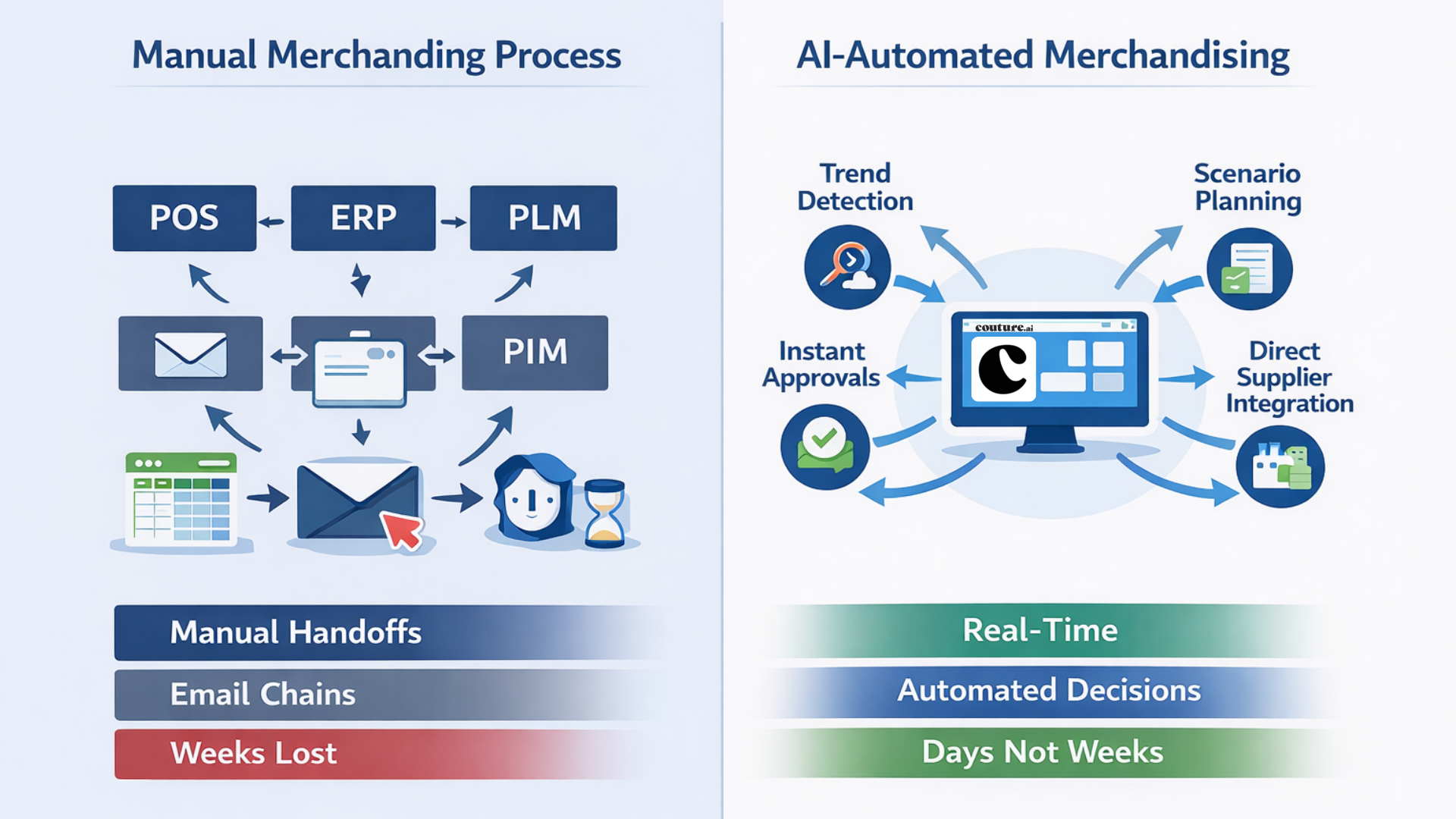
What makes this powerful is the speed of implementation—from analysis to action. Traditional causal analysis required weeks of manual investigation by analysts combing through spreadsheets, trying to connect dots between sales data and external factors. By the time they identified a pattern, the opportunity was gone.
AI systems recognize these patterns in real-time and automatically trigger actions. The moment social engagement crosses a threshold, the system doesn't just flag it for review—it automatically adjusts demand forecasts, triggers inventory allocation rules, and can even queue recommended orders for approval. The feedback loop that once took weeks now happens in hours or minutes.
Traditional forecasts update weekly or monthly. AI systems process data continuously.
When something changes, forecasts adjust immediately. Not next week. Now.
According to McKinsey’s 2024 supply-chain analysis, retailers integrating real-time signals into AI forecasting reduced inventory carrying costs by 20–30% due to more responsive demand sensing.
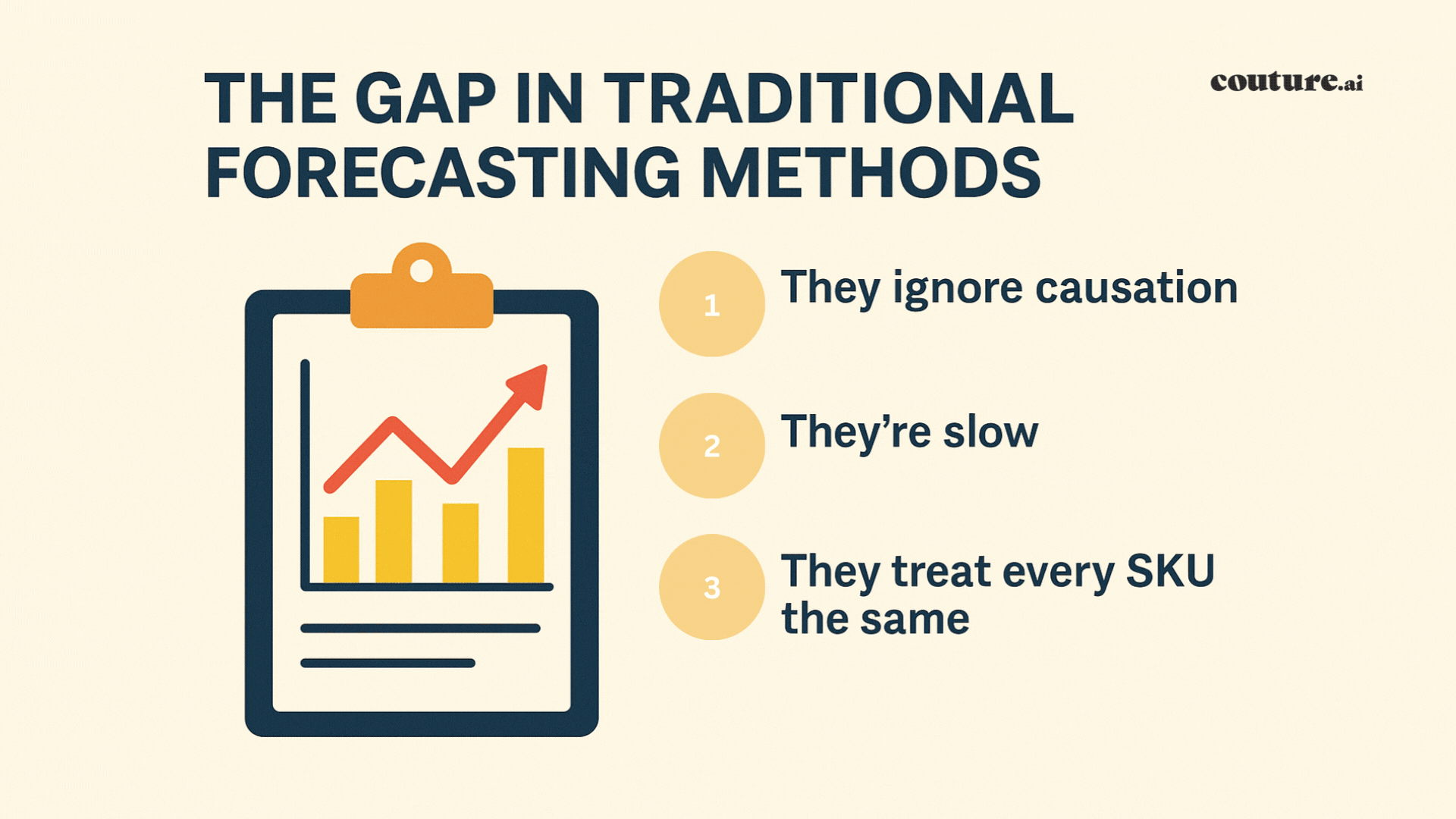
Not all products behave the same way. AI builds individual forecasting models for each SKU based on its unique characteristics:
Winter coats get a different model than summer dresses. Basics get different treatment than limited releases.
A word of caution: SKU-level precision is powerful, but it requires discipline. The granularity can tempt teams to over-optimize - constantly tweaking forecasts for every minor fluctuation. The key is setting appropriate thresholds and rules. Focus your energy on high-value SKUs and categories where precision delivers measurable impact. For long-tail items with low velocity, sometimes a simpler approach is better than complex individual models that consume resources without proportional returns.
Here's where things get interesting.
Standard forecasting sees correlation. Causal AI understands cause and effect.
Sales data show ice cream and sunscreen sales both spike in summer. A correlation-based model might predict sunscreen sales based on ice cream sales. Sounds foolish, right? But traditional models make these kinds of logical errors constantly. They just hide them better.
Causal models identify the actual driver: temperature. They understand that warm weather causes both to sell. If ice cream sales drop due to a competitor's promotion, the system won't incorrectly predict that sunscreen sales will also drop.
This matters most when planning promotions or responding to market disruptions.
A home goods retailer ran a big discount on kitchen items. Traditional forecasting predicted their dining category would also see increased sales (because they usually sell together).
But causal analysis showed the promotion would actually cannibalize dining sales as customers spent their budget on discounted kitchen items instead. They adjusted inventory plans accordingly and avoided an expensive overstock condition.
The game-changer here is automation. In the past, this kind of causal analysis happened manually - if it happened at all. Analysts would spend days building promotion impact models, running scenarios, and preparing recommendations. By the time approvals came through, promotional windows were closing.
Now, AI systems perform this pattern recognition continuously and automatically. When a promotion is queued, the system immediately analyzes historical cannibalization patterns, identifies which categories will be impacted, and automatically adjusts forecasts across affected SKUs. It can even trigger rule-based actions: rejecting orders for dining items during kitchen promotions, or automatically rerouting inventory based on predicted demand shifts. What once required manual intervention and weeks of analysis now happens autonomously in the background.
Academic evidence also supports this approach: causal AI models outperform correlation-based models in high-variance retail environments by correctly isolating true demand drivers.
Looking to bring causal intelligence and real-time accuracy to demand planning? Couture.ai helps retailers predict demand with precision using advanced AI models built for today's fast-moving markets. See how it works.
When causal understanding combines with real-time data, three things improve immediately:
Most retailers see a 15-25% improvement in forecast accuracy within the first quarter of using demand planning AI retail systems.
Better forecasts mean less safety stock. Less safety stock means less cash tied up in inventory.
When the right products land in the right places at the right time, customers notice. Stockout rates drop. Markdowns decrease because there's no desperate clearing of excess inventory. Sell-through rates climb.
Let's talk about what this means for operations:
The real outcome is the ability to respond to market changes and have the right product mix when trends change. It's not losing sales because items are out of stock or tied up in the wrong warehouse.
SKU forecasting AI and demand planning AI retail systems provide one thing traditional forecasting never could: the ability to see around corners - and the speed to act on what you see before the moment passes.
Forecasting will never be perfect because of too many variables with too much uncertainty.
But the gap between good forecasting and great forecasting is huge. It's the difference between 75% accuracy and 90% accuracy. Between acceptable stockouts and rarely running out. Between competitive and industry-leading margins.
SKU forecasting AI eliminates uncertainty and helps navigate it better than traditional methods.
Inclined to see how causal AI and real-time data can improve forecast accuracy? Couture.ai's platform is built specifically for retailers who need SKU-level precision in fast-moving markets. Let's talk about what's possible for your retail operations.
Subscribe to get the latest updates and trends in AI, automation, and intelligent solutions — directly in your inbox.
Stay Informed: Insights and Trends from Couture AI
Reduce operational complexity, improve planning accuracy, and deliver smarter retail execution with Couture AI.