Dec 18, 2025 | Couture AI Team
It's 2 AM on a Thursday.
Your phone lights up. Text from your merchandising lead: "The holiday sweaters won't make it. Factory says the earliest delivery is January 15th."
January 15th. Your entire holiday collection. The season you've been planning for six months. All vanished.
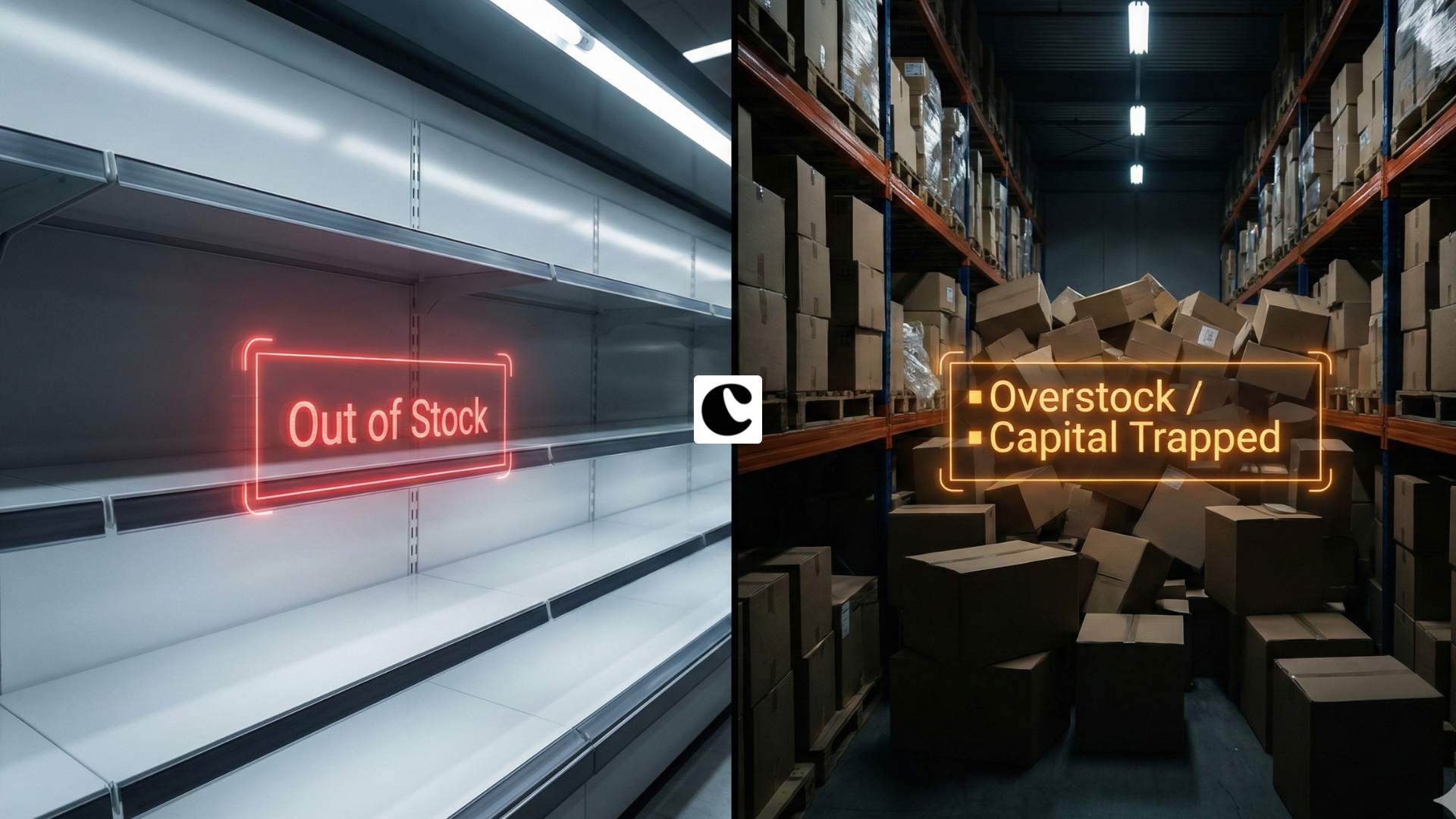
You check your competitor's social media. They're launching their holiday line tomorrow. Same trend. Same price point. They'll own the season, and you're stuck explaining delays to your board.
And the gap between retailers who ship in September versus January is growing wider every year.
Retail supply chain management is transformed. The old approach of placing orders six months out and hoping everything arrives on time doesn't function now. Customer expectations have drastically changed. Market windows got shorter. And the cost of being late went up.
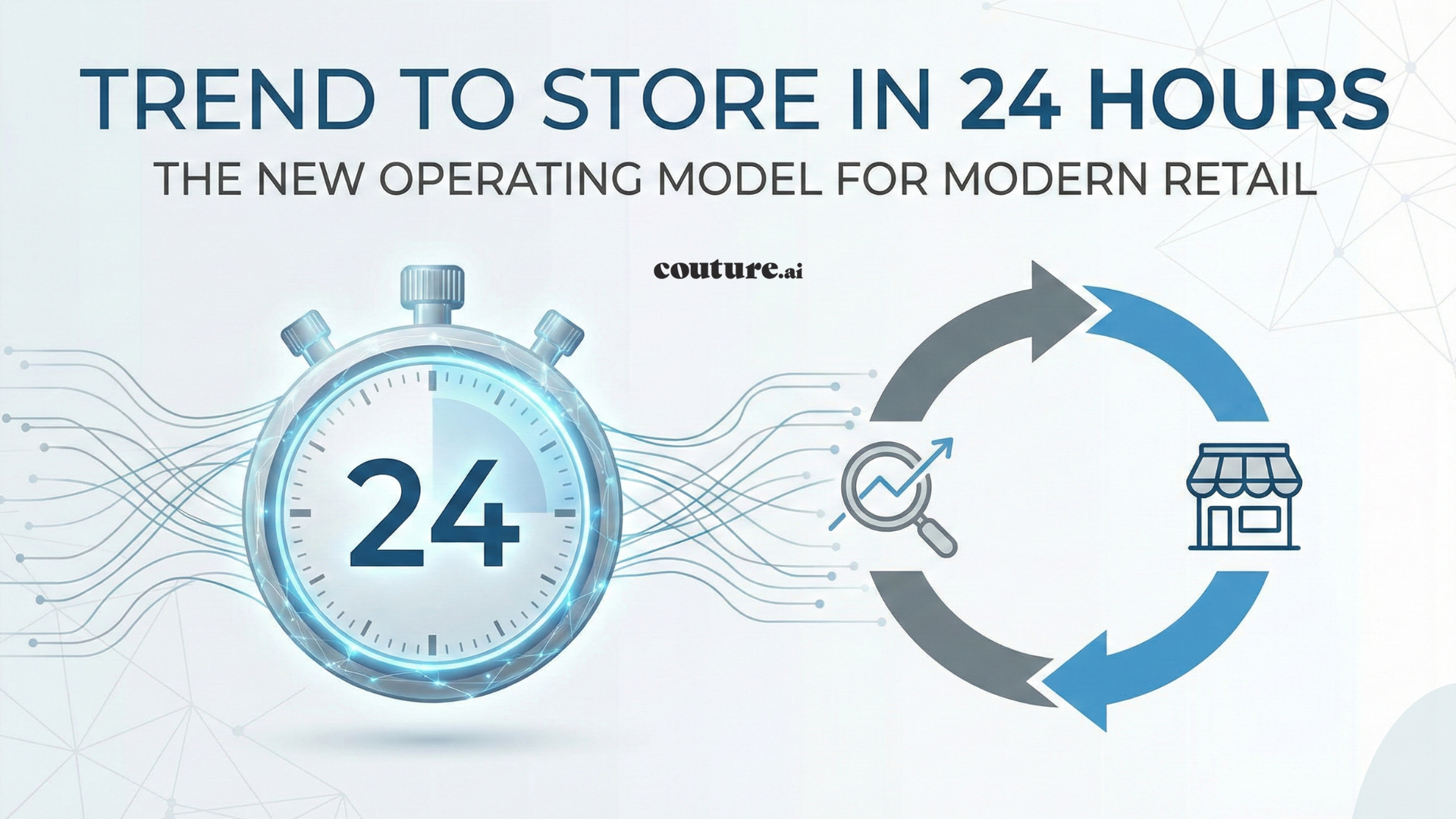
Smart retail companies are cutting lead times nearly in half. Not by spending more. By sourcing smarter with retail sourcing strategies that adapt to market speed.
Retailers think lead time problems come from slow factories or shipping delays.
That's only a part of it - the main issue is different.
How traditional retail sourcing works:
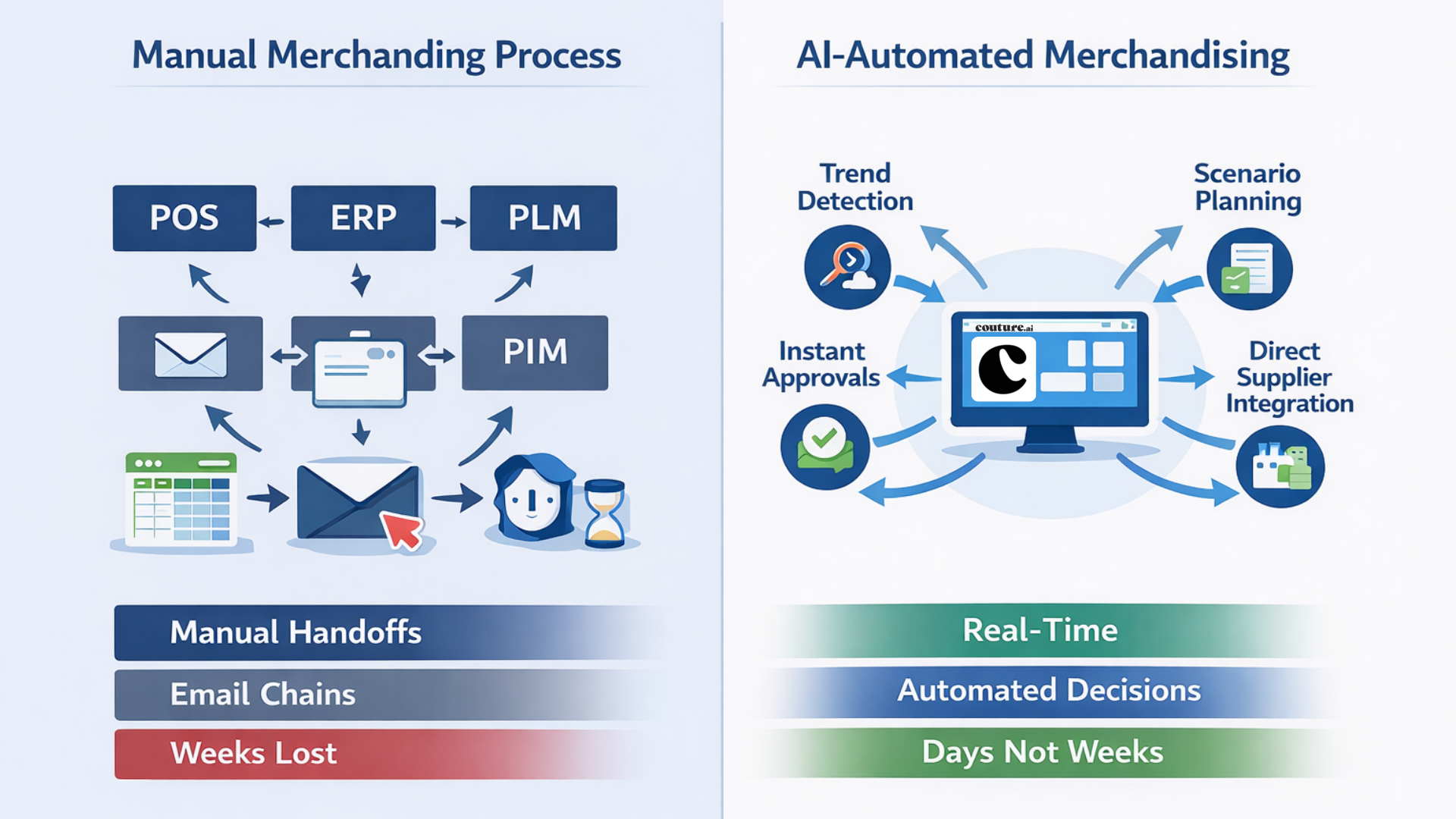
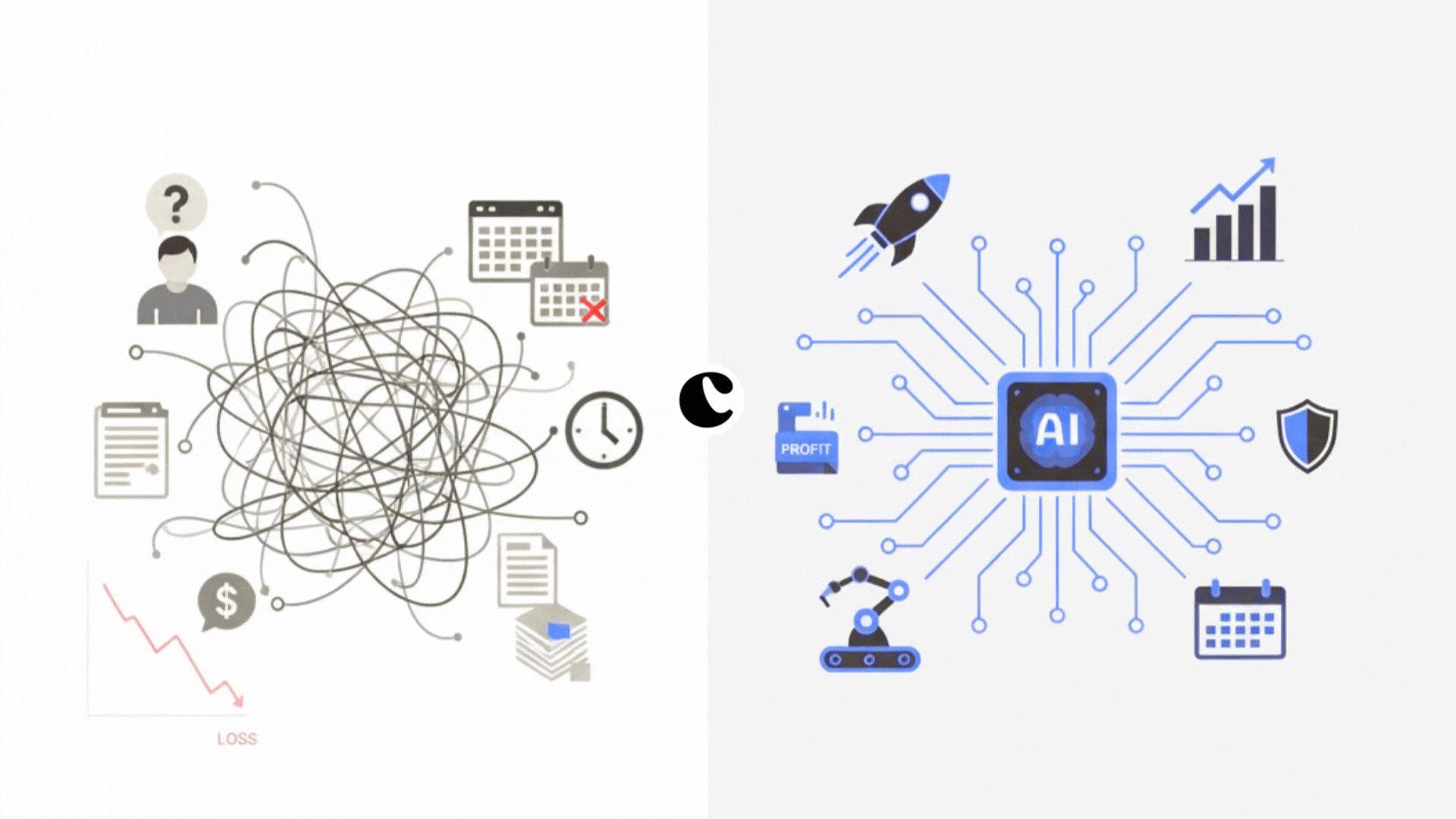
Your merchandising team spots a trend. They brief the product team. The product team creates specs. The sourcing team reaches out to suppliers. Suppliers send samples. Samples get reviewed. Rounds of revisions happen. Someone finally places an order.
By the time you order, the trend you were chasing is already cooling off.
Traditional sourcing agents have been around forever.
They know factories. They negotiate prices. They handle quality checks. They manage logistics.
All valuable. But they're reactive, not proactive.
You tell them what you need. They find suppliers. They get quotes. They coordinate production. They ship goods.
The problem? You're still making all the decisions. And you're making them with incomplete information.
Which supplier has capacity right now? Which factory can hit your timeline? What material alternatives are available if your first choice is delayed? Which shipping routes are moving fastest this month?
Traditional sourcing agents answer these questions when you ask them. Smart sourcing agents answer them before you need to ask.
Research on Zara’s digital supply chain model shows that integrated design, sourcing, and production systems enable the brand to respond to new trends much faster than traditional retailers, significantly reducing lead times.
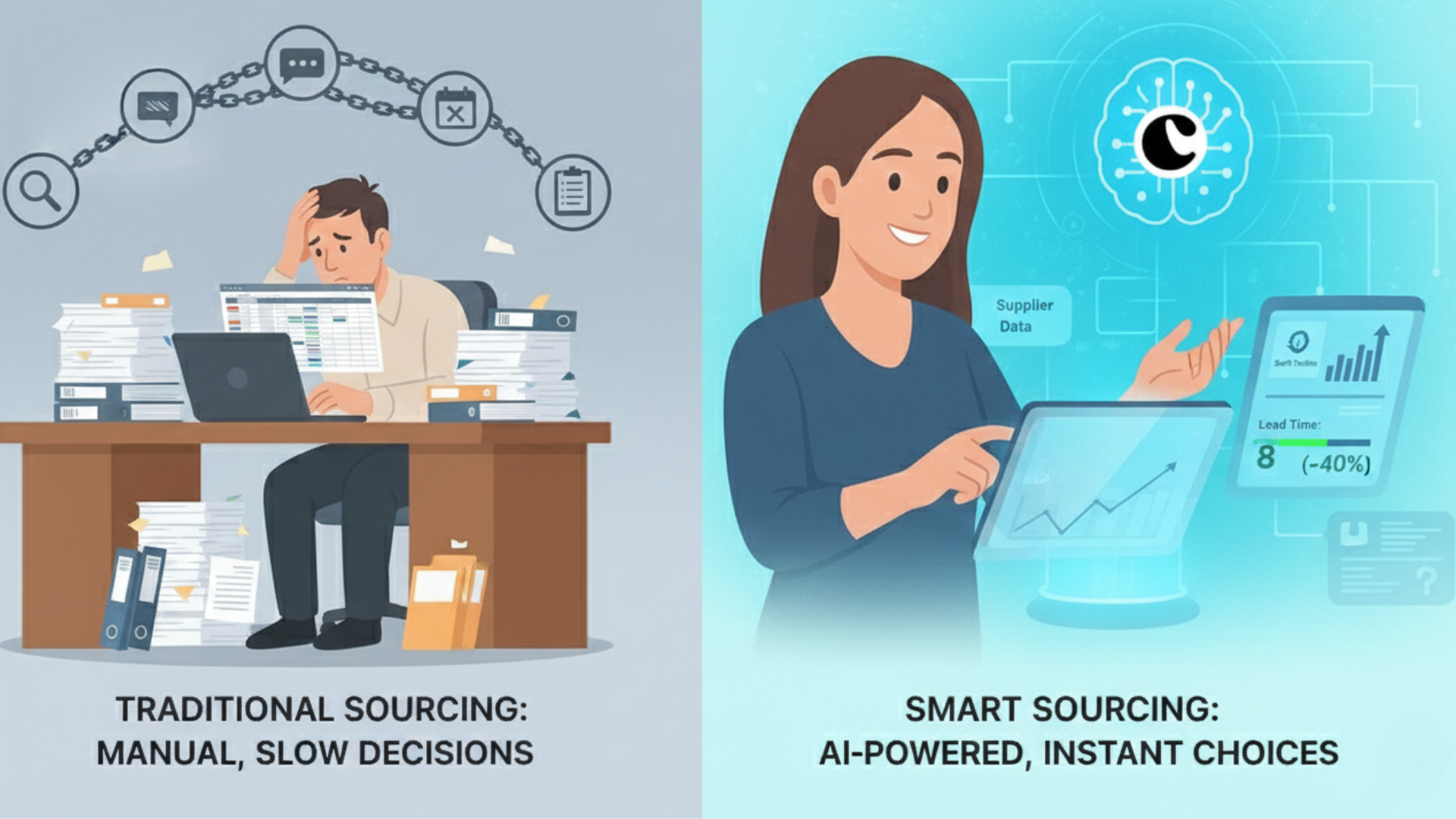
Smart sourcing agents use AI to compress decision cycles.
A recent NVIDIA study shows 54% of retailers using AI now run 6+ use cases, including forecasting, logistics, and inventory planning.
They're not replacing human judgment. They're eliminating the delays between decisions.
| Traditional approach | Smart approach |
|---|---|
| You request quotes from three suppliers. Wait 3-5 days for responses. Compare manually. Make a decision. That's one week reached. | AI instantly pulls current pricing, capacity, and lead times from your supplier network. Shows you the best options ranked by your priorities. You decide in an hour. |
| A material gets delayed. Your sourcing agent calls factories to find alternatives. Takes 2-3 days to explore options. | System flags the delay immediately. Suggests alternative materials or suppliers. Shows impact on timeline and cost. You adjust the course the same day.n |
| You're planning next season. Not sure which suppliers can handle your volume and timeline. | AI analyses supplier performance data, current capacity, and seasonal patterns. Shows you which partners are best positioned for your needs. |
That's where the 40% lead time reduction comes from. Not faster shipping. Faster decisions.
Shorter lead times change what's possible in retail supply chain management.
Scale that across your product line. The numbers add up fast.
Smart sourcing agents are always data-driven.
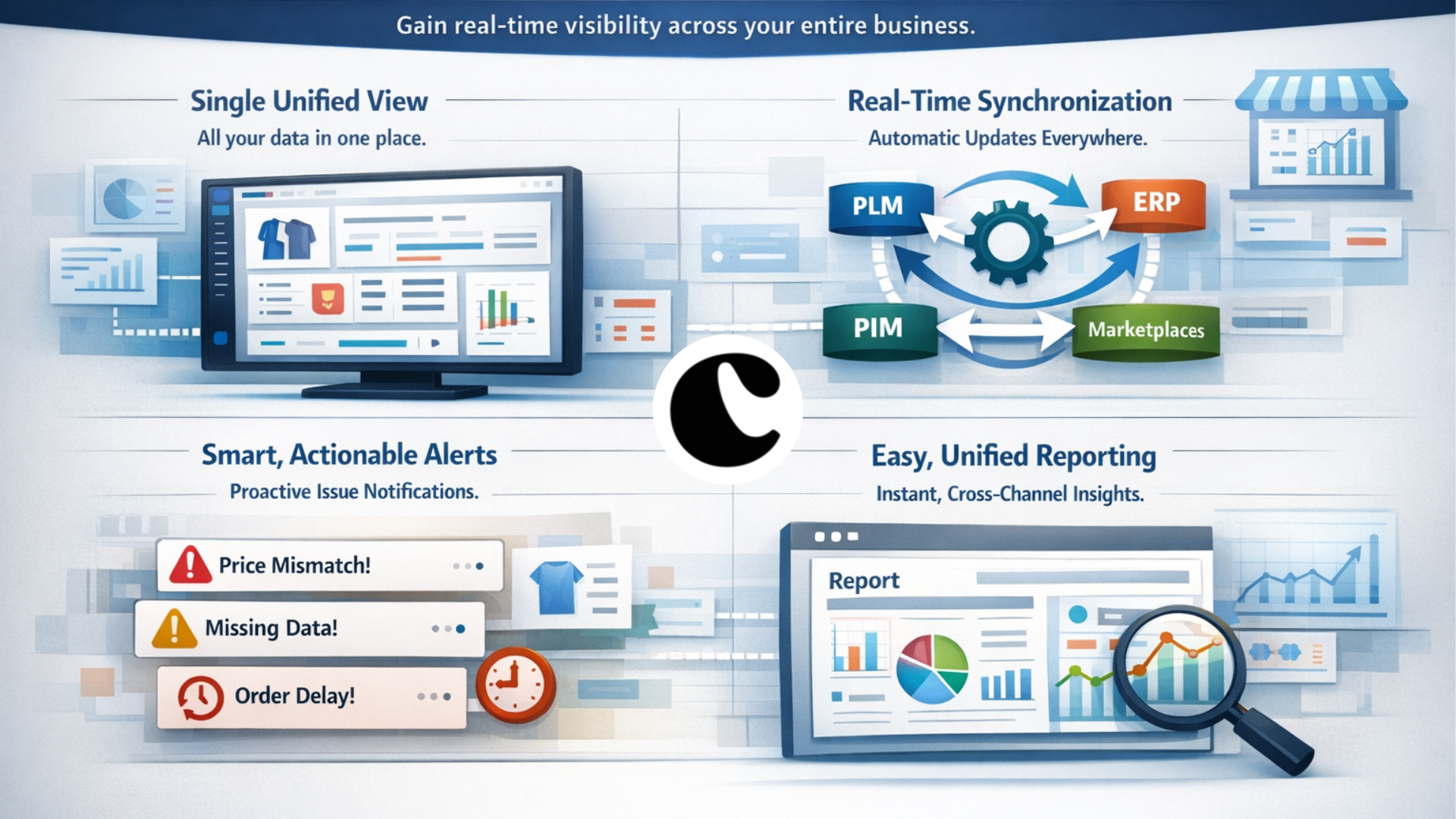
When all this data connects, patterns emerge. The system knows which suppliers are most likely to hit your timeline. Which materials will arrive on schedule? Which shipping routes are moving fastest?
Your entire operation changes.
Academic research has long shown that reducing lead times is one of the most effective ways to match supply with real demand and prevent costly overstocking.

Ready to see where lead time is hiding in your sourcing process? Connect with Couture.ai to identify opportunities that can cut weeks from your supply chain.
Retail sourcing doesn't need to take 16-20 weeks.
Smart sourcing agents prove that lead times can drop by 40% or more without sacrificing quality or increasing costs.
Markets move fast. Customer preferences deviate quickly. Trends come and go in just weeks
Market projections indicate that the retail supply-chain management sector is growing at a CAGR of 9.54% through 2030, caused by increased demand for visibility, automation, and faster sourcing cycles.
Ready to identify where weeks are hiding in your sourcing process? Schedule a personalized strategy session with our team to see how you can reduce lead times by 40% or more.
Subscribe to get the latest updates and trends in AI, automation, and intelligent solutions — directly in your inbox.
Stay Informed: Insights and Trends from Couture AI
Reduce operational complexity, improve planning accuracy, and deliver smarter retail execution with Couture AI.