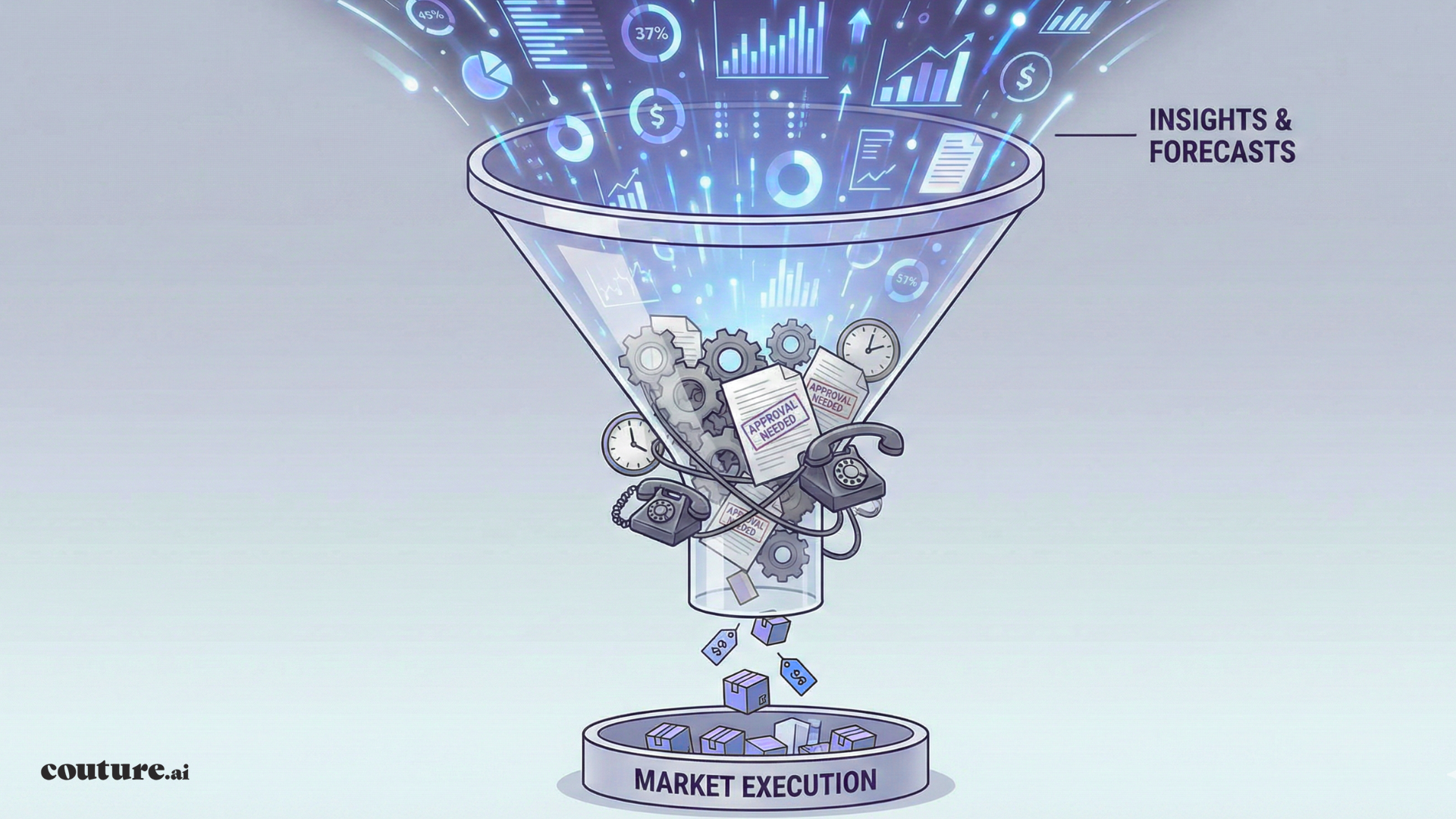
Retail merchandising is no longer constrained by data, tools, or planning quality. It is constrained by execution speed.
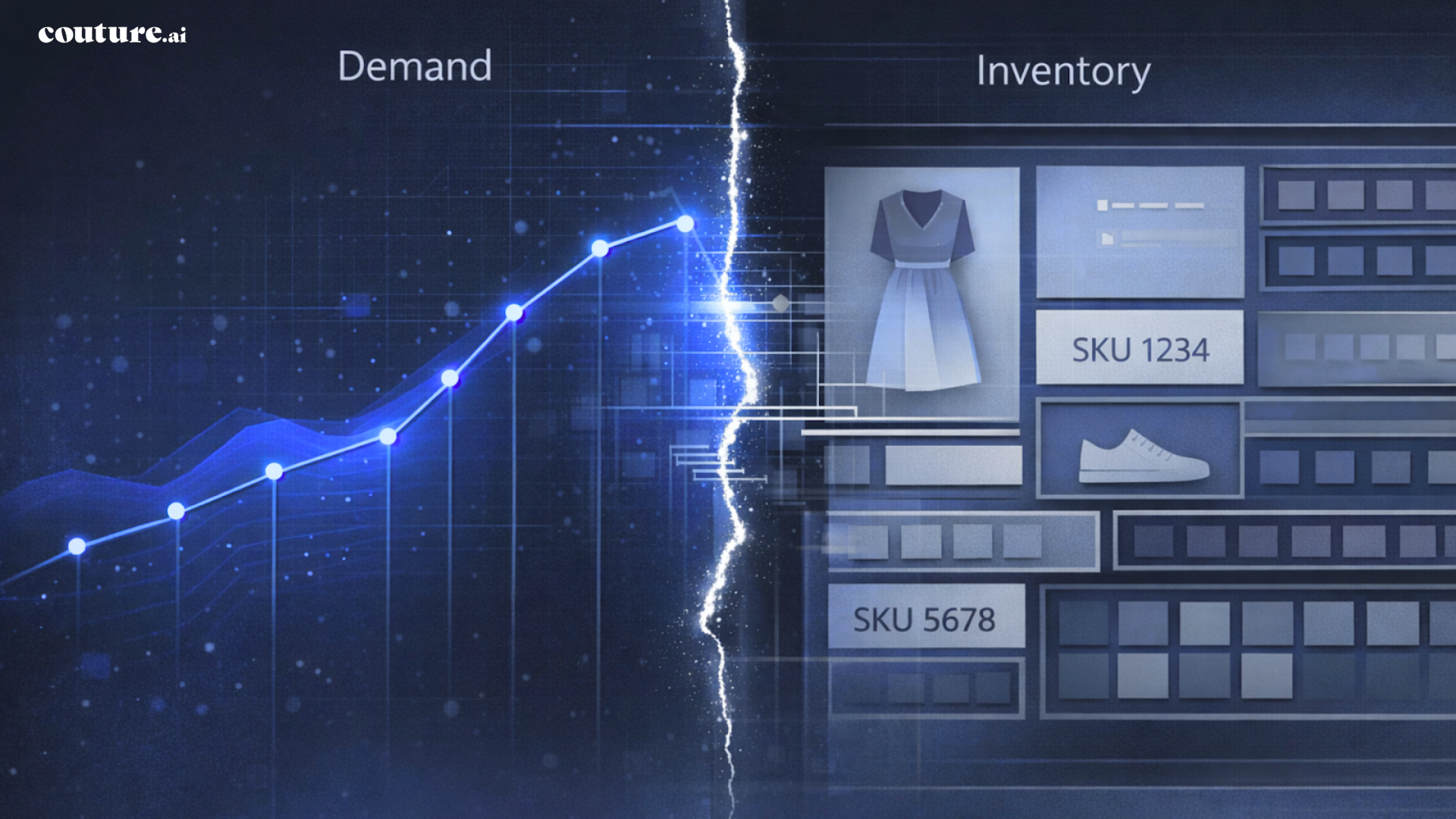
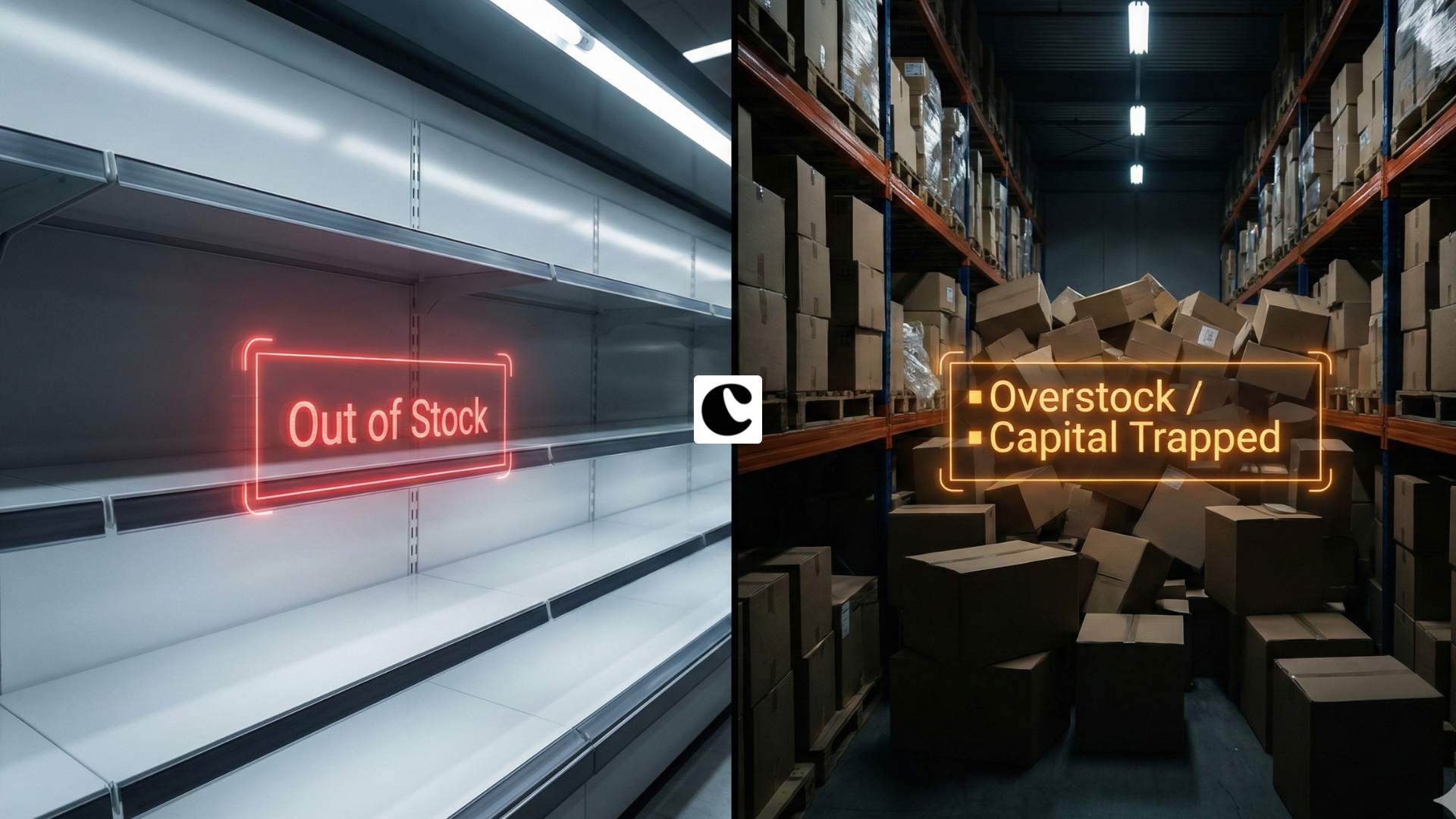
Across global retail, the cost of slow execution is now measured in margin loss, inventory distortion, and missed demand. Industry research estimates that inventory distortion alone costs retailers over $1.7 trillion annually, driven largely by stockouts and overstocks. These losses are not caused by poor insight. They occur because decisions take too long to move from signal to action.
AI is entering merchandising not as an innovation trend, but as a response to this growing execution gap.
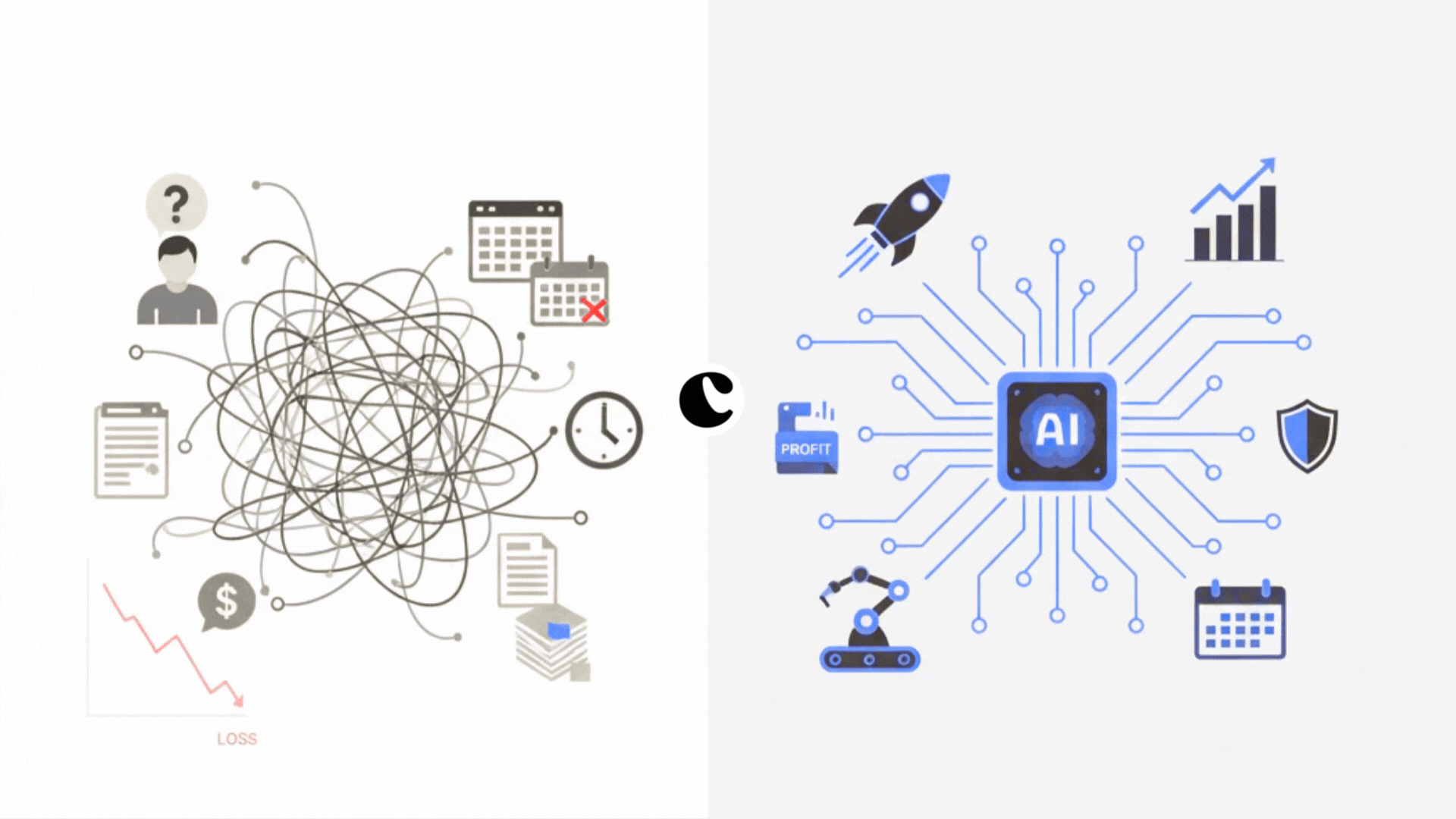
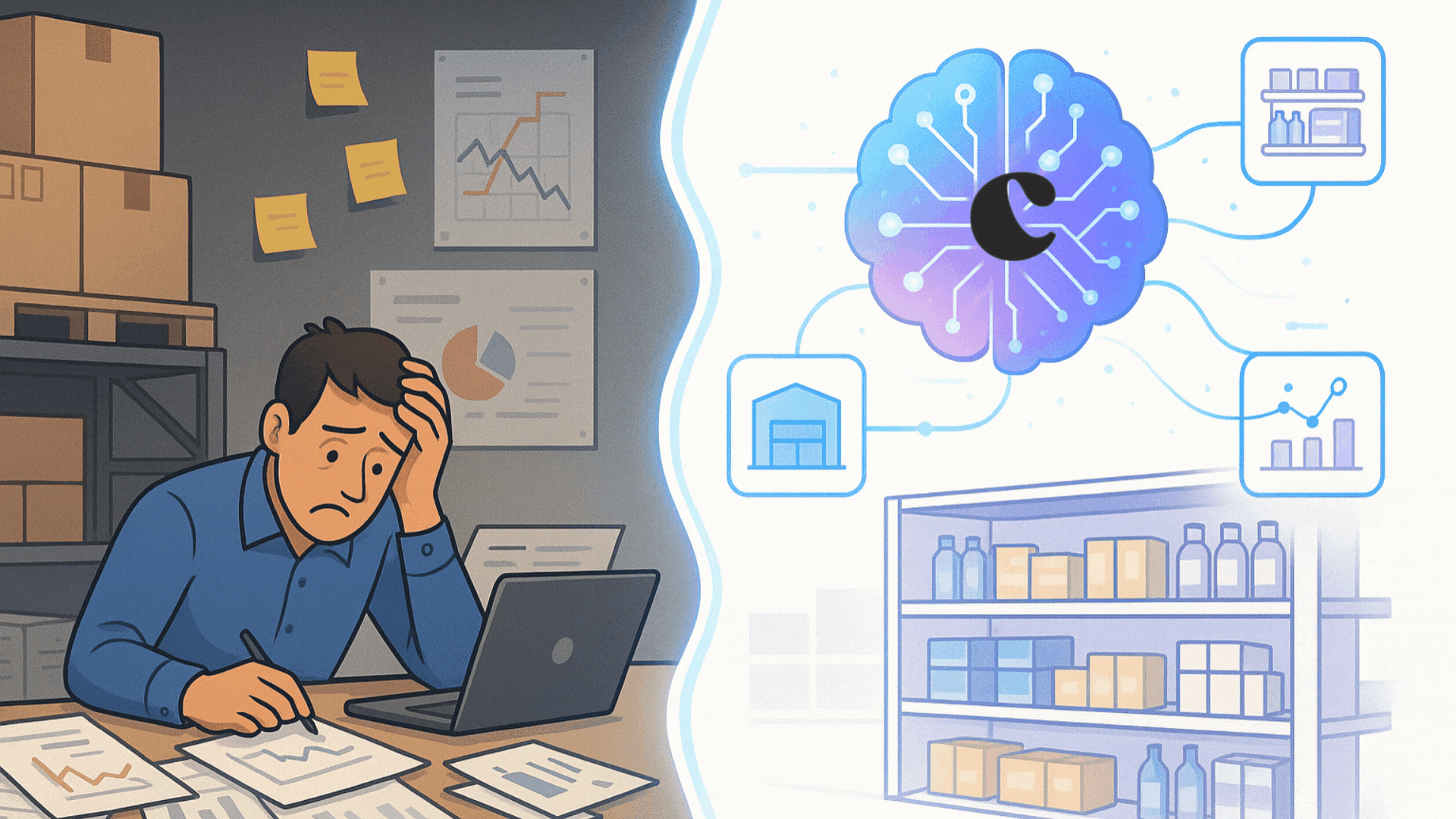
In day-to-day merchandising operations, the breakdown is consistent and visible.
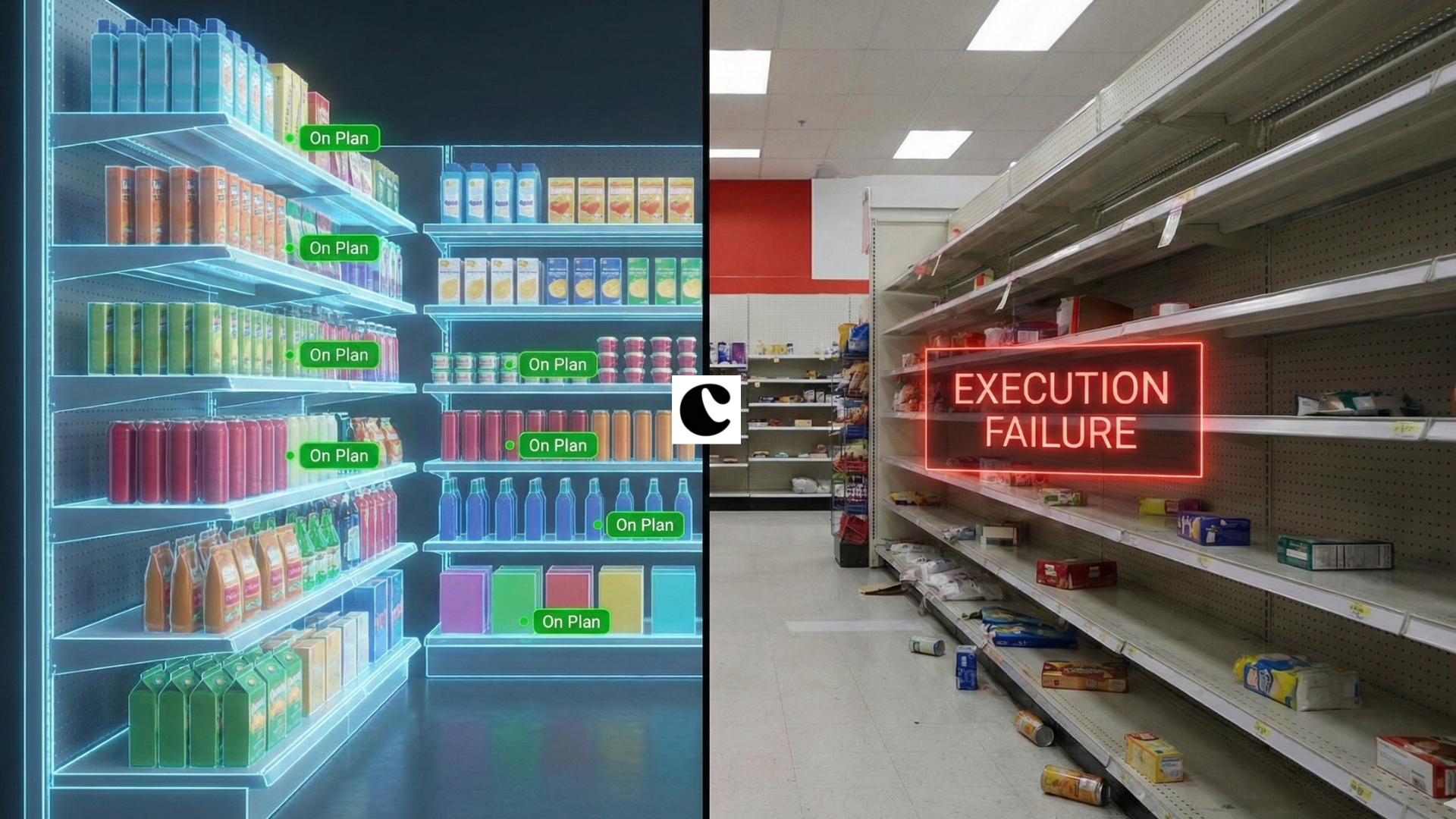
Retail teams encounter the same execution failures season after season:
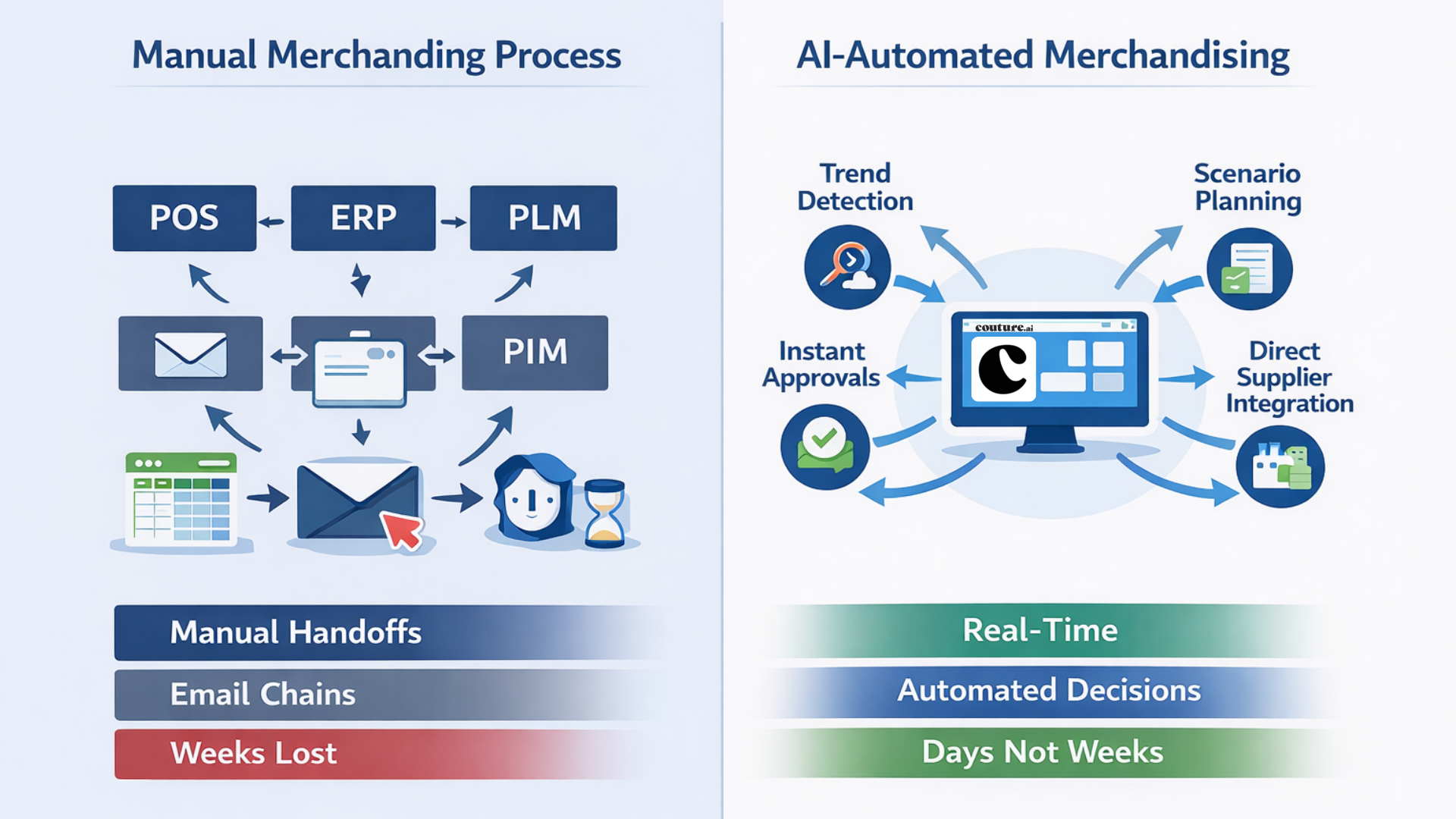
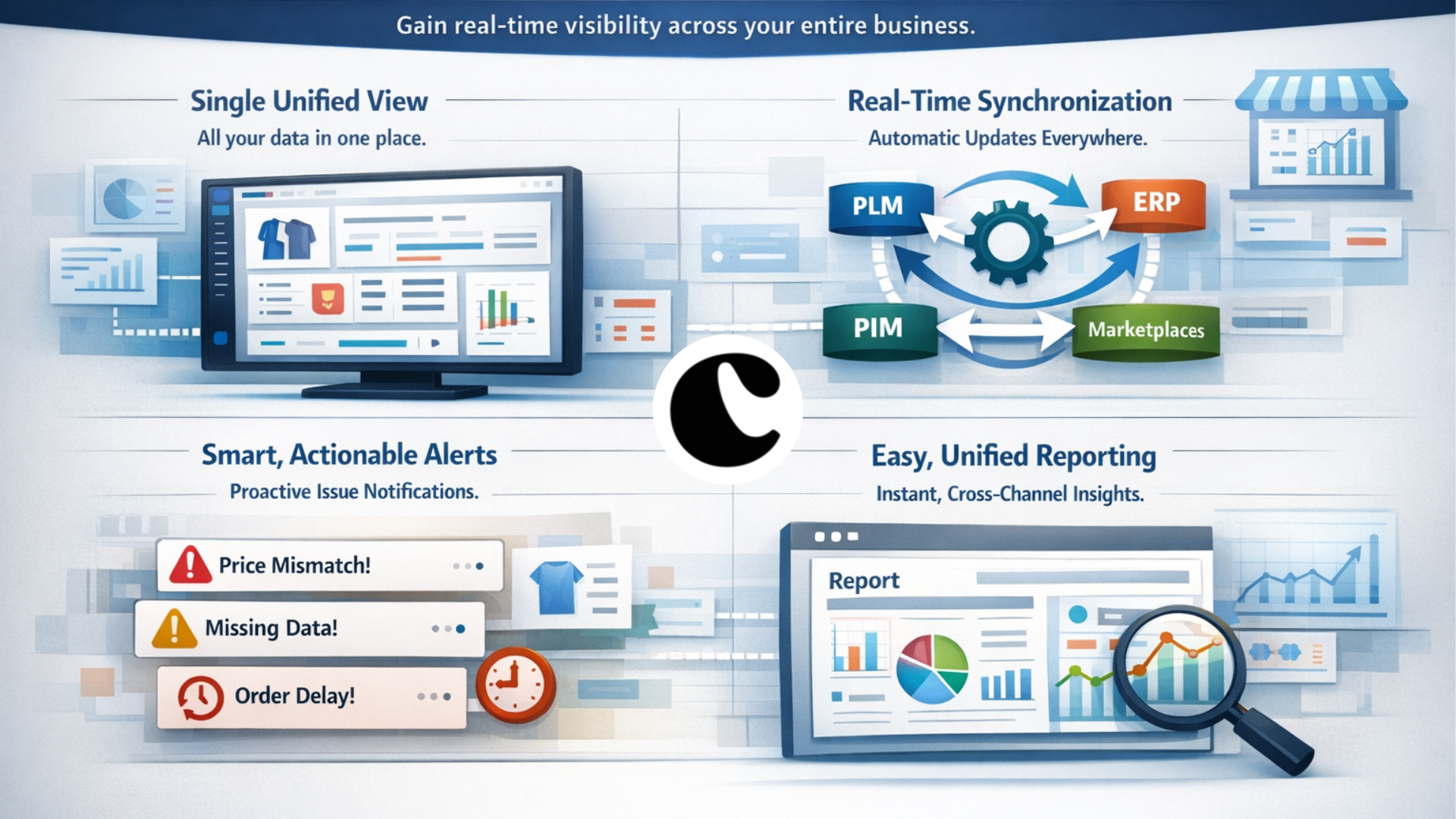
On paper, merchandising appears data-driven. Dashboards refresh. Forecasts update. In reality, execution still depends on manual coordination across planning, sourcing, content, allocation, pricing, and store operations.
This coordination burden compounds as SKU counts rise and channels multiply.
The root cause is not a lack of insight or technology. It is structural.
Most retailers operate with:
As assortments scale into the thousands of SKUs, coordination overhead grows faster than teams can manage. Decision latency increases, even when insight quality improves.
This is why many retailers see diminishing returns from better analytics alone. Insight arrives faster, but execution does not.
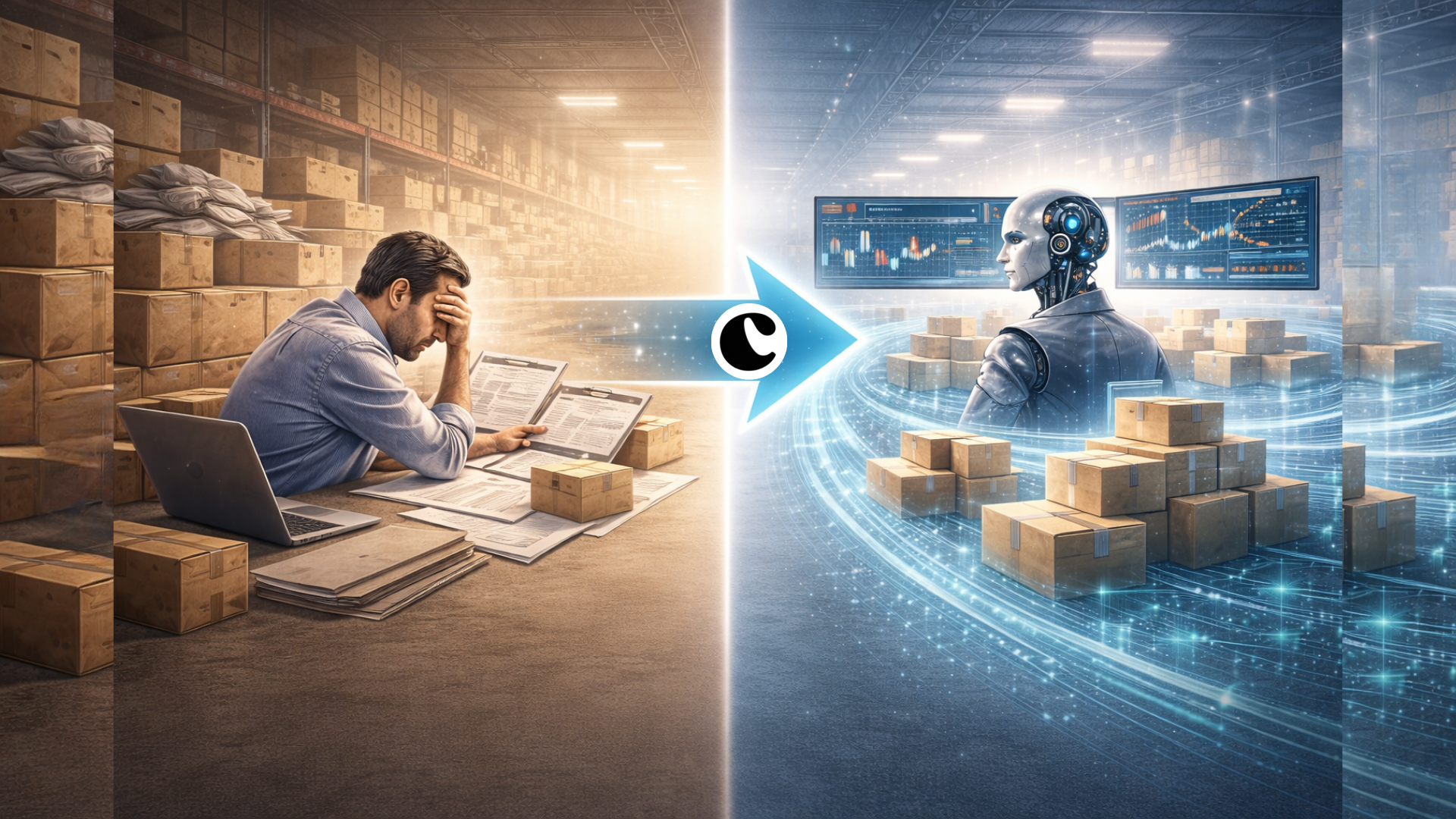
When merchandising execution shifts from episodic to continuous, behavior across the organization changes.
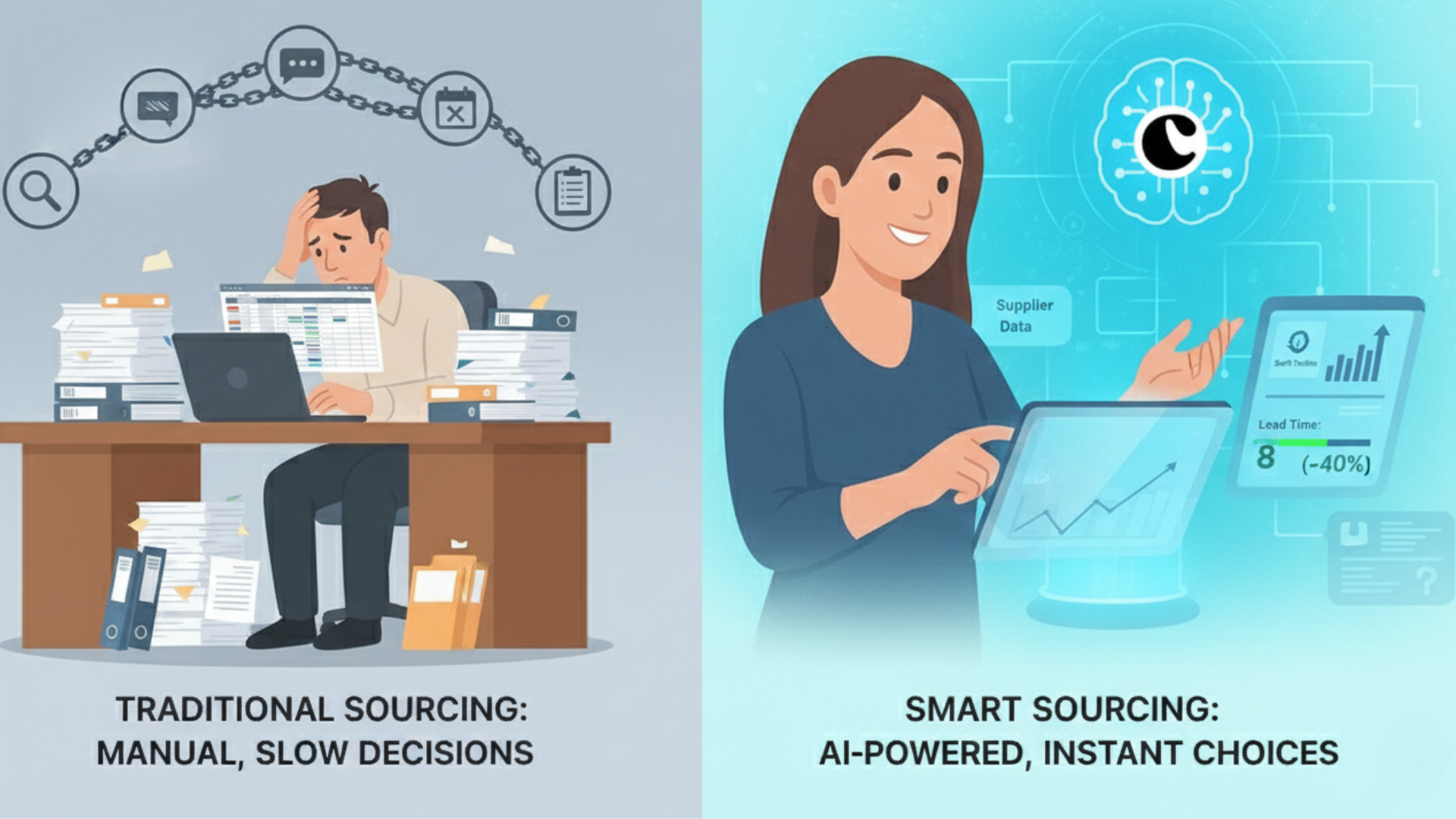
Key differences include:
Retailers move away from rigid 8–12 week cycles and toward continuous decision loops operating at SKU level.
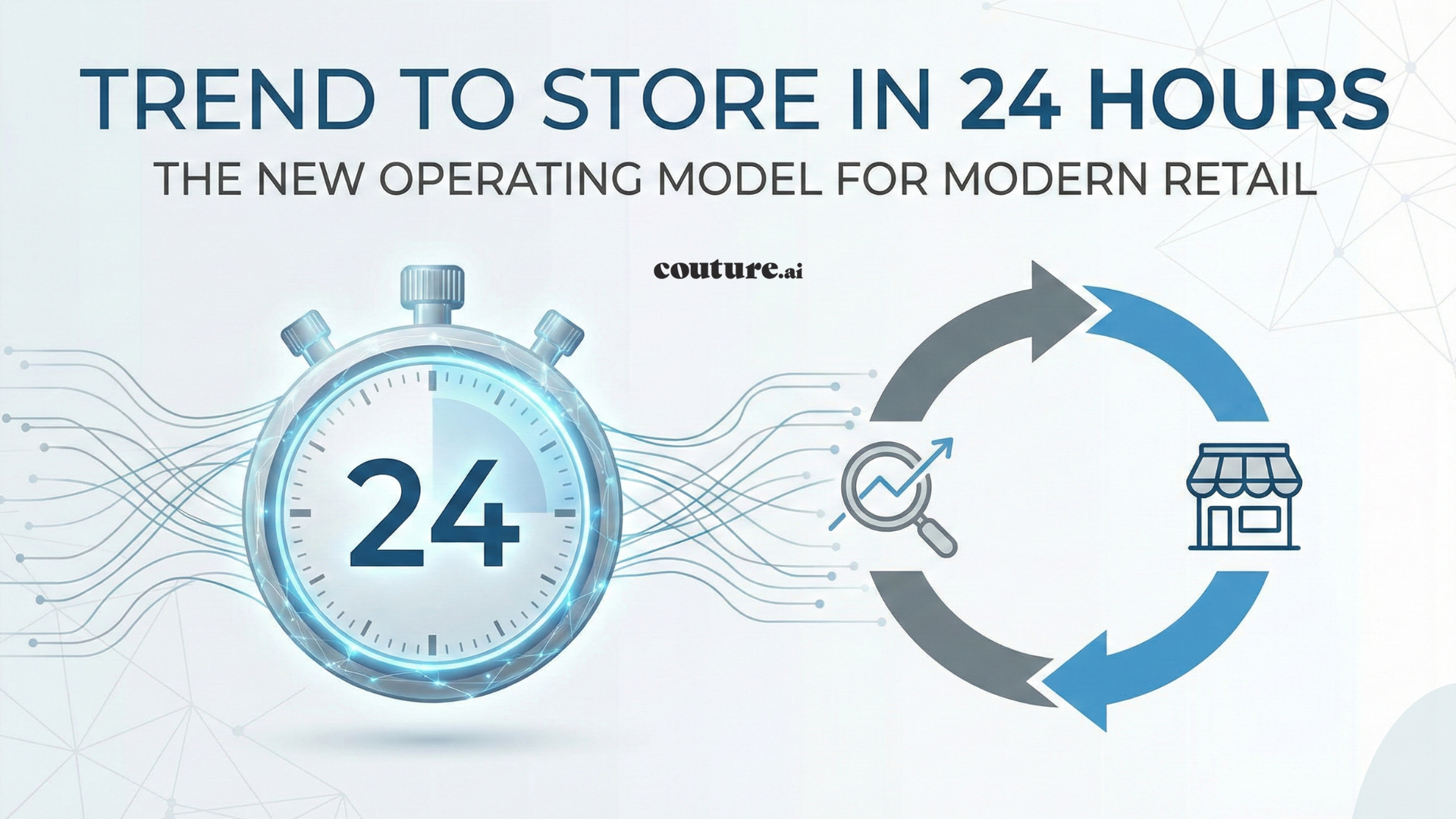
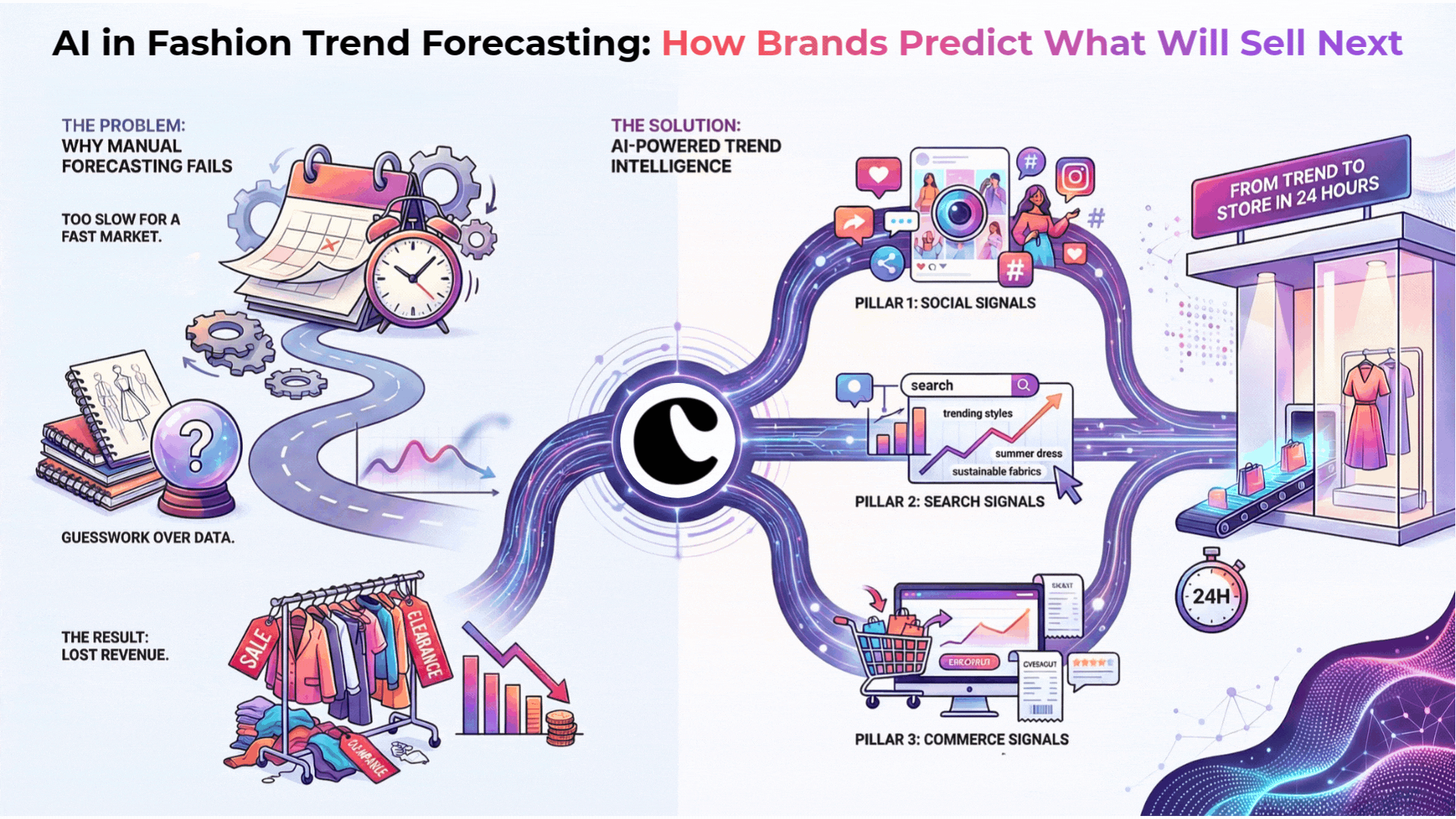
At Couture.ai, this shift consistently delivers the largest impact when retailers redesign execution across the full Trend → Store lifecycle.
When execution latency is reduced, the results are measurable and compounding.
Even small improvements in execution speed compound across thousands of SKUs, translating into meaningful margin preservation and working capital efficiency.
This is why analysts estimate generative AI could unlock $240–390 billion in annual value for retail. The value is not in experimentation. It is in execution at scale.
One of the most underestimated contributors to slow execution is visual production.
Traditional photoshoots were built for seasonal campaigns, not for continuous assortment updates across multiple channels. In many organizations:
In the AI era, visuals are no longer a creative afterthought. They are part of the merchandising execution layer.
Couture.ai integrates visual execution into the broader merchandising system so content keeps pace with demand rather than slowing it down.
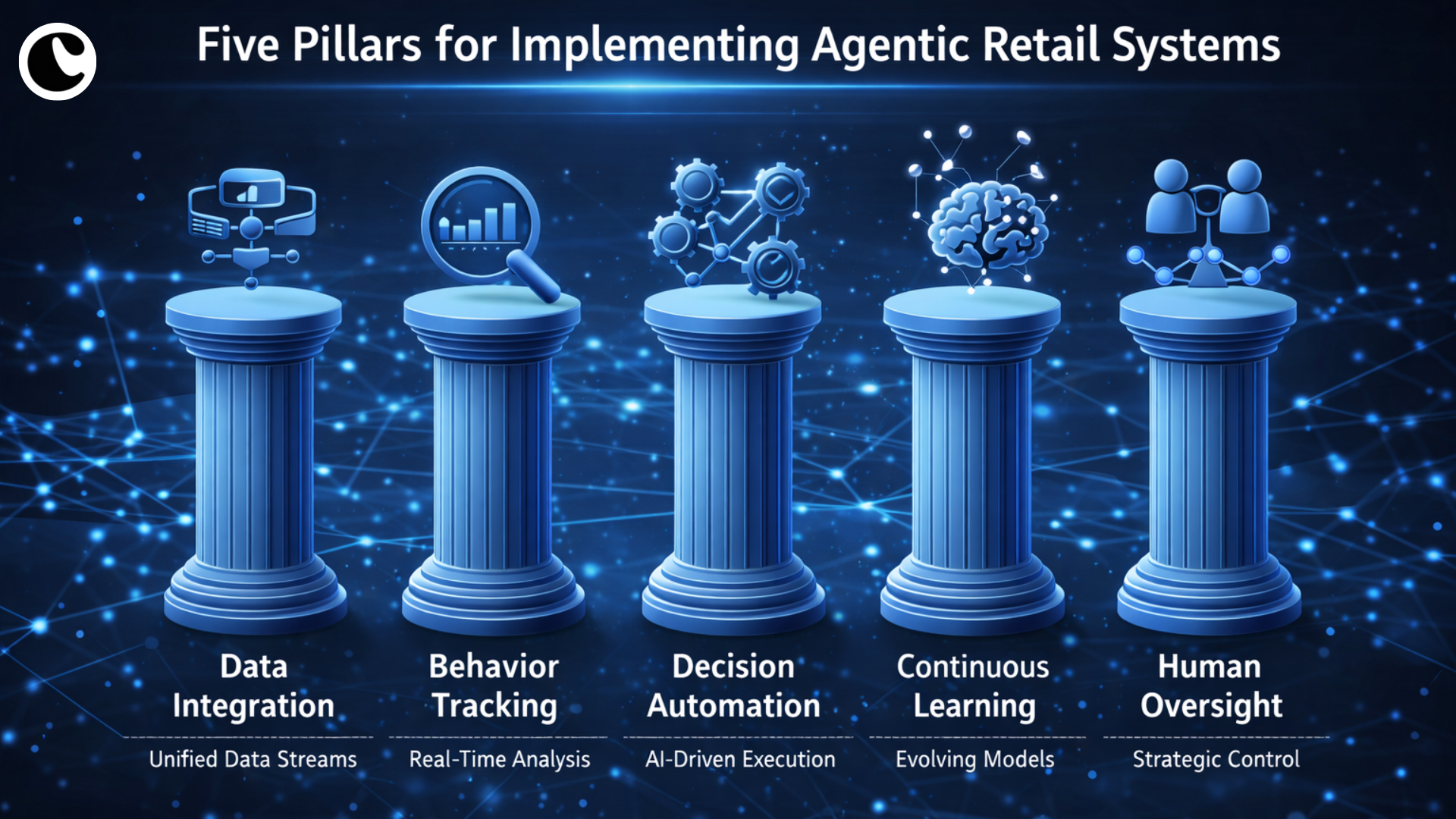
In AI-enabled merchandising systems, these concepts converge into a single operating loop.
When execution works, these outcomes reinforce each other automatically.
Most AI initiatives fail not because of technology, but because of how they are applied.
Common pitfalls include:
AI delivers value only when it is embedded into how merchandising decisions are made, governed, and executed end-to-end.
For retail leaders, the priorities are increasingly clear:
If your teams spend more time coordinating work than acting on decisions, it is a signal that execution, not planning, is the constraint.
AI will not replace merchandisers. But it will replace manual merchandising models that cannot keep pace with modern retail dynamics.
Every season spent operating with slow execution carries a real cost in lost margin, excess inventory, and missed demand. Retailers that treat AI as an execution capability rather than an insight layer are already closing this gap.
Merchandising advantage in the AI era comes from sensing demand early, deciding with discipline, and executing faster than the market moves. Couture.ai helps retailers make that shift by turning merchandising decisions into continuous, governed action across the Trend → Store lifecycle.
Explore how Couture.ai enables autonomous merchandising execution and reduces the cost of delay.
Subscribe to get the latest updates and trends in AI, automation, and intelligent solutions — directly in your inbox.
Stay Informed: Insights and Trends from Couture AI
Reduce operational complexity, improve planning accuracy, and deliver smarter retail execution with Couture AI.